Artisan vs Valley (2026): Which Actually Gets Replies?

Try Valley
Make LinkedIn your Greatest Revenue Channel ↓

Saniya
Published:
Updated:
Artisan vs Valley (2026): Which Actually Gets Replies?
Published [original date] · Updated July 27, 2026
The verdict in 60 words: Artisan wins if you want outbound fully delegated - Ava sources, writes, sends, and replies autonomously across email at enterprise scale, on custom annual pricing. Valley wins if LinkedIn is your channel and you want AI leverage with control - warm-signal targeting, your voice, your approval, $149/mo. The real question isn't features; it's how much autonomy you can afford to give an LLM under your brand.
Valley makes one of the tools in this category. We've marked our entry clearly and included tools that beat us for specific jobs.
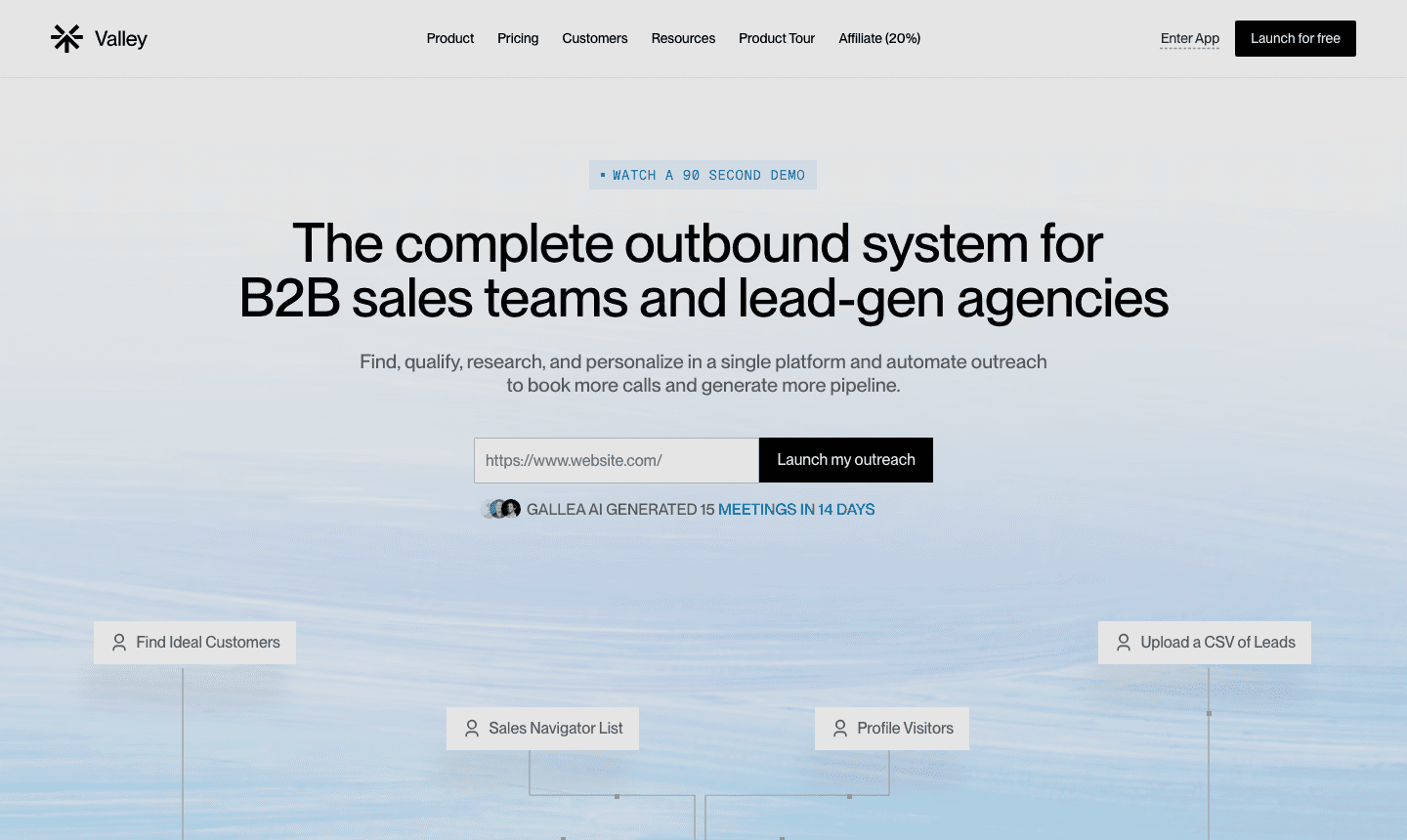
Valley is an AI outbound platform that finds the people most likely to buy from you - from live buying signals, natural-language search, or your own lists - qualifies them against your ICP, researches each one, and sends personalized messages across email and LinkedIn that get 15-45% reply rates, against a category average of about 2%.
► Run your own Valley vs Artisan test with a full-featured 7-day free trial

At a glance
Valley | Artisan (Ava) | |
|---|---|---|
Category | Signal-based LinkedIn outreach (deliberately not an AI SDR) | Autonomous AI SDR / "AI employee" |
Pricing | $149/mo, billed quarterly, 7-day trial | Custom, talk-to-sales; tiers ≈2,500 - 6,000 leads contacted/mo |
Channels | LinkedIn + native email in one sequence (email added Aug 2026 - own OAuth inbox, ~30/day/seat, included) | Email-first, multichannel |
Targeting | Warm signals (profile views, engagement, site visits) scored vs ICP | 250M+ contact database, ICP filters |
Human control | Approve each message, or vetted autopilot - your choice | Autonomous by design; review dashboards |
Reply handling | Routed to you | Ava replies and books autonomously |
Safety on LinkedIn | Zero restrictions, 1,000+ accounts, 2.5 yrs, 5× guarantee | Email-centric; LinkedIn is secondary |
Proof style | 15 - 45% reply rates on signal sends | Logos and testimonials; limited published methodology |
The philosophical difference (this decides everything else)
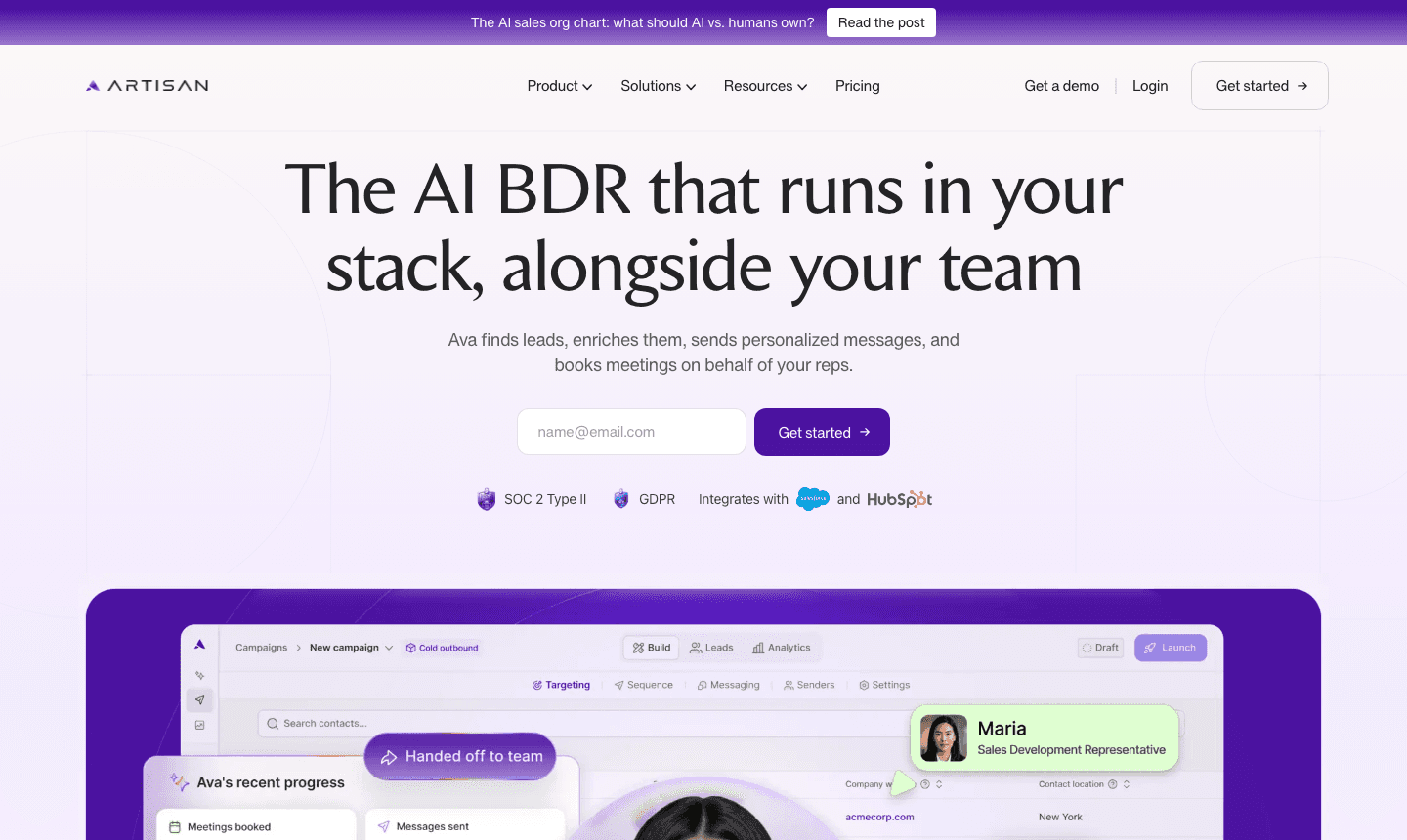
Artisan's bet: SDR work should be delegated to AI. You hire Ava, she runs outbound end-to-end - sourcing from a 250M+ contact database, drafting, sending, handling replies, booking. The pitch is headcount replacement, and the UX ("hire Ava") is the most intuitive in the category.
Valley's bet: SDR labor should be automated, SDR judgment shouldn't. Valley finds the people already leaning in - profile viewers, post engagers, website visitors - researches them, drafts in your voice, and then you decide: approve each message manually, or let vetted sequences run. Nothing negotiates with your future customers unsupervised.
Neither bet is wrong. Enterprise teams with volume economics and compliance review can absorb autonomy's variance. Founder-led and mid-market teams usually can't - one hallucinated discount in a reply thread costs more than the labor saved.
Channel: where your buyers actually are
Artisan is email-first - its infrastructure, deliverability tooling, and reply automation center on inbox outreach at volume, with LinkedIn as a supporting channel. Valley is LinkedIn-native with email as the in-sequence follow-through: cloud LinkedIn sends through dedicated IPs inside the limits, built around signals that only exist on LinkedIn (who viewed you, who engaged your posts) - and, since August 2026, native email from your own OAuth inbox (~30 sends/day/seat, included in every plan) riding the same sequence. The architectural difference stands: Artisan scales email volume through managed infrastructure; Valley sends quality email from the inbox you already own.
Practical rule: if your ICP lives in their inbox and you need thousands of touches monthly, Artisan's architecture fits. If your deals start on LinkedIn - founders, sales leaders, agencies - the signal layer matters more than send volume, and that's Valley's home turf.
Keep exploring: Valley pricing, explained · real customer results.

Pricing: transparent vs scoped
Valley publishes its price: $149/mo, billed quarterly, 7-day trial. Artisan doesn't - plans are scoped in a sales process, sized by leads contacted per month (~2,500 on the Team tier, ~6,000 on Scale, per their July 2026 pricing page). Custom pricing isn't a scam - it's how enterprise sales works - but budget for an annual commitment and onboarding, and get the per-lead math in writing before you sign.
Proof: what each side can show
Valley's receipts are rate-based: 15 - 45% replies on warm-signal sends against a ~2% cold benchmark, zero LinkedIn restrictions across 1,000+ accounts in 2.5 years. Artisan's public proof is logo- and testimonial-based; reproducible outcome data with methodology is thin - worth asking their sales team for segment-matched numbers during evaluation.
Who should pick Artisan
Enterprise and upper-mid-market teams running high-volume, email-first outbound
Teams with compliance/brand review processes that can audit autonomous sends
Buyers who genuinely want headcount replacement, not rep leverage
Who should pick Valley
Teams whose pipeline starts on LinkedIn and whose accounts must stay safe
Founders and sales leaders who want AI research and drafting but final say on what ships under their name
Anyone who'd rather pay $149/mo published than scope a custom annual contract to find out the price
FAQ
Is Artisan better than Valley? For autonomous, email-first outbound at enterprise volume: yes. For signal-based outreach with human control - LinkedIn plus in-sequence email: no. They're different bets - delegation vs leverage - more than competing products.
How much does Artisan cost? Artisan doesn't publish pricing; plans are custom, scoped by leads contacted per month (~2,500 - 6,000 on the two named tiers as of July 2026). Expect an annual contract. Valley is $149/mo, billed quarterly.
Is Valley an AI SDR like Ava? No - deliberately. Valley automates research, targeting, and drafting but keeps a human in control of sending (or lets you enable autopilot on vetted sequences). The autonomous "AI employee" category is exactly what it's built as an alternative to. (What an AI SDR is - and costs.)
Can Artisan do LinkedIn outreach safely? Artisan includes LinkedIn as a channel, but its architecture and proof points are email-centric. If LinkedIn is your primary channel, evaluate any vendor on sending architecture: cloud vs browser, dedicated IPs, and a written restriction track record.
Which books more meetings? Volume × conversion. Artisan wins the volume term at enterprise scale; Valley wins conversion (15 - 45% replies on warm signals). For most sub-enterprise teams the conversion term dominates - you can't out-volume a 2% cold reply rate with a channel your buyers ignore.
Related: Valley vs Artisan vs Common Room · What is an AI SDR (2026 costs) · Best AI SDR tools 2026 · Valley pricing

Related Blogs

FEATURED READ
5 min
ZoomInfo Pricing Explained (2026): What It Actually Costs
Read
Read

FEATURED READ
5 min
Apollo Pricing and Credits Explained (2026): What You Actually Pay
Read
Read

FEATURED READ
5 min
Clay Pricing and Credits Explained (2026): The Post-March Math
Read
Read

FEATURED READ
5 min
LinkedIn Sales Navigator Cost Explained (2026): Every Tier, Real Numbers
Read
Read
Which channels does Valley support?
Valley supports LinkedIn outreach, including connection requests and InMails. Valley users safely send 1000-1200 messages per seat every month.
How safe is it and does Valley risk my LinkedIn account?
Do I have to commit to an Annual Plan like other AI SDRs?
How does Valley personalize messages?
Is Valley available in my country?

VALLEY MAGIC