Best LinkedIn Automation Tool in 2026: Full Comparison

Try Valley
Make LinkedIn your Greatest Revenue Channel ↓

Saniya Sood
What "Best" Actually Means in 2026
What "Best" Actually Means in 2026
The best LinkedIn automation tool in 2026 is not the one with the most features or the lowest price. It is the one that produces the highest rate of qualified conversations per seat, with the least risk to your LinkedIn account, in the shortest time from setup to first meeting. By that definition, signal-based warm outbound platforms consistently outperform sequence automation tools by a factor of 2–3x on reply rate and meeting conversion.
Three metrics separate the category leaders from the also-rans:
Reply rate. Cold outreach sequence tools (Expandi, HeyReach, Dripify, Waalaxy) produce 2–6% overall reply rates when working from cold lists. Signal-based warm outbound platforms produce 6–11% because every outreach starts from demonstrated prospect interest rather than from a list filter.
Account safety record. Chrome extension tools (Waalaxy) create the highest restriction risk. Shared-IP cloud tools create moderate risk. Dedicated-IP platforms with open/closed profile detection create minimal risk. The tool that books you 20 meetings and then gets your LinkedIn account banned has a negative lifetime ROI.
Time to first meeting. Cold sequence tools require list building, sequence setup, connection warmup, and message testing before the first conversation books — typically 3–6 weeks. Signal-based platforms act on existing intent, producing first meetings within 72 hours of setup because warm prospects are already there.
The Top LinkedIn Automation Tools in 2026: Ranked
1. Valley — Best Overall for Signal Intelligence and AI Personalization
Valley occupies a distinct category in the LinkedIn automation market. Where other tools automate the sending of outreach, Valley automates the intelligence behind it — signal detection, ICP qualification, prospect research, message generation, and safety-compliant execution.
Signal Detection: Valley monitors four real-time signal streams from your LinkedIn presence: profile viewers (who researched you today), post engagers (who engaged with your content), company page followers (who opted into your brand), and website visitors matched to LinkedIn profiles. Every signal is automatically filtered against your ICP definition before entering the research queue. No manual list building required.
AI Research: For each qualified signal, Valley's AI conducts up to five research dimensions: the prospect's recent LinkedIn posts and comments, company news and announcements, growth and funding signals, role-specific context, and behavioral intent patterns. This is research that would take a human SDR 10–15 minutes per prospect, completed in seconds.
Message Generation and Review: A personalized message is drafted using the research output and your defined writing style. The message enters your approval queue. You review it in under 90 seconds — seeing the message, the research behind it, and the prospect's context — then approve, edit, or regenerate. Valley sends only messages you have approved.
Safety Architecture: Dedicated IP addresses per account, automatic daily limit enforcement (never exceeding LinkedIn's guidelines), open/closed profile detection, and automatic exclusion of competitors and existing customers. Zero documented account restrictions in the customer base.
Meeting Guarantee: The Growth plan guarantees 10 meetings booked in 90 days or Valley works for free.
Best for: Founders, sales leaders, and RevOps teams whose ICP is active on LinkedIn, who publish content regularly, and who want outreach that books meetings rather than just sends messages.
Proof: Bolt.new generated $1 million in pipeline in 60 days. ThinkFish runs 50 seats and books 380–400 meetings per month. Linarca achieved a 22% reply rate with 14 meetings in their first month.
2. HeyReach — Best for High-Volume Agency Operations
HeyReach built its market position on unlimited LinkedIn accounts at a flat monthly fee. For agencies managing 20+ client accounts simultaneously, the pricing model creates a compelling unit economics case.
Strengths: Multi-account dashboard management, flat-fee pricing that scales for agencies, clean connection request management across accounts.
Weaknesses: No signal detection — every prospect enters cold. Personalization is template and merge-tag based. No AI research layer. Reply rates reflect the quality ceiling of cold outreach: typically 2–5%. No human message review workflow.
Best for: Agencies prioritizing volume and account count over per-message quality.
3. Expandi — Best Cloud-Based Sequence Tool
Expandi is the most mature cloud-based LinkedIn sequence tool. It handles the standard automation workflow (connection request, message, follow-up) with more reliability than Chrome extension tools and better per-account control than HeyReach.
Strengths: Cloud-based safety (lower restriction risk than Chrome extensions), established track record, GIF personalization support, clean campaign reporting.
Weaknesses: No signal detection, personalization limited to merge tags and basic AI overlays, no dedicated IPs (shared infrastructure), no human review loop.
Best for: Teams that have outgrown Chrome extension tools and need reliable cloud-based sequence automation without the investment in signal-based intelligence.
4. Waalaxy — Best Entry-Level Tool
Waalaxy serves the most price-sensitive segment of the market. Its 99+ template library and low-friction onboarding make it the fastest tool to start on.
Strengths: Lowest price point, LinkedIn and email combined, beginner-friendly interface, quick setup.
Weaknesses: Chrome extension architecture (highest restriction risk), template-based personalization (lowest depth), reply rates reflect cold outreach at template quality: 2–4%.
Best for: Solo operators or early-stage teams testing LinkedIn outreach for the first time, not for teams with established pipeline targets.
5. Dripify — Best for Conditional Sequence Logic
Dripify offers the most sophisticated sequence branching of the sequence-automation tools on this list. Conditional flows that respond differently based on prospect actions (accepted vs. ignored, viewed profile vs. did not) give sales teams more control over the outreach path.
Strengths: Conditional multi-path sequences, LinkedIn and email combined, clean per-step conversion reporting.
Weaknesses: No signal detection, personalization limited to merge-tag depth, no AI research layer, no dedicated IPs.
Best for: Teams that need sophisticated sequence branching and have accepted the cold-list targeting model.

Full Comparison Matrix: Best LinkedIn Automation Tools 2026
Full Comparison Matrix: Best LinkedIn Automation Tools 2026
Category | Valley | HeyReach | Expandi | Waalaxy | Dripify |
|---|---|---|---|---|---|
Primary Use Case | Signal-based warm outbound | Multi-account agency volume | LinkedIn sequence automation | Entry-level LinkedIn + email | LinkedIn sequence with conditional branching |
Signal Types Tracked | Profile views, post engagers, website visitors, Sales Nav matches | None | None | None | None |
AI/Personalization | Deep multi-source research (up to 5 dimensions) | Merge tags | Merge tags + GIF | Template library | Merge tags + conditional logic |
LinkedIn Safety | Dedicated IPs, open/closed profile detection, daily limits | Shared IPs, cloud-based | Shared IPs, cloud-based | Chrome extension (highest risk) | Cloud-based, shared IPs |
Human Review Loop | Yes — every message | No | No | No | No |
ICP Qualification | Automatic, built into signal filter | Manual list import | Manual list import | Manual list import | Manual list import |
Channels | LinkedIn only | LinkedIn only | LinkedIn only | LinkedIn + email | LinkedIn + email |
Meeting Guarantee | Yes — Growth plan | No | No | No | No |
Reply Rate Benchmark | 6–11% (warm signals) | 2–5% | 3–6% | 2–4% | 3–6% |
Setup to First Meeting | 72 hours | 3–6 weeks | 3–6 weeks | 2–4 weeks | 3–6 weeks |
Best For | Signal-first pipeline teams | High-volume agencies | Reliable cold sequences | Entry-level testing | Conditional sequence teams |
The Decisive Criterion: Warm vs. Cold Starting Point
Every tool on this list — except Valley — starts outreach from cold lists. The prospect has given no signal of interest before your first message arrives. The effectiveness of the outreach depends entirely on message quality, ICP precision, and statistical probability: send enough messages to enough right-profile people and some percentage will respond.
Valley starts from the opposite position. The prospect has already shown interest — visited your profile, engaged with your content, followed your company, or researched your product. The outreach arrives as a natural continuation of attention already paid. Same message quality, same ICP precision, structurally higher conversion because the starting temperature of the prospect is different.
In 2026, the best LinkedIn automation tool is the one that changes the starting temperature. That is a category distinction, not a feature difference — and it is the reason warm outbound on LinkedIn outperforms cold outreach automation by 2–3x on every conversion metric that matters.
Book a demo with Valley and see how signal-based warm outbound compares to your current LinkedIn automation tool. Setup takes under 24 hours. First meetings book within 72.

Frequently Asked Questions
Frequently Asked Questions
Q: Which LinkedIn automation tool is safest to use in 2026?
Valley uses dedicated IP addresses per account, enforces LinkedIn's daily limits automatically, and detects open versus closed profiles before sending — the most protective safety architecture available. Chrome extension tools like Waalaxy carry the highest restriction risk. Shared-IP cloud tools (Expandi, HeyReach, Dripify) sit in the middle. Valley is the only tool with zero documented account restrictions in its customer base.
Q: What reply rate should I expect from a LinkedIn automation tool in 2026?
Cold outreach sequence tools produce 2–6% overall reply rates when targeting well-defined ICPs. Signal-based warm outbound platforms produce 6–11% because outreach starts from behavioral intent rather than list filters. Positive reply rates (genuinely interested responses) run 25–35% of all replies with warm outbound — significantly higher than cold sequence benchmarks.
Q: What is the fastest LinkedIn automation tool to get first meetings?
Valley produces first meetings within 72 hours of setup because it acts on existing warm signals — prospects who have already shown interest do not need to be convinced to engage. Cold sequence tools require list building, sequence testing, and connection warmup — typically 3–6 weeks before the first qualified meeting books.
Q: Do LinkedIn automation tools work for agencies in 2026?
Yes — both HeyReach (volume-focused) and Valley Scale (10–50 seats, quality-focused) support agency use cases. The distinction is whether the agency sells its clients on meeting volume or meeting quality. ThinkFish, running 50 Valley seats, delivers 380–400 meetings per month — nearly 8 per seat — by prioritizing warm signal quality over raw message volume.
Q: Is it worth paying more for an AI-powered LinkedIn automation tool?
The relevant comparison is cost per qualified meeting, not cost per month. A cheaper tool that produces 3% reply rates with poor meeting quality costs more per qualified meeting than a higher-priced tool producing 8% reply rates with strong ICP fit. Valley's cost-per-meeting math consistently outperforms cheaper alternatives when the comparison uses qualified meetings as the output metric.

Related Blogs
FEATURED READ
5 min
Valley LinkedIn Safety Features Explained
Read
Read
FEATURED READ
5 min
Our Biggest Quarter, 4 Winning ICP Segments, and What We're Fixing
Read
Read
FEATURED READ
5 min
How to Use Stripe and Claude to Find Your ICP Golden Segment (6-Step Process)
Read
Read
FEATURED READ
5 min
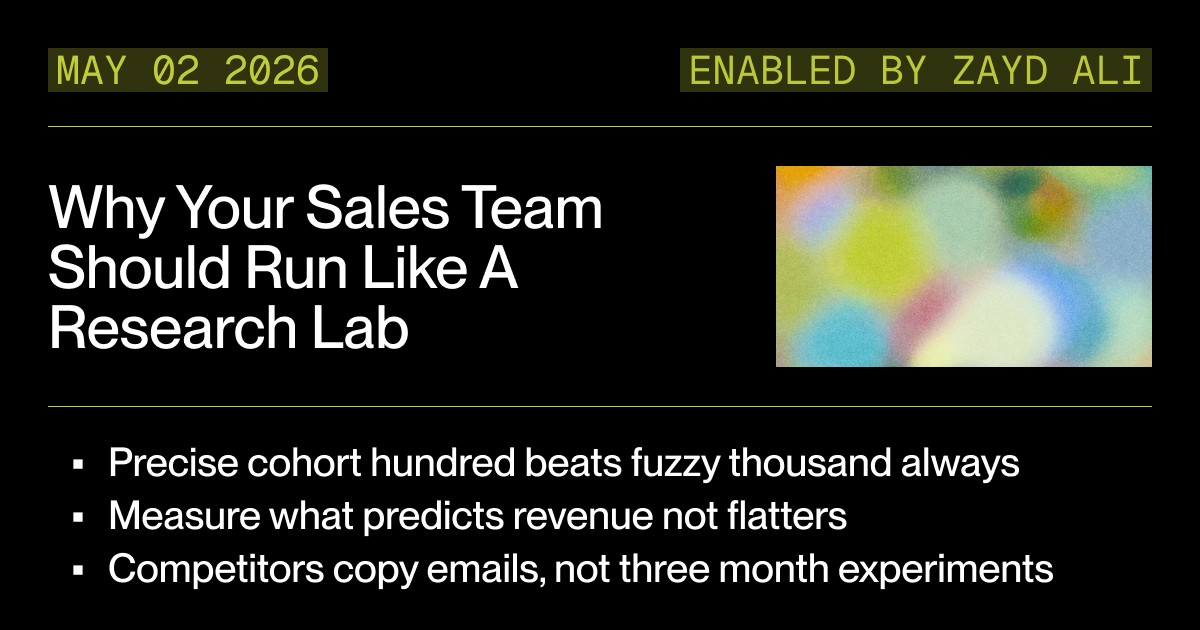
Why Your Sales Team Should Run Like a Research Lab: The 100-Prospect Experiment
Read
Read
Which channels does Valley support?
Valley supports LinkedIn outreach, including connection requests and InMails. Valley users safely send 1000-1200 messages per seat every month.
How safe is it and does Valley risk my LinkedIn account?
Do I have to commit to an Annual Plan like other AI SDRs?
How does Valley personalize messages?

VALLEY MAGIC