

Valley
Published:
Updated:
Published December 7, 2025 · Updated August 31, 2026
You spend hours researching prospects and writing cold DMs that barely get a reply, and you start to wonder: Can AI write personalized LinkedIn messages without sounding fake? The real frustration is trying to scale outreach while still sounding human and relevant to each person you contact.
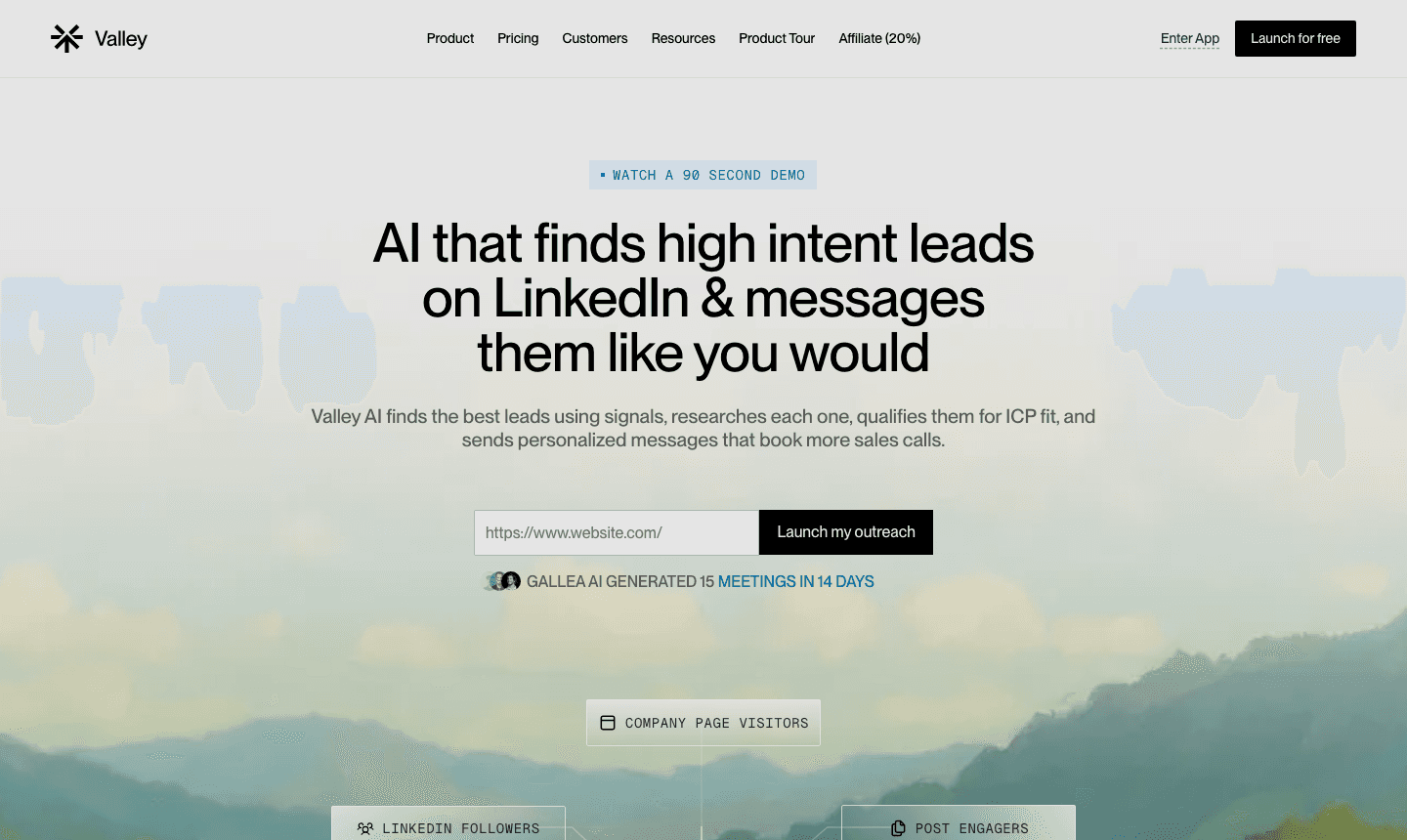
Valley helps you turn buyer signals and profile data into LinkedIn messages that feel personal, not scripted or spammy. You stay in control of your voice while AI takes on the repetitive research and drafting that usually eats your calendar.
In this guide, you will see how AI builds relevant messages, where it struggles, and how to keep a real human touch. You will learn how to choose tools, personalize at scale, and track what actually drives responses and booked meetings, so your outreach finally feels worth the effort.
Inside AI-Powered LinkedIn Messaging: From Data To Dialogue
AI tools now help you send LinkedIn messages that actually feel personal and relevant. They mix together data, research, and your unique style to save you time and create messages that connect better.
How AI Generates LinkedIn Messages
AI grabs key info about your prospects; think job role, company news, or recent activities. It hunts for meaningful signals that show buying intent or interest.
Then, it blends these signals with your company’s value props and your writing tone. The message ends up feeling like you wrote it for that person. That means you skip the hours of manual research and personalizing.
Some advanced AI tools even pick the best time to send a message, based on when your prospect usually responds. That’s a nice touch.
Key Technologies Behind AI Messaging
AI messaging leans on natural language processing (NLP) to create text that sounds genuinely human. It studies how people talk and write, so it can echo your tone and style.
There’s also behavioral signal analysis at work. This tech tracks online moves - like profile views or company changes - to spot prospects who might be ready to chat.
And with machine learning, the AI keeps getting better. Every interaction helps it adapt, so your outreach gets smarter over time.
Together, these tools help your LinkedIn messages stay personal, professional, and way more effective than a template blast.
Benefits of Using AI for Messaging
AI lets you reach way more prospects without letting message quality slip. It takes over the boring research and drafting, freeing you up to talk to actual buyers.
AI messages can be more personalized than those old templates because they use real, current data about each person. That usually means higher reply rates and better conversations.
Finally, by automating outreach, you fill your calendar faster and build a stronger sales pipeline without sounding like a robot.
Personalization In AI-Generated LinkedIn Messages
AI can help you craft messages that feel personal and relevant, and you don’t have to spend hours researching. It uses a bunch of strategies to match your tone and the recipient’s interests. But, honestly, automation still needs your input to keep things genuine. AI tools aren’t perfect, and it’s good to know their limits before you trust them fully.
Personalization Techniques Used By AI
AI pulls data from LinkedIn profiles, company info, and recent activities to shape your messages. It checks out job titles, shared connections, and behaviors like posts or comments. This way, the AI can relate directly to each prospect’s role and interests.
Some tools even learn your writing style and tone, so they mimic how you communicate. They also use timing and lead scoring to pick the best moment and method for reaching out.
Benefits include:
Reaching more people without losing relevance
Faster message creation
Better responses from targeted personalization
Balancing Automation And Human Touch
Automation saves you time, but it can sound stiff if you’re not careful. Always review AI-generated messages before sending and add a personal note or tweak the tone if needed.
Mixing AI speed with your judgment keeps messages authentic. For example, drop in a unique question or comment based on what you know. That little bit of care goes a long way.
When you blend AI with your input:
Messages sound like you
Prospects feel like real people, not targets
You avoid that dreaded “cookie-cutter” message vibe
Limitations Of AI Personalization
AI can pick out a lot of relevant details, but it just can’t get emotions or subtle context right. Sometimes, messages miss the mark or feel a little flat.
Overdoing automation can get your LinkedIn flagged or just make your messages less effective if things feel forced.
Some limits you’ll notice:
AI just can’t replace real empathy
Messages risk feeling repetitive or scripted
It all depends on getting accurate profile data
Knowing these limits helps you keep your expectations in check. Use AI as a tool, not a replacement for real outreach, and your LinkedIn efforts will stay effective and above board.
Setting Up AI Tools For Personalized Outreach
To get the most out of AI in LinkedIn messaging, you’ve got to connect it properly with your profile and pick tools built for real personalization. Setting up means some technical steps and choosing software that actually fits your outreach style and goals. Your choices here really affect how natural your messages feel and how much time you save.
Integrating AI With LinkedIn Profiles
Your LinkedIn profile is the hub for AI-powered outreach. The AI needs your profile data, connections, and activity to make messages that actually matter. You’ll usually link the AI tool with LinkedIn through secure API access or an authorized login.
A good setup means syncing your contact lists and keeping your profile fresh. AI uses this info to spot prospects and catch intent signals, like recent job changes or content interactions. That’s what helps make messages feel personal, not just a name swap.
Check your LinkedIn privacy settings so the AI can grab what it needs. If it can’t, your personalization will fall flat. Also, keep an eye on LinkedIn’s usage limits; some tools are pretty good at staying within safety rules so your account stays safe while you automate.
Selecting The Right AI Messaging Tools
Pick AI tools that fit your outreach needs and let you keep your voice. Look for platforms that handle lead research, message writing, and follow-ups, all in one spot.
Prioritize tools with signal-based personalization. These can spot buyer intent signals - like profile visits or engagement, and tweak messages on the fly. That way, you focus on people who are actually ready to talk.
Make sure your tool follows LinkedIn’s rules. Safe automation means you avoid bans and keep your outreach rolling. A unified inbox helps too, so you can track replies and manage chats easily.
Key features to check for:
AI-powered prospect research
Personalized message generation in your tone
Automated follow-ups based on response behavior
Compliance with LinkedIn activity limits
Getting the right tool set up takes some effort, but it really pays off when your calendar fills up with better meetings.
Best Practices For Effective AI-Driven Messaging
If you want your AI-powered LinkedIn messages to actually work, you need to build strong templates and tailor them carefully. The goal is messages that feel personal and relevant, even when you’re sending a lot. These steps help you connect and avoid sounding like a robot.
Crafting Compelling Message Templates
Start with an opener that grabs attention - maybe a question or a pain point you both care about. Keep your language simple and your sentences short.
Cover who you are, why you’re reaching out, and what you actually offer. End with a clear call to action, like inviting the prospect to chat.
Use placeholders for names, company info, or recent activities. That way, AI can drop in personalization details smoothly. Keep your tone friendly and professional - the message should sound like you, not a script.
Don’t cram in too much. Stick to one or two main points per message. That keeps things readable and boosts your chances of a reply.
Customizing Messages For Different Audiences
Different people want different things. Break your audience into segments - by role, industry, or company size. Tailor your themes to their real challenges.
For example, a CEO might care about growth, while an IT manager worries about efficiency or security. Use actual data and research to guide your customization.
When you personalize, mention recent news or shared connections to build trust. Skip the generic lines and avoid being too salesy. Just show how you can help, clearly and fast.
Track how people respond. If one style works for a certain group, lean into it. Good AI tools can help you test and personalize at scale, so your messages stay warm, not cold.
Measuring The Impact Of AI On LinkedIn Engagement
If you want to see how AI is changing your LinkedIn outreach, keep an eye on clear metrics that show if your messages are working. Tracking results is the only way to spot what’s landing and what’s falling flat, so you can keep improving.
Tracking Message Performance Metrics
Watch metrics like open rates, response rates, and meeting bookings. These numbers show if your personalized messages get attention and spark real conversations.
Look at:
Open rate: How many people actually read your message.
Response rate: The percentage who reply.
Conversion rate: How many replies turn into meetings.
Track how different message styles or subject lines do. That helps you spot patterns and send messages that feel personal and engaging, not robotic.
Adapting Strategies Based On Results
Keep an eye on your performance data and adjust your outreach as you go. If a message just isn’t getting replies, maybe it’s time to change the tone, trim the length, or rethink your call to action.
Try things like:
Testing different personalization elements based on prospect signals.
Mixing up your message timing and frequency.
Doubling down on what’s working; AI can help you scale up personalized messaging quickly.
Ethical Considerations In AI-Generated LinkedIn Communication
AI can write LinkedIn messages faster than you ever could, and honestly, it can boost your results, too. Still, it’s crucial to keep things real and respect people’s privacy - otherwise, what’s the point?
Building trust and lasting connections means balancing automation with authenticity. Not always easy, but worth it.
Maintaining Authenticity
If you’re using AI for LinkedIn messages, don’t just settle for robotic, generic copy. Aim for something that sounds like you: human, a little imperfect, and not afraid to show some personality.
Here’s what helps:
Let AI draft, but tweak messages so they reflect your actual style.
Add details that matter to each prospect’s profile.
Skip the obvious templates; nobody likes feeling like message #237 in a sequence.
When you sound authentic, people feel like you actually care. That’s when real conversations start happening.
Respecting User Privacy
AI can help personalize your LinkedIn outreach, but you’ve got to respect privacy and stick to LinkedIn’s rules. Only use info that’s public or shared by the prospect; don’t get sneaky with data scraping.
A few things to remember:
Let AI analyze signals like profile changes or recent activity, but stay above board.
Don’t cross the line by grabbing private or off-platform info.
Stick to LinkedIn’s daily message limits so you don’t get flagged or restricted.
Future Trends In AI For LinkedIn Messaging
AI is shaking up how you connect on LinkedIn, making messages smarter and more personal. New tools are learning your tone, researching prospects faster, and letting you reach out in a way that feels, well, actually human.
You might find yourself booking more meetings without spending hours writing the same thing over and over.
Emerging Capabilities
AI tools now do more than just send messages. They watch for signals - like prospect activity, company news, and buying behavior - almost in real time.
This means AI can help you craft messages that feel personal, but you don’t have to spend your whole afternoon researching.
You’ll probably see AI:
Learning your tone and writing quirks
Timing messages for when your prospects are actually online
Focusing on leads who seem ready to talk
Predicted Advancements In Personalization
Personalization is about to get a lot deeper. AI will soon pick up on your prospect’s current challenges by digging through LinkedIn posts, news, and industry chatter.
That means your messages could actually offer value, not just “Hi [Name], hope you’re well.”
Imagine being able to:
Adapt outreach to what’s going on in a prospect’s business right now
Pull in context from all over the place to make your message stand out
Scale up personalized outreach and still sound like yourself
Stop Guessing If AI Can Personalize Your LinkedIn Outreach
Low reply rates, manual research, and copy-paste templates make LinkedIn outreach feel like a grind. The real question is not just “can AI write personalized LinkedIn messages,” but whether those messages actually turn into conversations and meetings with the right people.
Valley helps you turn signals, profiles, and context into messages that feel human while AI handles the heavy lifting in the background. You stay focused on real conversations, not on rewriting the same cold DM for the hundredth time.
If you are ready to fix low response rates and protect your time, now is the moment to act. Book a demo (teams of 5+) to see how AI-powered LinkedIn messaging can finally support the way you sell, instead of slowing you down.
Frequently Asked Questions
How Do I Use An AI Tool To Create Personalized LinkedIn Messages?
Pick an AI tool that plugs into LinkedIn and learns your style. Feed it info like your prospect’s job, company, and recent activity. The AI will use that to write messages that sound like you.
Are There Any Free Tools Available For Generating LinkedIn Posts Using AI?
Some free AI writing tools exist, but honestly, they usually miss out on LinkedIn-specific stuff like tone matching or live research. For real results, look for tools built for LinkedIn outreach; they’re just better at this.
What Are The Best Practices For Sending Bulk Messages On LinkedIn With AI Assistance?
Personalize your messages using recipient signals. Don’t blast out too many messages at once, or you’ll get flagged. Let AI automate research, but always review messages before hitting send. Automation is great, but don’t skip the human part.
Is It Possible To Rewrite LinkedIn Messages Using AI If They’re Not Effective?
Absolutely. AI can look at engagement data and suggest tweaks. Rewrite, test, and optimize until you get better response rates.
How Can I Ensure My LinkedIn Messages Remain Personalized When Using AI?
Use tools that pull in signals like recent posts, company news, and buyer intent so you can add details that actually matter. Avoid those cookie-cutter templates. The best AI learns your quirks, so your messages still sound like you.
Can LinkedIn Detect And Flag Messages That Have Been Generated By AI?
LinkedIn keeps an eye out for stuff that feels spammy or just repeats itself. They’re not really out to catch AI-generated messages specifically.
The more thoughtful AI tools stick to LinkedIn’s safety guidelines and try to act like real people, which helps them fly under the radar. If you want to stay on LinkedIn’s good side, focus on writing fewer, better messages instead of blasting out a ton.