Try Valley
Put your outbound workflow to work.

Zayd Ali
Published:
Updated:
Published May 23, 2026 · Updated August 31, 2026
Running a sales company means I get sold to constantly.
All day I get LinkedIn DMs, cold emails, and the occasional cold call to a number I didn’t know was public.
I read most of them.
Partly out of professional curiosity. Partly because you learn more about what’s wrong with outbound by being on the receiving end of it than from almost anything else.
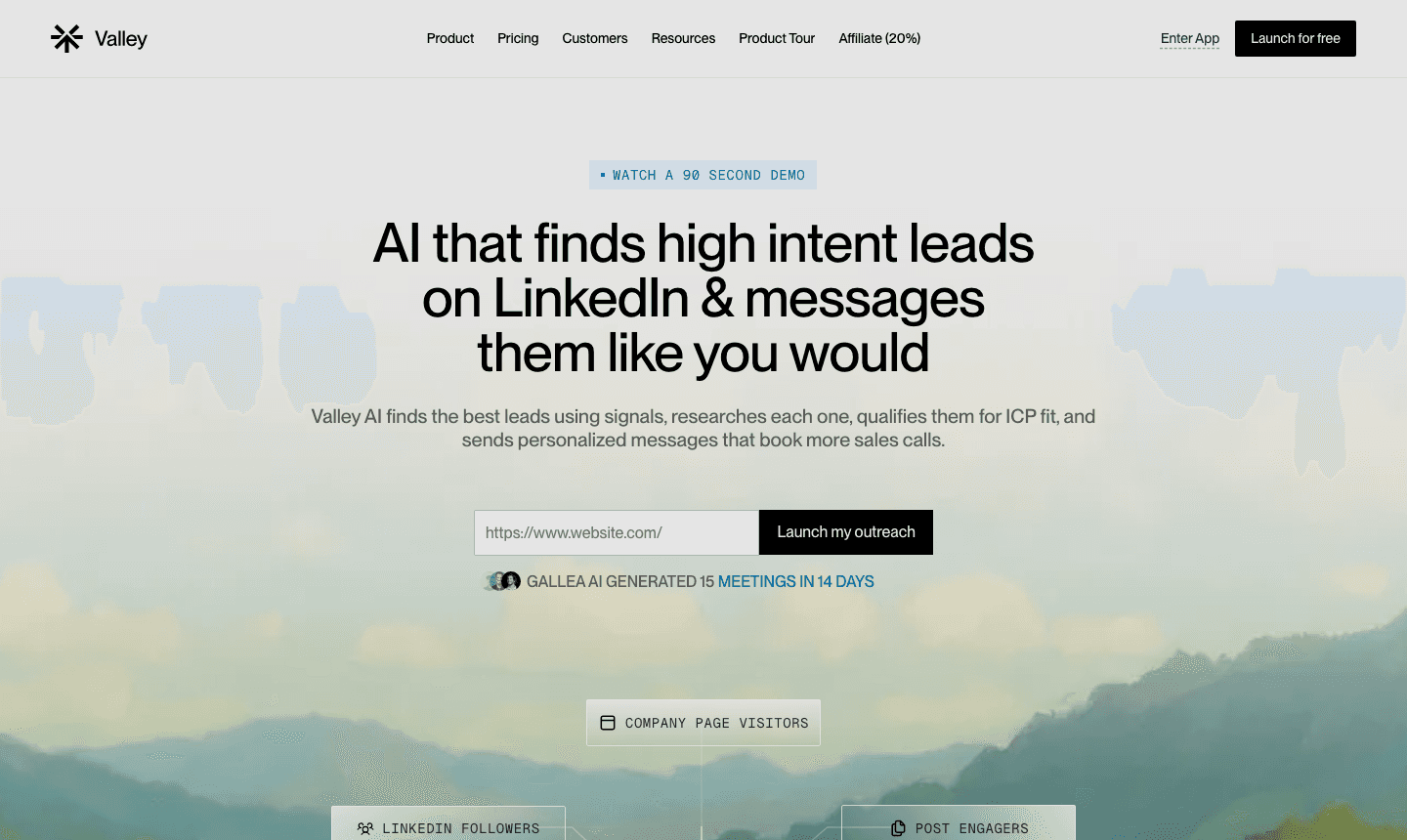
Most of what I receive is bad in exactly the ways I’d predict. Some of it is bad in ways that still manage to surprise me. And occasionally, something lands in my inbox that makes me actually stop.
This week we’re talking about those.
btw get Enabled in your inbox each week!
The Blue Bottle Problem: Personalization Without Relevance
There’s an example I keep coming back to.
A while back I got a message that opened with something like: “Hey Zayd, noticed you’re based in NYC, have you tried Blue Bottle Coffee? Anyway, come join our webinar.”
Technically personalized. Completely useless.
The sender thought they were being clever. They had a local hook. The problem is that personalization without relevance is just decoration. It makes the message look like it’s about you without actually being about you, and people feel that gap immediately.
We are remarkably good at distinguishing between someone who has thought about our actual situation and someone who has just run our name through a template.
The pattern shows up constantly:
The compliment that could apply to anyone
The observation about a company milestone that has nothing to do with why they’re reaching out
The “I was impressed by your recent post” opener followed by a pitch with zero connection to what the post was actually about
► Book a demo (teams of 5+)and explore how Valley can support your use case
Here are my favorite finds of the week:
Discovery call red flags checklist (link)
Favorite template to get deals unstuck when leads ghost you (link)
Don’t sell through users to get buyers (link)
Key to a valuable lead magnet people can’t refuse (link)
Habits that lead to PMF with founder-led sales (link)
► LinkedIn and email in one flow: try it free for 7 days with Valley

Give your sales team
an unfair advantage.
1. Specificity That Could Only Apply to Me
Something that shows they actually looked at what Valley does and thought about a real connection to their product.
The bar for this is higher than most people think. It means doing actual research and being willing to write a message that won’t work on anyone else. That’s the cost. That’s also why it works.
2. A Problem Framing That’s Honest
Some of the most effective cold messages I’ve received have opened with something like: “We probably caught you at the wrong time, but here’s why I thought this was worth sending anyway.”
That acknowledgment that the interruption is real, and that they’re betting on it anyway, shows confidence without arrogance. It’s disarming in a way that “I’d love to connect” never is.
3. A Short, Low-Friction Ask
Every message that has turned into a conversation has ended with something low-friction.
Not “do you have thirty minutes to jump on a call this week?” First contact is too early for thirty minutes.
“Would this be worth a five-minute conversation, or should I come back next quarter?” is a completely different energy. It gives the recipient an easy out and signals that you respect their time. That combination gets responses.
💡 LinkedIn Tip of the Week
Messages under 100 words get 50% higher response rates than messages over 200 words. Shorter is always better. If you can’t cut it, the message isn’t ready to send.
The AI Tell
My AI-detection instincts are probably better tuned than most, given what I do all day. But those instincts are becoming more common across the board.
Certain phrases have become signature tells:
“I was impressed by”
“That resonates with me”
“I noticed you’re doing incredible work”
These have become the markers of someone who hit generate and didn’t edit.
AI-assisted messaging isn’t inherently bad. We literally built Valley around it. The difference is in the training and the editing.
A message that went through a thoughtful approval process, shaped by someone who actually knows how to sell, reviewed by a human before it hit send: that can be genuinely good.
A message that got generated and shipped as-is almost always reads like a message that got generated and shipped as-is.
If you’re using AI in your outreach and haven’t spent serious time teaching it to sound like you, you’re just producing mediocrity faster.
🎁 Free Resource
The Ultimate LinkedIn Hook Writing Guide: A Complete System for High Performing Content: claim it free.

Give your sales team
an unfair advantage.
A few weeks ago I got a message from someone who had clearly read a few of my newsletters.
They referenced a specific point I’d made about the difference between personalization and relevance, said it changed how they’d been thinking about their own outreach, and then made a connection to something their company was working on that was genuinely adjacent to that idea.
The ask was simple: they wanted to know if I had thoughts on a specific problem they were running into.
I responded within the hour.
No template caught me. A specific, honest, low-friction message did.
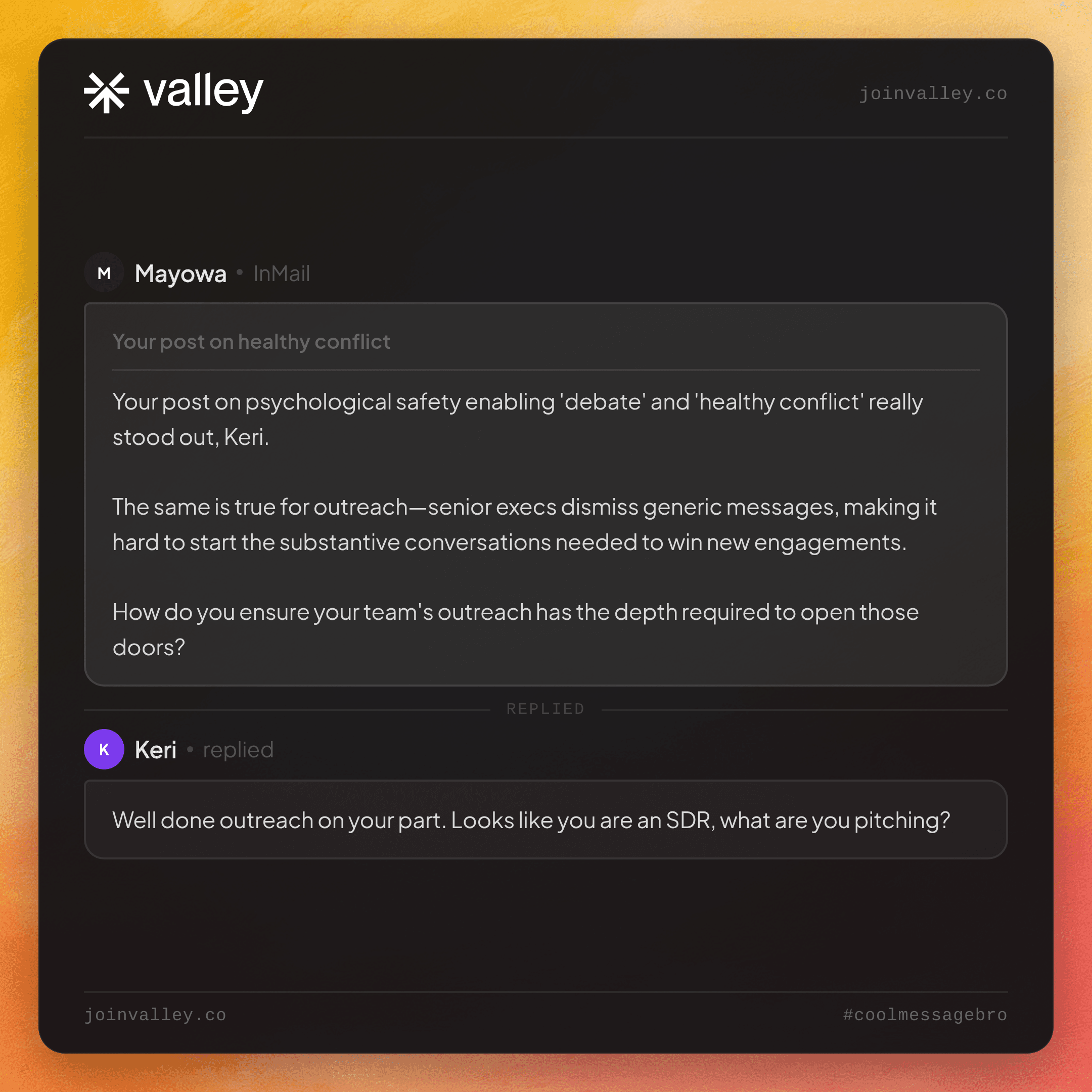
► Check Out Valley’s Incredible Outreach: A compilation of real time messages and responses!
How Valley Approaches This Problem
Valley is built on the same principle: relevance over volume.
Rather than sending generic messages at scale, Valley identifies warm prospects (people who have already engaged with your profile, content, or website), qualifies them against your ICP, and generates personalized outreach based on real signals, not templates.
The AI is trained on your voice, your offer, and your ICP. Every message goes through a human review step before it sends. That’s the difference between outreach that reads like you wrote it and outreach that reads like a tool wrote it.
Real campaigns average 3x better results than standard outreach, because the messages are relevant rather than just personalized.
Teams that need custom CRM integrations or AI sales workflows can work with AY Automate to build around their existing systems.
Frequently Asked Questions
What is the difference between personalization and relevance in cold outreach?
Personalization is including someone’s name, company, or a surface detail in a message. Relevance is demonstrating that you understand their actual situation and have a genuine reason to reach out related to it. Personalization without relevance reads as template-based decoration. Recipients feel the difference immediately. Relevance requires real research and a message that wouldn’t work on anyone else.
Why do AI-generated cold messages get lower response rates?
AI-generated messages that are sent without editing tend to use predictable phrases (“I was impressed by,” “that resonates with me”) that have become widely recognized as AI tells. Recipients now detect these patterns quickly. The result is 45% fewer interactions than human-written messages. AI-assisted outreach can work well when the model is trained on the sender’s actual voice and every message goes through human review before sending.
What makes a cold outreach ask more likely to get a response?
Low-friction asks significantly outperform high-commitment ones. “Would this be worth a five-minute conversation, or should I come back next quarter?” outperforms “Do you have thirty minutes this week?” because it signals respect for the recipient’s time and gives them a face-saving out. The goal of first contact is not to book a meeting. It is to earn permission for a next step.
How long should a cold LinkedIn message be?
Under 100 words. Messages under 100 words get 50% higher response rates than messages over 200 words. Length signals effort in the wrong direction: a long cold message communicates that the sender is optimizing for their own information delivery rather than the recipient’s time.
What should you actually research before sending a cold message?
Enough to write something that couldn’t be sent to anyone else. That means understanding what the company does, what problem they likely have that you solve, and connecting your outreach to something specific about their actual situation. A company milestone, a piece of content they published, or a signal of interest (a profile view, a post engagement) all give you legitimate, specific material to work with.
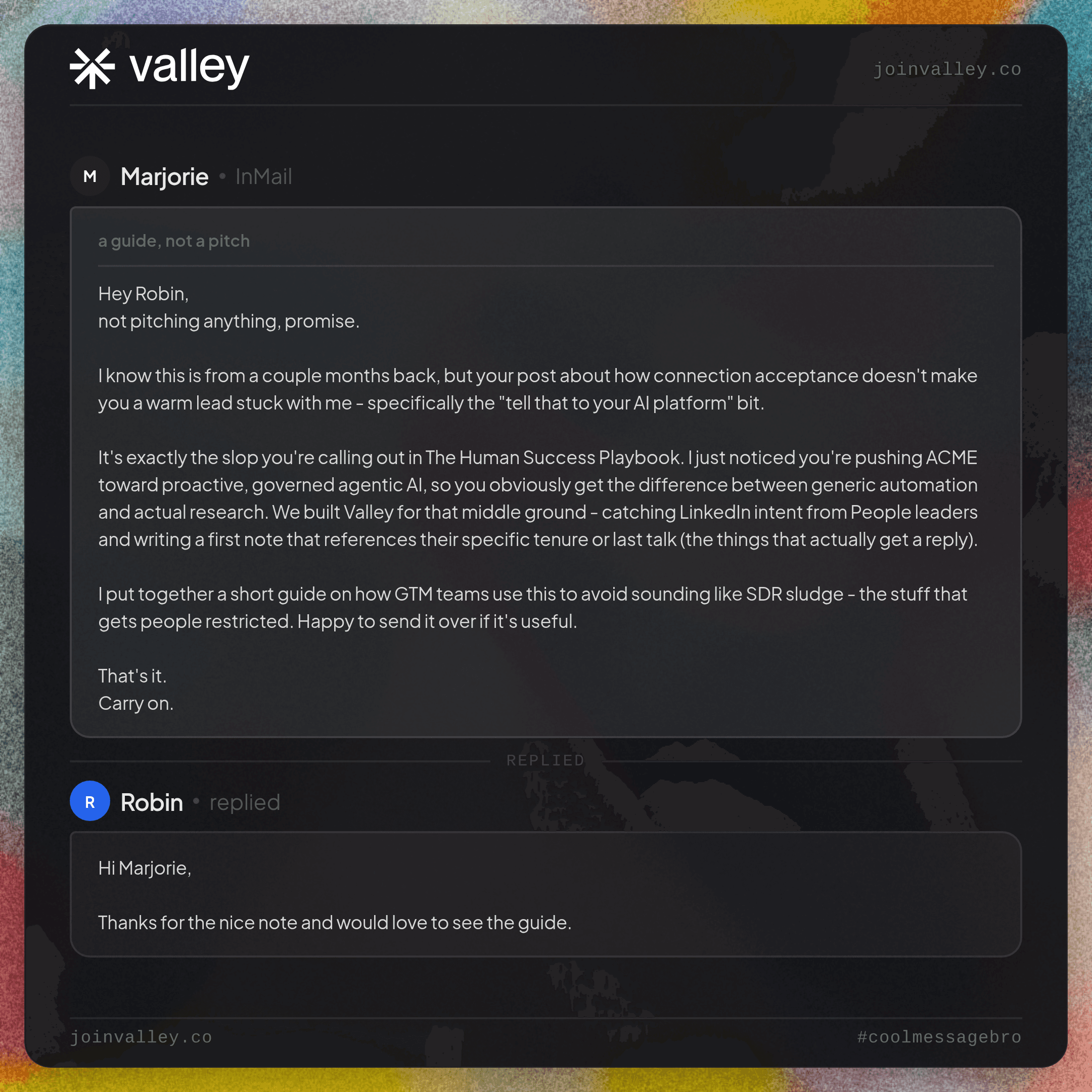
See more of Valley’s outreach examples: coolmessagebro.com
Generate more demos using LinkedIn: Book here
Become a Valley partner and earn 20% recurring commission: Join the affiliate program
Related: how Valley works.
See also: cold email templates for B2B sales.
► Thirty researched emails a day from your own inbox: see it free for 7 days


