
Try Valley
Put your outbound workflow to work.

Saniya Sood
Published:
Updated:
Published June 15, 2025 · Updated August 31, 2026
Every day your best prospects are telling you they’re ready to buy; they’re viewing your LinkedIn profile, engaging with posts about problems you solve, visiting your pricing page after clicking through your content, or changing jobs at companies that fit your ICP perfectly. The signal is right there. The problem is timing. By the time a rep notices and reaches out manually, the prospect has moved on.
This is the core problem Valley was built to solve. After working with hundreds of sales teams from early-stage startups to companies like GoCanvas (who 30x’d their outbound pipeline) and Salesforge (who hit 70% reply rates) the same pattern shows up every time. The teams winning outbound in 2026 aren’t sending more messages. They’re sending the right message within a narrow window when someone is actually in buying mode.
What does “in buying mode” actually look like on LinkedIn? It’s not a single profile view. It’s a VP of Sales at a 200-person SaaS company who viewed your profile at 9 AM on a Tuesday, liked your post about SDR efficiency two days earlier, and whose company just announced a Series B round. That combination means something. Each signal alone is noise together, they’re a buying window that closes within 24-48 hours.
Valley’s job is to catch that window before your competitors do. Here’s exactly how the signal hierarchy works, and how each tier translates into booked meetings.
What Actually Predicts Buying Intent
Tier 1: Immediate Action Signals (Priority Response)
The single most valuable moment in any outbound motion is when a prospect visits your pricing page not a blog post, not your home page, specifically your pricing page. That visit alone is a strong intent signal. When it comes from someone who also viewed your profile or engaged with your content in the previous 72 hours, you’re looking at a compounding signal that converts at 3-4x the rate of a cold connection request sent to the same person on a different day.
Valley surfaces these moments in real time. When a prospect hits your pricing page and their LinkedIn history shows active category research, the system triggers personalized outreach automatically within minutes of the visit, while they’re still thinking about your solution.
Profile View Reciprocity:
Multiple views from the same company indicating buying committee coordination
Views following specific content engagement showing heightened interest
Business hours viewing patterns versus casual browsing behavior
C-level profile views signaling decision-maker research
Content Engagement Intensity:
Saving posts for later reference indicates serious consideration
Detailed comments demonstrating subject matter expertise
Cross-posting with additional commentary showing thought leadership positioning
Multiple interactions across different content pieces over time
What acting on Tier 1 signals actually looks like in practice:
When Salesforge started routing Tier 1 signals through Valley instead of relying on manual outreach, their reply rate reached 70%. Not because their messaging was dramatically better because their timing was. The same message sent to a cold prospect converts at 5-8%. The same message sent 12 minutes after that prospect visited your pricing page, referencing what they were researching, converts at a completely different rate.
The practical shift: acting on Tier 1 signals means you’re not “following up.” You’re responding to demonstrated interest at the exact moment it exists. That’s the difference between 2% reply rates and 70%.
Tier 2: High-Intent Professional Signals (48-Hour Window)
New executives have a narrow window typically the first 60-90 days where they’re actively evaluating tools and building their stack. They haven’t committed to existing vendors yet, they have budget to spend, and they’re motivated to show results quickly. A VP of Sales who just joined a 150-person company is one of the highest-value prospects you can reach, and most outbound teams miss them entirely because they’re not monitoring for the signal.
Valley detects these role transitions automatically across your target accounts. When someone in your ICP moves into a decision-making role, the system flags it and triggers outreach timed to the first wee before they’ve been flooded with competitor messages and before they’ve locked in their existing relationships.
Company Milestone Indicators:
Funding announcements suggesting expansion mode and increased budgets
Office expansions or new market entries indicating growth initiatives
Leadership changes creating opportunities for strategic pivots
Product launch announcements revealing scaling challenges
Professional Achievement Recognition:
Work anniversaries often coinciding with budget and planning cycles
Promotions to decision-making roles indicating new responsibilities
Industry award recognition creating natural conversation starters
Conference speaking engagements showing thought leadership positioning
Tier 3: Medium-High Intent Behavioral Patterns
Social Proof Seeking:
Requesting vendor recommendations in LinkedIn posts or comments
Participating in industry polls about solutions and preferences
Joining industry-specific groups suggesting active research
Following competitor executives indicating evaluation activity
Network Expansion Research:
Following company pages after content engagement
Connecting with industry peers in similar roles
Engaging with thought leadership in relevant solution categories
Attending virtual events and webinars in target categories
Valley’s Signal-to-Pipeline Engine
Real-Time Signal Detection and Response
Valley automatically monitors and responds to LinkedIn signals:
Multi-Source Signal Integration:
Website visitor identification with immediate LinkedIn outreach triggering
LinkedIn post engagement tracking converting content interaction into personalized conversations
Profile view notifications generating reciprocal connection requests
Job change monitoring with automated congratulatory sequences
Intelligent Signal Scoring:
Intent level assessment based on signal type and behavior patterns
ICP alignment verification ensuring prospects match ideal customer profiles
Quality-focused filtering determining optimal prospects for outreach
Competitive intelligence identifying prospects evaluating alternatives
The Valley Signal Response Framework
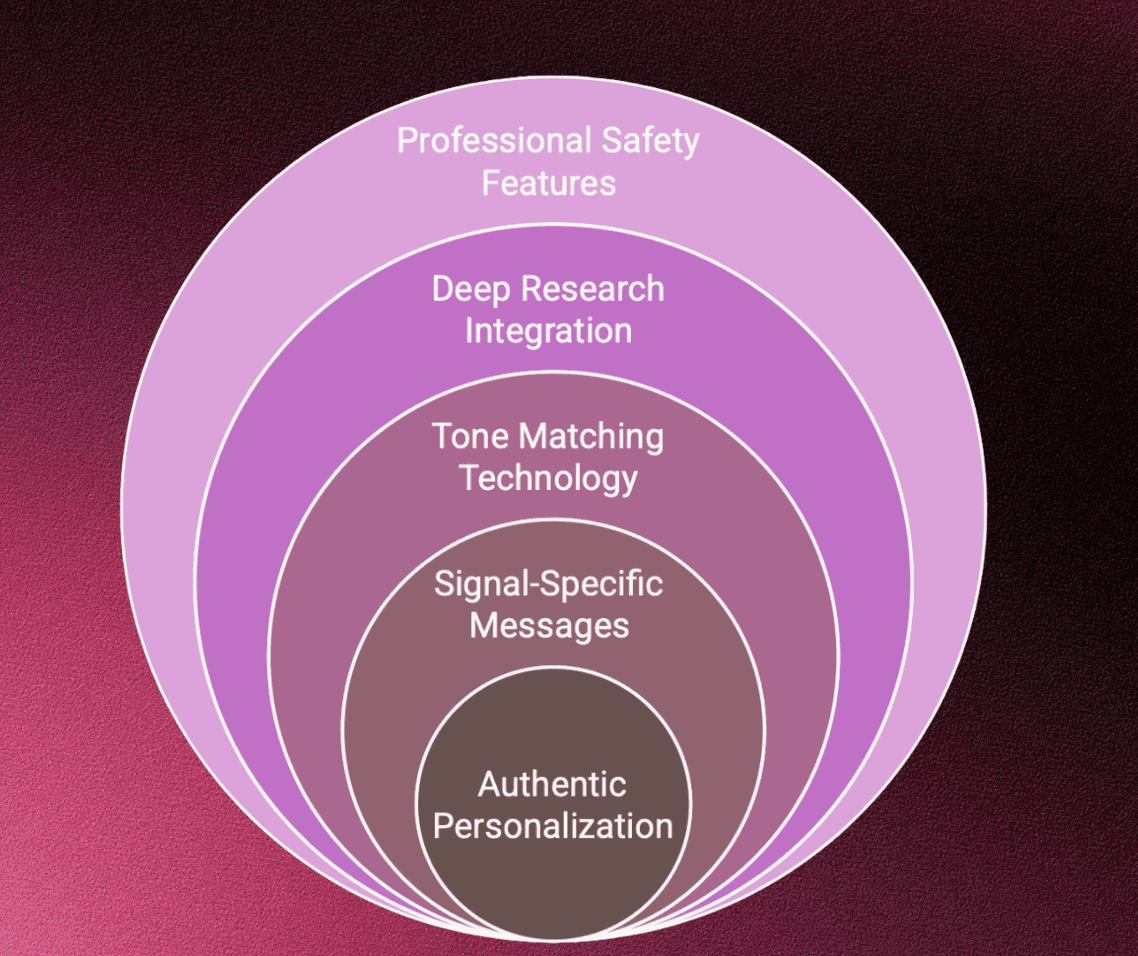
Automated Signal Response: Valley responds to high-intent signals automatically, capitalizing on the critical window when businesses responding quickly are significantly more likely to connect than those waiting days or weeks.
Signal-Specific Message Generation:
Website visitor messages referencing specific pages viewed
Job change congratulations with role-relevant value propositions
Content engagement responses continuing conversations from posts or comments
Profile view acknowledgments with mutual interest positioning
Authentic Personalization at Scale:
Tone matching technology ensuring messages sound like they come from you
Deep research integration incorporating prospect background and company context
Value proposition alignment connecting your solution to prospect-specific challenges
Professional safety features protecting account reputation during automated outreach
► See your own buying signals today: start a free 7-day Valley trial

Give your sales team
an unfair advantage.
Stage 1: Signal Detection and Qualification (Real-Time)
Automatic Signal Monitoring: Valley continuously monitors website visitors, LinkedIn engagement, and profile activity, automatically scoring prospects based on intent level and ICP alignment.
Qualification Criteria:
Company size and industry matching ideal customer parameters
Role and seniority indicating decision-making capability
Recent activity patterns suggesting active solution evaluation
Buying committee indicators through multiple stakeholder engagement
Stage 2: Immediate Response Generation
Context-Aware Message Creation: Valley's AI analyzes the specific signal trigger and generates personalized outreach that references the exact behavior that prompted contact.
Signal-Specific Templates:
Website visitor: "I noticed you were checking out our [specific page] - the timing might be perfect for a conversation about [relevant challenge]"
Job change: "Congratulations on the new role at [company]! Given your focus on [responsibility area], this might be relevant timing to discuss [solution]"
Content engagement: "Thanks for engaging with my post about [topic] - your comment about [specific point] suggests you're dealing with [challenge]"
Stage 3: LinkedIn Safety and Optimization (Ongoing)
Account Protection Measures:
Open/closed profile detection preventing wasted outreach on inaccessible prospects
Daily limit compliance never exceeding 25 connection requests per day
Professional messaging standards maintaining credibility essential for B2B relationships
Dedicated IP infrastructure optimizing deliverability while ensuring account safety
Stage 4: Multi-Touch Sequence Execution
Systematic Follow-Up Process: Valley executes intelligent multi-touch sequences that build relationships rather than just sending repeated pitches.
The Valley Conversion Sequence:
Initial: Signal-triggered outreach with specific context
Follow-up: Value-first content sharing with relevant insights
Engagement: Social interaction with prospect's LinkedIn content
Resource: Industry-specific insights or case studies
Meeting: Low-pressure calendar booking request
Stage 5: Training Center Optimization (Continuous)
Performance-Based Improvement: Valley's Training Center enables continuous optimization of message quality and conversion rates.
Feedback Integration:
Response rate tracking by signal type and message variation
Meeting booking analysis identifying most effective approaches
Message refinement based on prospect engagement patterns
Best practice documentation for systematic improvement
Stage 6: Pipeline Attribution and Reporting
Revenue Impact Measurement: Valley tracks complete attribution from initial signal detection through deal progression.
Pipeline Metrics:
Signal-to-response conversion measuring initial engagement success
Response-to-meeting rates tracking calendar booking efficiency
Meeting-to-opportunity progression analyzing qualification accuracy
Opportunity progression tracking demonstrating pipeline impact
Valley Customer Success: Signals to Pipeline Results
$150K Pipeline in 4 Months
"We're looking at about $150k in pipeline in about four months. The messaging is what impressed me most. I have seen really, really nicely crafted messages that I steal for my own manual outreach too. It sounds like a real human."
Signal-Based Implementation:
Website visitor automation converting pricing page visits into personalized LinkedIn outreach
Content engagement sequences turning post interactions into qualified conversations
Job change monitoring capturing prospects during optimal transition periods
Deep Signal Intelligence
"I've been pleasantly surprised by how deep the system goes in scouring not just the details that can be found on LinkedIn, but also the specific nuances of information about individuals and companies and current events."
Signal Detection Results:
Profile view reciprocity generating strong connection acceptance rates
Content engagement conversion turning likes and comments into meeting requests
Company milestone targeting using funding and growth announcements
Superior Meeting Booking Through Signals
"I've been doing this about 12 years and I've never used a tool like this before. Valley seems to have booked us more meetings than anything else that we're using right now."
Signal-to-Meeting Conversion:
Behavioral pattern recognition identifying prospects showing multiple engagement signals
Timing optimization responding to signals during peak receptivity windows
Qualification accuracy ensuring meetings with prospects who can actually buy
LinkedIn vs Email Performance
"Our response rate runs 6 to 10% probably... like triple compared to email."
Multi-Channel Comparison:
LinkedIn via Valley: 6-10% response rates
Email campaigns: 2% response rates
LinkedIn advantage: Professional context and authentic personalization
Signal-Based vs. Generic LinkedIn Outreach Performance
Response Rate Excellence
Valley's Signal-Based Results:
6-15% response rates for signal-triggered outreach
3-4x higher engagement compared to template-based automation
Quality conversation generation from signal-based sequences
Traditional Generic Outreach:
1-3% average response rates for cold LinkedIn messaging
Template fatigue reducing effectiveness over time
Generic messaging failing to capture prospect attention
Performance Multiplier: 3-4x improvement in engagement through signal-based targeting and intelligent personalization.
Time and Efficiency Impact
Valley's Automated Advantage:
Continuous monitoring ensuring no signals are missed
Immediate automated response while prospect interest is active
15+ hours saved per week on manual research and outreach
Manual Response Challenges:
Delayed signal recognition due to manual monitoring limitations
Missed opportunity windows from slow response times
Resource-intensive manual research and personalization requirements
Quality vs. Quantity Focus
Signal-Based Economics:
Higher conversion rates through targeted, relevant outreach
Reduced prospect volume while maintaining superior results
Professional reputation protection through intelligent, contextual messaging
Traditional High-Volume Approaches:
Spray and pray methodologies requiring massive prospect lists
Generic messaging that damages sender reputation
Low conversion rates despite high message volumes
Valley's Competitive Signal Intelligence
Signal Detection Capabilities vs. Alternatives
Valley's Complete Approach:
Website visitor identification with real-time LinkedIn outreach triggering
LinkedIn engagement tracking across posts, comments, and profile views
Job change monitoring with automated congratulatory sequences
Multi-signal aggregation for sophisticated prospect scoring
Built-in LinkedIn outreach execution in single platform
Common Room Limitation:
Signal detection only without execution capabilities
Requires separate tools for LinkedIn outreach implementation
Signal-to-action gap creating delays between detection and engagement
Enterprise pricing limiting accessibility for growing teams
HeyReach Basic Signals:
Limited signal detection compared to Valley's complete monitoring
Agency-focused pricing with unlimited accounts model
Template-based responses lacking Valley's intelligent personalization
No website visitor integration missing high-intent behavioral triggers
The Valley Signal Advantage
Only Platform Combining:
Real-time signal detection across multiple LinkedIn and website sources
Immediate automated response with intelligent personalization
LinkedIn safety mastery protecting professional reputation
Complete attribution tracking from signal detection through pipeline
LinkedIn-Only Strategic Focus: While competitors spread across multiple channels, Valley's LinkedIn specialization delivers deeper personalization, better deliverability, and higher response rates on the platform where B2B relationships actually develop.

Give your sales team
an unfair advantage.
Valley Setup for Signal Success
Week 1: Signal Foundation
Website visitor tracking integration with LinkedIn outreach automation
LinkedIn monitoring configuration for profile views and content engagement
ICP qualification parameters ensuring signal relevance
Writing style setup for authentic tone matching
Week 2: Sequence Optimization
Multi-touch sequence configuration for sustained engagement
Training Center utilization for message quality improvement
Response tracking setup measuring conversion at each stage
Feedback integration for continuous improvement
Week 3+: Scale and Optimize
Signal source expansion adding job change and company milestone monitoring
Volume optimization increasing outreach while maintaining quality
Attribution tracking connecting signals to pipeline and revenue
Performance refinement based on conversion data and prospect feedback
Signal-to-Pipeline KPIs
Leading Indicators:
Signal detection accuracy ensuring high-intent prospect identification
Message quality scores from Training Center feedback
Initial response rates tracking engagement with signal-triggered messages
Connection acceptance rates for profile view and engagement responses
Lagging Indicators:
Meeting booking rates from signal-triggered sequences
Pipeline generation attributable to specific signal types
Deal progression rates for signal-originated opportunities
Revenue attribution demonstrating ROI from signal-based investment
The Pattern Across Every Team That’s Made This Work
Every Valley customer who’s gone from inconsistent pipeline to predictable revenue has made the same fundamental shift: they stopped treating LinkedIn as a broadcast channel and started treating it as a real-time intent feed.
The signals were always there. GoCanvas was always generating intent signals they just weren’t capturing them. ThinkFish’s 380+ monthly meetings don’t come from volume; they come from responding to the right signals faster than anyone else in their prospects’ inboxes.
The difference between a team that books 5 meetings a month from LinkedIn and one that books 50 isn’t effort. It’s how quickly they can identify a buying window and how relevant their message is when they step into it.
If you want to see which signals in your specific ICP are going unresponded to right now, that’s exactly what a Valley demo shows you, your actual pipeline sitting in LinkedIn activity you haven’t acted on yet.
Book a demo (teams of 5+) today and discover how Valley transforms your prospects’ LinkedIn activity into predictable pipeline.
Experience the platform that doesn’t just detect signals, it converts them into the conversations and meetings that drive real business growth.
Every LinkedIn signal represents buying intent waiting to be converted.
Valley ensures your team captures and converts these opportunities while competitors miss them entirely, turning prospect behavior into pipeline advantage that compounds over time.
► You’ve got more intent data than you think: see it inside a free 7-day Valley trial


