How Do Valley's Limits and Safeguards Protect Users?

Try Valley
Make LinkedIn your Greatest Revenue Channel ↓

Saniya Sood
Published:
What Are Valley's Hard Limits for Daily LinkedIn Activity?
Valley enforces non-negotiable daily limits aligned with LinkedIn's safety thresholds: maximum 30 connection requests per day, maximum 40 InMails per day, and unlimited follow-ups to existing connections. These limits are hardcoded - users cannot exceed them regardless of settings. Valley automatically manages distribution across campaigns if multiple are active.
Monthly, this translates to approximately 700 connection requests and 800 InMails to open profiles, plus closed-profile InMails based on your credits. Valley spreads activity throughout the day with randomized timing between 45 seconds and 5 minutes per action. This natural pattern has resulted in zero customer suspensions since October 2023.
► Book a demo and explore how Valley can support your use case

How Does Valley Prevent LinkedIn Account Restrictions?
Valley's safety architecture involves multiple protective layers. Technical safeguards include dedicated IP addresses per account, cloud-based infrastructure avoiding browser automation, randomized action timing and patterns, and automatic throttling when approaching LinkedIn limits.
Behavioral safeguards include preventing spam-pattern messaging, enforcing cooling-off periods, and detecting unusual activity patterns.
Valley's advisory board of LinkedIn insiders provides advance warning of algorithm changes. This insider knowledge helped Valley proactively adjust when LinkedIn tightened restrictions in 2023, protecting customers while competitors faced widespread suspensions.
Can Valley Detect When Accounts Are at Risk?
Valley monitors multiple risk indicators to protect accounts. The platform tracks daily activity approaching limits, weekly patterns suggesting automation, response rates indicating spam filtering, and connection acceptance rates showing profile health. When risk indicators emerge, Valley automatically adjusts sending patterns, reduces daily volumes temporarily, and increases randomization.
Users receive alerts if concerning patterns emerge, though this rarely occurs given Valley's conservative limits. The platform would rather undersend than risk account health. This conservative approach frustrates some users wanting higher volume but has maintained Valley's perfect safety record.
► Book a demo and explore how Valley can support your use case
What Happens If LinkedIn Changes Their Restrictions?
Valley's LinkedIn advisory board provides advance notice of policy changes, typically learning about updates 2-3 months before implementation. This lead time allows Valley to adjust algorithms, update safety protocols, and notify customers of necessary changes. Historical changes have been managed seamlessly without customer impact.
Valley maintains buffer zones below LinkedIn's actual limits. When LinkedIn reduced daily connection limits from 50 to 30, Valley users were already operating at 25-30, experiencing no disruption. This conservative approach ensures stability despite platform changes.
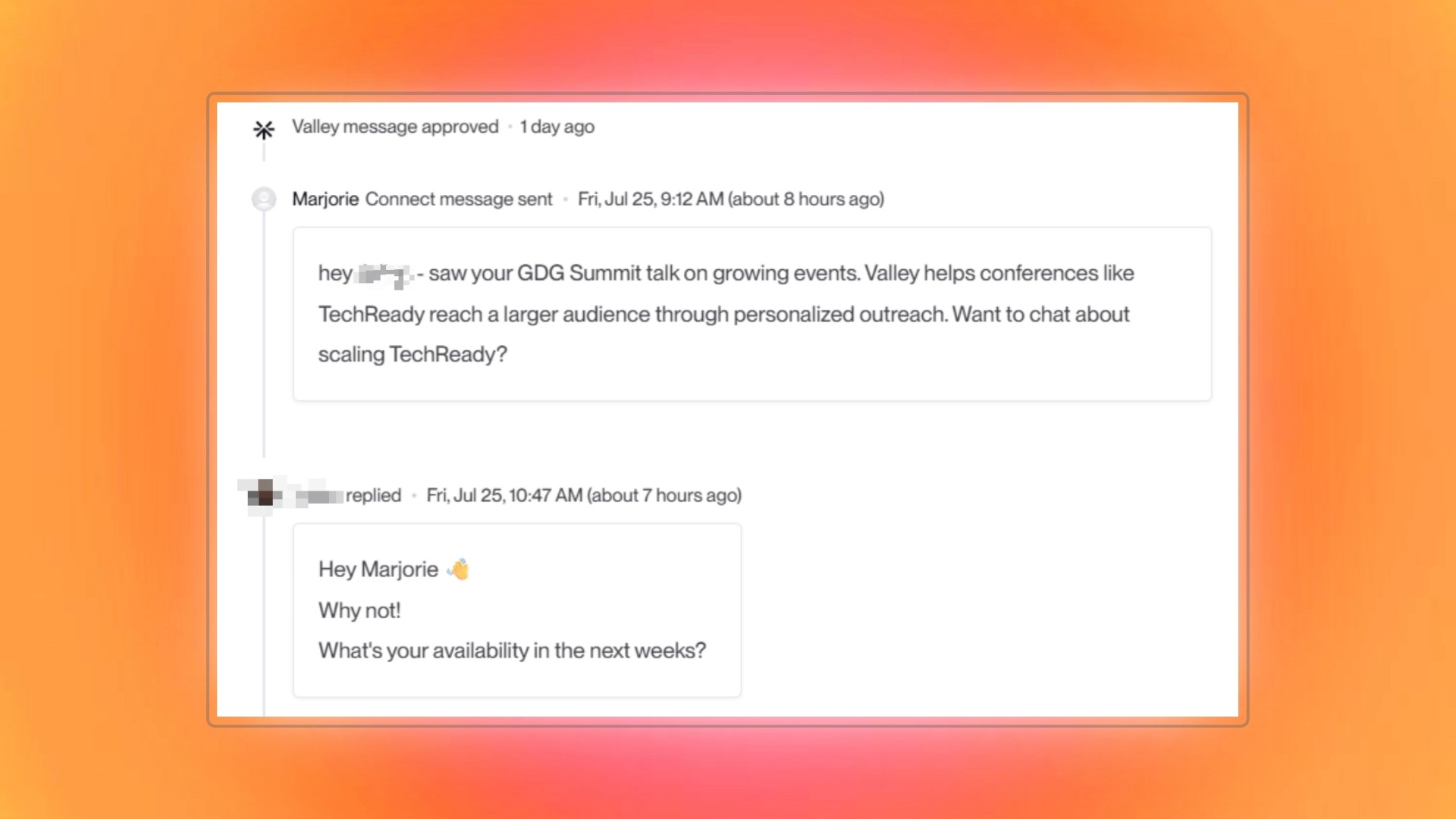
► Check Out More of Valley's Incredible Outreach: A compilation of real time messages and responses!

Does Valley's Safety Vary by Account Age or Authority?
Valley applies uniform safety standards regardless of account characteristics. While LinkedIn may treat established accounts more leniently, Valley doesn't adjust limits based on account age, follower count, or premium status. This conservative approach protects all users equally, preventing overconfidence that could risk newer accounts.
Some users with established accounts report successfully exceeding Valley's limits through manual activity without issues. However, Valley maintains consistent limits to ensure safety for all users. The platform's value comes from quality and consistency, not maximum volume.
How Does Valley Compare to Manual LinkedIn Activity?
Valley actually operates more safely than typical manual usage. Humans often exhibit patterns that trigger LinkedIn's detection: rapid sequential actions, consistent timing patterns, and mechanical behavior when prospecting. Valley's randomization and natural patterns avoid these tells.
Valley users report feeling safer using Valley than doing manual outreach. The platform prevents accidental violations like sending too many connection requests in frustration or copying-pasting messages that trigger spam detection. Valley's disciplined approach protects users from their own worst impulses while maintaining effectiveness.
What Recovery Options Exist If Accounts Face Issues?
While Valley hasn't had customer suspensions since October 2023, the platform provides recovery guidance if issues arise elsewhere. For restricted accounts, Valley recommends 2-3 week complete rest periods, gradual re-engagement starting at 5-10 actions daily, and focus on manual relationship building initially.
Valley can help rehabilitate accounts through conservative re-engagement strategies. The platform's high-quality messaging and natural patterns help restore LinkedIn's trust. Users successfully recover restricted accounts by following Valley's rehabilitation protocol, though prevention remains the primary strategy.
► Book a demo and explore how Valley can support your use case

Related Blogs

FEATURED READ
5 min
Valley vs HeyReach: Which LinkedIn Outreach Tool Wins More Qualified Meetings?
Read
Read

FEATURED READ
5 min
Valley in 2026: Is the Price Worth the Pipeline?
Read
Read

FEATURED READ
5 min
Valley vs Dripify: Which LinkedIn Outreach Tool Actually Converts in 2026?
Read
Read

FEATURED READ
5 min
Valley vs. Hiring an SDR: The Real Cost and ROI Breakdown for 2026
Read
Read
Which channels does Valley support?
Valley supports LinkedIn outreach, including connection requests and InMails. Valley users safely send 1000-1200 messages per seat every month.
How safe is it and does Valley risk my LinkedIn account?
Do I have to commit to an Annual Plan like other AI SDRs?
How does Valley personalize messages?
Is Valley available in my country?

VALLEY MAGIC