
Try Valley
Put your outbound workflow to work.

Saniya
Published:
Updated:
Published March 7, 2026 · Updated August 31, 2026
LinkedIn signals reveal buying interest, but not all prospects respond on LinkedIn.
Valley’s multi-channel approach uses LinkedIn intelligence to warm up email outreach, creating coordinated sequences that engage prospects where they’re most responsive.
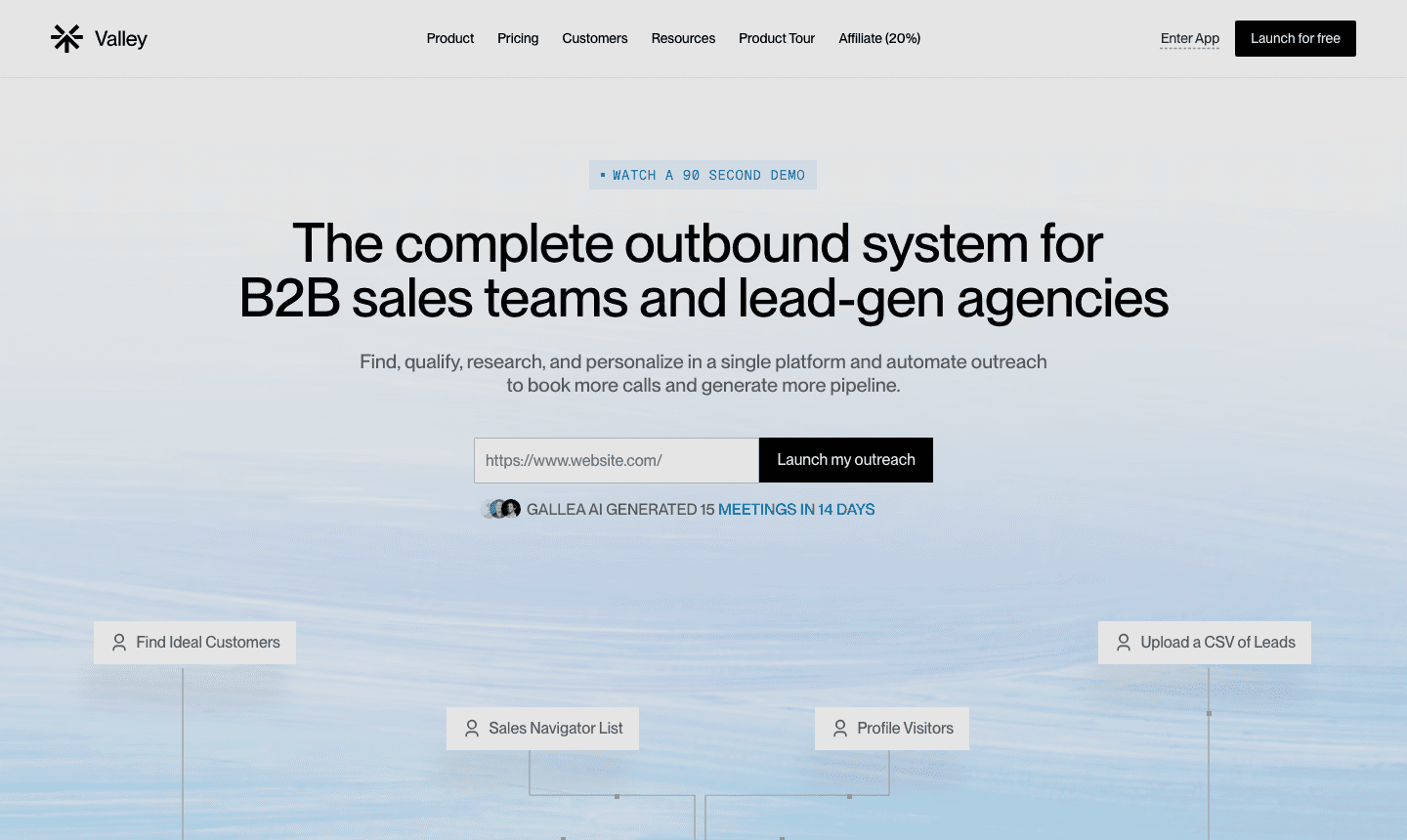
Single-channel outreach leaves opportunity on the table.
Prospects have communication preferences: some live in LinkedIn, checking daily and responding quickly; others ignore LinkedIn notifications but monitor email closely; many check both but respond on their preferred channel; and channel preference often correlates with seniority (executives favor email).
Valley’s philosophy: let LinkedIn signals inform email strategy rather than treating channels as separate silos.
How Valley Uses LinkedIn Signals to Warm Email Outreach:
The most powerful application isn’t choosing LinkedIn OR email, it’s using LinkedIn intelligence to make email more relevant.
Signal-Informed Email Personalization:
When Valley captures LinkedIn signals, those insights enhance email: subject line references LinkedIn activity (“Following up on your LinkedIn profile view”), opening line acknowledges specific behavior (“I noticed you viewed my profile and engaged with my post about [topic] this week”), body leverages research Valley gathered (“Based on your role at [Company] and [recent trigger event]…”), and CTA builds on demonstrated interest (“You checked out our pricing page, want to discuss specifics?”).
This “warm” email performs dramatically better than cold email because relevance is established through behavioral data.
LinkedIn-First, Email Follow-Up Sequencing:
Valley enables coordinated multi-touch sequences across channels:
Touch 1 (Day 0): LinkedIn connection request with personalized note referencing signal
Touch 2 (Day 3): LinkedIn message if connection accepted, email if request pending
Touch 3 (Day 7): Email with different angle if no LinkedIn response, LinkedIn follow-up if email bounced
Touch 4 (Day 12): Final LinkedIn attempt OR final email based on engagement
This persistence across channels catches prospects wherever they’re most active.
Email Deliverability Boost from LinkedIn Context:
Emails mentioning LinkedIn interactions improve deliverability and engagement: spam filters less aggressive (personalization signals legitimate outreach), recipients recognize context (remember LinkedIn activity), deletion rates decrease (relevance established), and response rates increase (warm context vs. cold interruption).

Channel coordination requires strategic sequencing to avoid overwhelming prospects while maintaining presence.
Same-Day Multi-Channel (High-Intent Only):
For highest-intent signals (pricing page visitors, 3+ profile views), Valley supports same-day outreach across channels: LinkedIn message in morning, email in afternoon if no LinkedIn response by midday.
Urgency justifies compression when intent is clear.
Staggered Multi-Channel (Standard Approach):
For moderate signals: LinkedIn first (Day 0), wait 3-5 days for response, email follow-up if no LinkedIn engagement (Day 3-5), wait another 5-7 days, and final touch on opposite channel (Day 10-12).
This spacing prevents message fatigue while maintaining consistent presence.
Channel-Specific Timing Optimization:
Valley optimizes send times by channel: LinkedIn messages: 8-10 AM, 12-1 PM, 5-6 PM (when prospects check LinkedIn), emails: 6-8 AM, 1-2 PM (inbox-checking times), avoiding: Late night (seems automated), weekends (lower business context).
How Valley Handles Email Enrichment from LinkedIn Data:
LinkedIn profiles provide intelligence that strengthens email outreach.
Email Address Discovery:
Valley finds email addresses through: LinkedIn profile email (when publicly visible, rare), company domain patterns (firstname.lastname@company.com tested), email finder database integration (verified business emails), and website contact page scraping.
Email Validation:
Before sending, Valley validates: email format correctness (syntax checking), domain MX record existence (company has mail server), catch-all detection (company accepts all addresses vs. specific), and previous bounce tracking (don't retry known bad addresses).
This reduces bounce rates and protects sender reputation.
Role and Context Enrichment:
Every email includes context Valley extracted from LinkedIn: recipient's exact title and department, company size and industry, recent company news or funding, technology stack signals, and LinkedIn activity (posts, engagement patterns).
This research depth differentiates Valley-informed emails from generic cold emails.
What Valley's Multi-Channel Messaging Strategy Looks Like:
Coordinated LinkedIn + email requires consistent narrative across channels with variation to avoid redundancy.
LinkedIn Message (Touch 1):
"Hi Sarah, I noticed you viewed my profile twice this week and [Company] checked out our pricing page. We help sales teams turn LinkedIn signals into qualified meetings. Based on your role and [Company]'s growth, seems relevant. Worth exploring?"
Focus: Signal acknowledgment, brief value prop, soft ask
Email Message (Touch 2, if no LinkedIn response):
Subject: "Following up - LinkedIn outbound for [Company]"
Body: "Hi Sarah,
I reached out on LinkedIn after noticing your interest in our approach to LinkedIn automation (profile views + pricing page visit).
Quick background: We help teams at [similar companies] automate the research and personalization that currently consumes rep time. [Customer] went from 12 meetings/month to 35 using this.
Worth a 15-minute overview? I have slots Thursday at 2 PM or Friday at 10 AM: [calendar link]
Best, [Name]"
Focus: Different medium, same context, more detail, specific CTA
LinkedIn Follow-Up (Touch 3, if email sent but no response):
"Sarah - sent an email about the LinkedIn automation workflow but wanted to follow up here too since you were active on LinkedIn initially. If timing's not right, no worries. Otherwise happy to show you how [similar company] is using this. Let me know."
Focus: Acknowledge multi-channel attempt, give easy out, maintain value
► Check Out Valley's Incredible Outreach: A compilation of real time messages and responses!

Coordination prevents awkward duplicates or contradictions.
Cross-Channel Deduplication:
Valley tracks all outreach regardless of channel: prospect already in LinkedIn campaign? Don’t add to email campaign simultaneously, prospect received email this week? Don’t send LinkedIn message same day, and prospect in multi-touch sequence? Follow defined channel progression, don’t randomize.
Unified Prospect Timeline:
Valley maintains single timeline showing: all LinkedIn activity (profile views, messages sent/received), all email activity (sent, opened, clicked, replied), combined view enables strategic next action, and reps see full context before engaging.
Message Consistency Checking:
Valley ensures cross-channel consistency: same value proposition (don’t claim different things on LinkedIn vs. email), consistent facts (numbers, customer names, features mentioned), aligned tone (don’t be casual on LinkedIn, formal via email), and coherent narrative (each channel continues the story, doesn’t restart).
How Valley Tracks Multi-Channel Attribution:
Understanding which channel drives conversion requires sophisticated tracking.
Channel Contribution Analysis:
Valley attributes pipeline to channels: first-touch channel (where relationship started - LinkedIn signal or email open?), last-touch channel (where conversion happened - LinkedIn meeting request or email reply?), and channel assists (LinkedIn created awareness, email drove conversion, or vice versa).
Multi-Channel Journey Mapping:
For every closed deal, Valley shows: complete cross-channel timeline (all LinkedIn and email interactions), response channel (where prospect first engaged), conversion channel (where meeting was booked), and channel preference patterns (did they ignore LinkedIn but respond via email?).
Performance Metrics by Channel:
Compare effectiveness: LinkedIn-only campaigns: X% response rate, Y% meeting rate, email-only campaigns: A% response rate, B% meeting rate, or multi-channel campaigns: higher response rate (more touchpoints), higher meeting rate (catch them where active).
What Results Multi-Channel Coordination Delivers:
Coordinated LinkedIn + email outperforms single-channel approaches.
Response Rate Lift:
Single-channel LinkedIn: 6-10% response rate, single-channel email: 2-4% response rate, or coordinated multi-channel: 12-18% response rate (30-50% improvement over best single channel).
Multiple exposures increase likelihood of engagement.
Meeting Booking Improvement:
LinkedIn alone: 2-3% meeting rate, email alone: 0.5-1% meeting rate, or coordinated approach: 4-6% meeting rate (doubles best single channel).
Coverage Expansion:
LinkedIn reaches: active LinkedIn users, senior executives on platform regularly, and prospects who prefer social selling.
Email reaches: email-primary communicators, prospects who ignore LinkedIn, and some demographics less active on LinkedIn.
Combined coverage: reaches 80-90% of target ICP vs. 50-60% single channel.
Channel Preference Discovery:
Multi-channel reveals individual preferences: 40% respond primarily on LinkedIn, 35% respond primarily via email, and 25% engage across both.
Learning preferences enables future optimization.
How to Implement Valley’s Multi-Channel Strategy:
Effective integration requires intentional setup and ongoing optimization.
Phase 1: LinkedIn-Primary Approach (Weeks 1-4):
Start with LinkedIn signal capture and outreach, add email for non-responders after 7 days, and measure which signals benefit from email backup.
Phase 2: Strategic Email Integration (Weeks 5-8):
Identify prospect segments that ignore LinkedIn, build coordinated sequences with optimal timing, and test email-first approach for these segments.
Phase 3: Fully Coordinated Multi-Channel (Week 9+):
Implement automated channel selection based on prospect behavior, enable dynamic sequencing (adjust based on engagement), and continuously optimize timing and channel mix.
Best Practices for Success:
Maintain consistent value proposition across channels, vary message content (don’t copy-paste LinkedIn message to email), respect channel norms (LinkedIn more conversational, email can be longer), track preference by segment (C-level might prefer email, Directors on LinkedIn), and don’t overwhelm (2 channels is enough: adding phone, WhatsApp, etc. becomes spam).
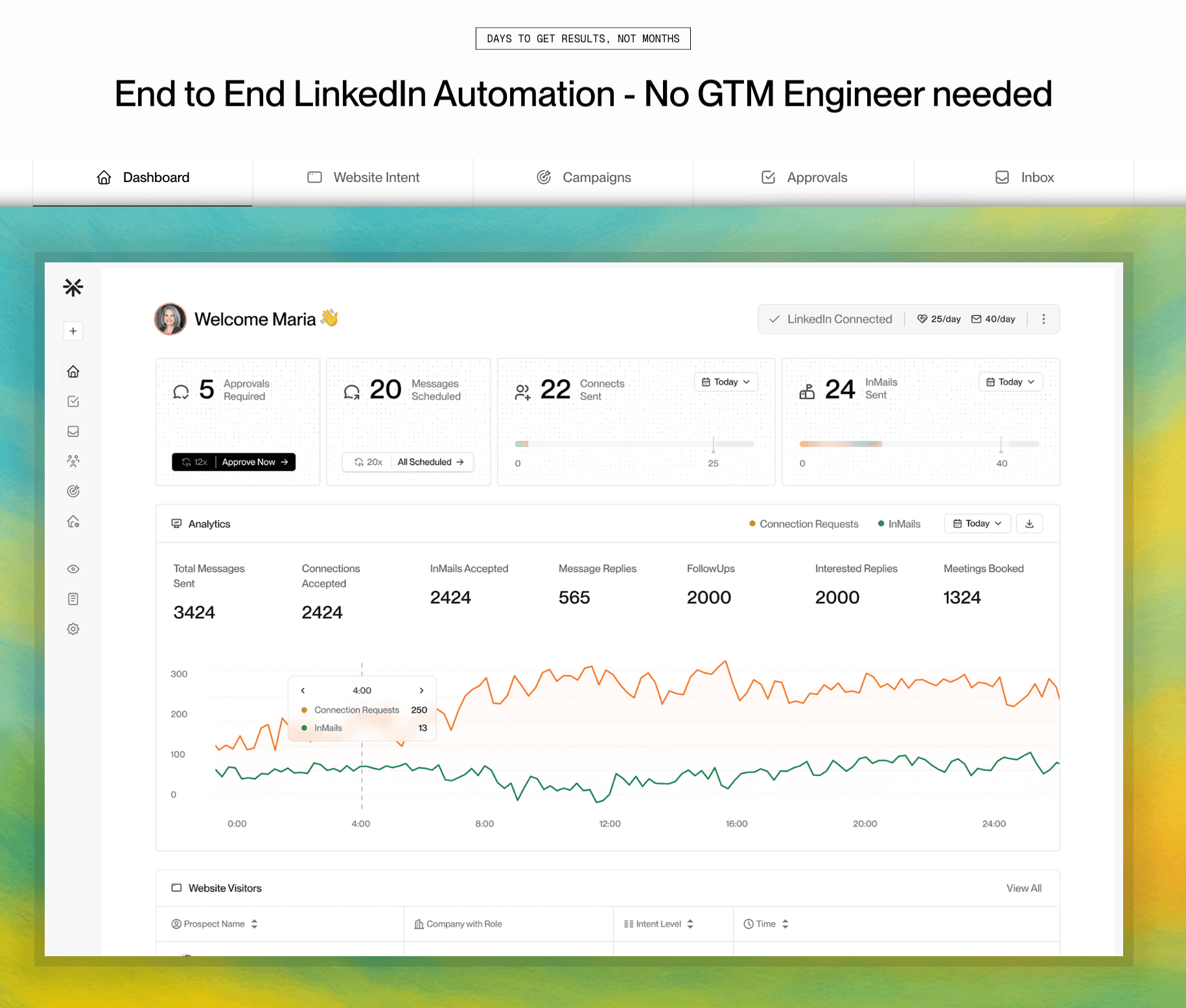
► Book a demo (teams of 5+)and explore how Valley can support your use case
Valley’s multi-channel intelligence transforms LinkedIn signals from single-channel data into cross-channel strategic asset, enabling warm outreach regardless of prospect’s preferred communication medium while maintaining coordinated narrative that builds rather than fragments relationship development.
► Your next sequence can run both channels: trial Valley free for 7 days
