
Try Valley
Put your outbound workflow to work.

Saniya Sood
Published:
Updated:
Published November 5, 2025 · Updated August 31, 2026
Valley excels at multi-client management, with agencies successfully running 10-15 different clients simultaneously through the platform. The architecture supports unlimited products (client configurations), campaigns, and writing styles, enabling complete separation between clients while maintaining centralized management.
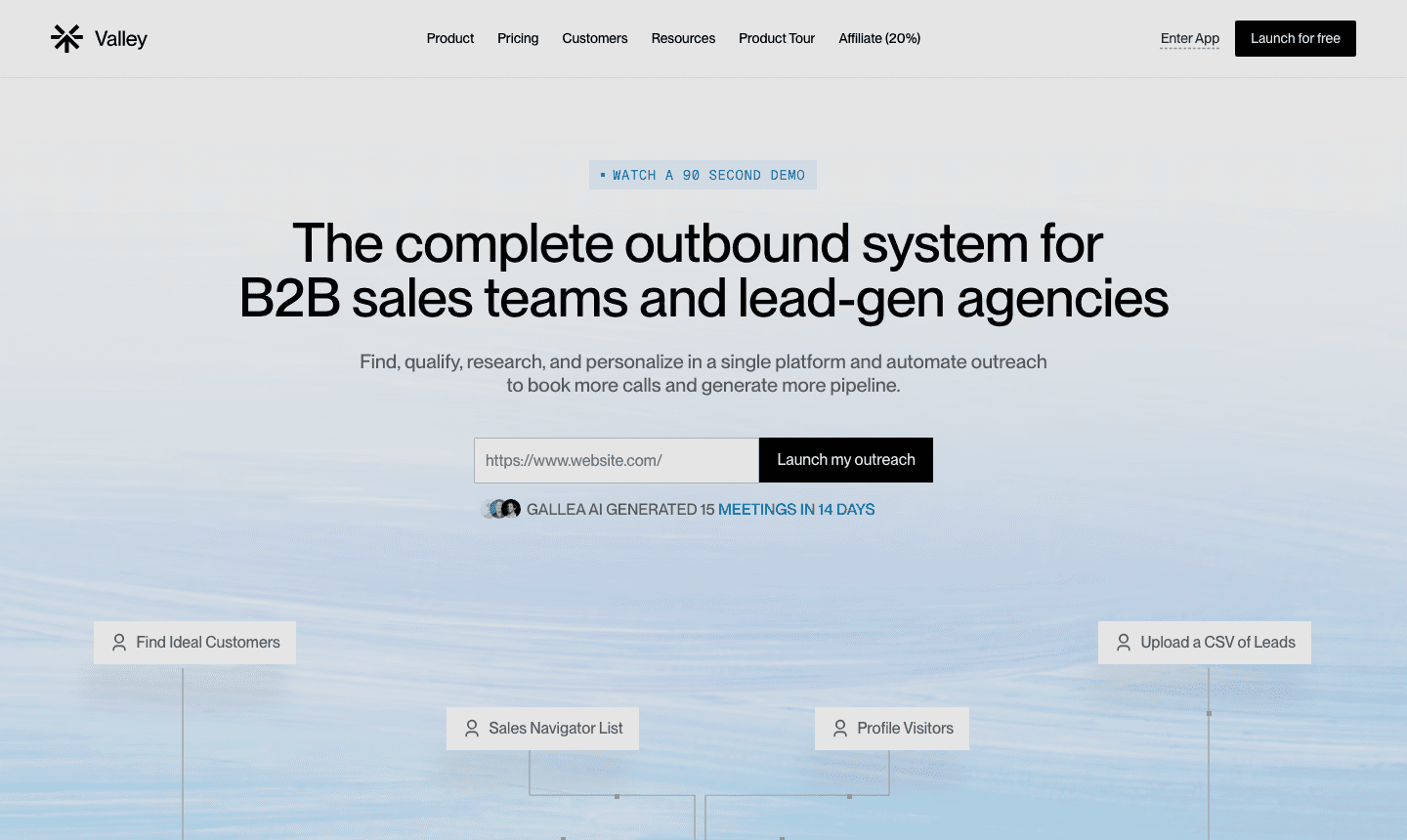
Each client gets their own product configuration with unique ICPs, value propositions, and messaging, ensuring no cross-contamination of outreach.
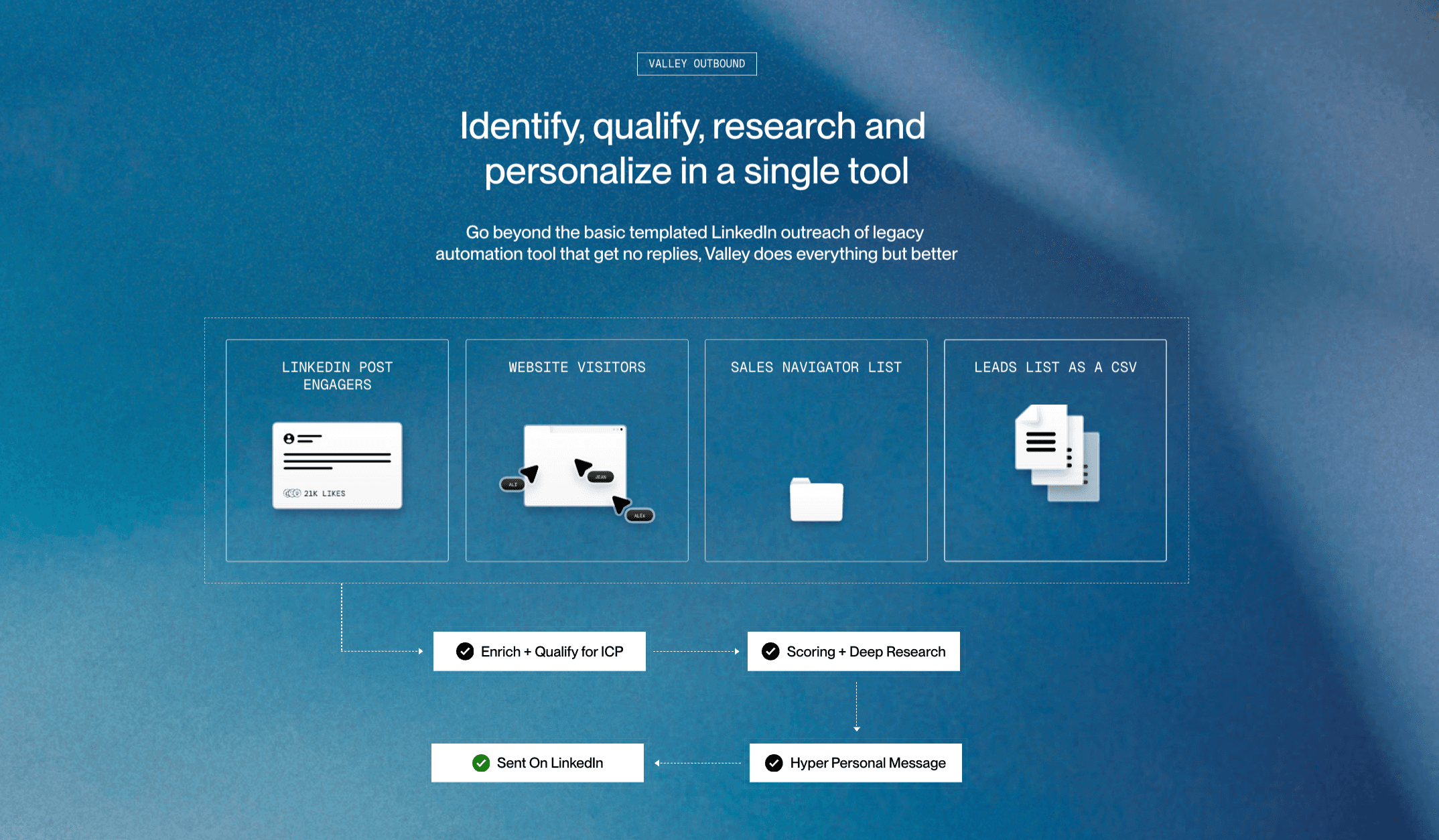
The platform’s design specifically accommodates agency workflows. One agency reported managing diverse clients spanning “construction, manufacturing, financial advisors, product resellers, services doing technology implementation and digital transformation” all through one Valley workspace. The key is Valley’s product isolation - each client’s configuration remains completely separate, preventing any message bleed between accounts.
Agencies particularly value the ability to maintain distinct voices for each client. Valley’s writing style system allows unlimited variations, so your SaaS client can maintain a technical, precise tone while your consulting client uses a more conversational approach. The AI applies the appropriate style based on campaign configuration, maintaining authenticity across all client outreach.
What’s Valley’s Agency Pricing Structure?
Valley offers aggressive agency pricing that scales with seat volume, making it economically viable for agencies to offer LinkedIn outreach as a service. With Valley handling the heavy lifting of research and personalization, agencies can manage multiple clients without proportionally scaling headcount.
The flexibility extends to account management.
Agencies can connect client LinkedIn accounts directly or use dedicated agency accounts for outreach.
► Book a demo (teams of 5+)and explore how Valley can support your use case
Valley doesn’t charge for admin seats - only LinkedIn accounts actively sending outreach count as billable seats. This means account managers can have full visibility and control without additional cost.
► Check Valley’s Outreach: A compilation of real time messages and responses!

Successful agencies follow a systematic approach to Valley implementation for clients. The typical structure involves 2-3 campaigns per client: one for ICP-A (primary buyer persona), one for ICP-B (secondary or influencer persona), and optionally one for warm prospects (website visitors, content engagers). This segmentation ensures targeted messaging while maintaining manageable complexity.
The campaign setup process for agencies is streamlined: 15 minutes to configure each client's product section, 10 minutes to establish writing style (often reusing templates from similar clients), and 5 minutes to launch each campaign. Agencies report onboarding new clients in under 2 hours using Valley's templates and proven configurations from similar industries.
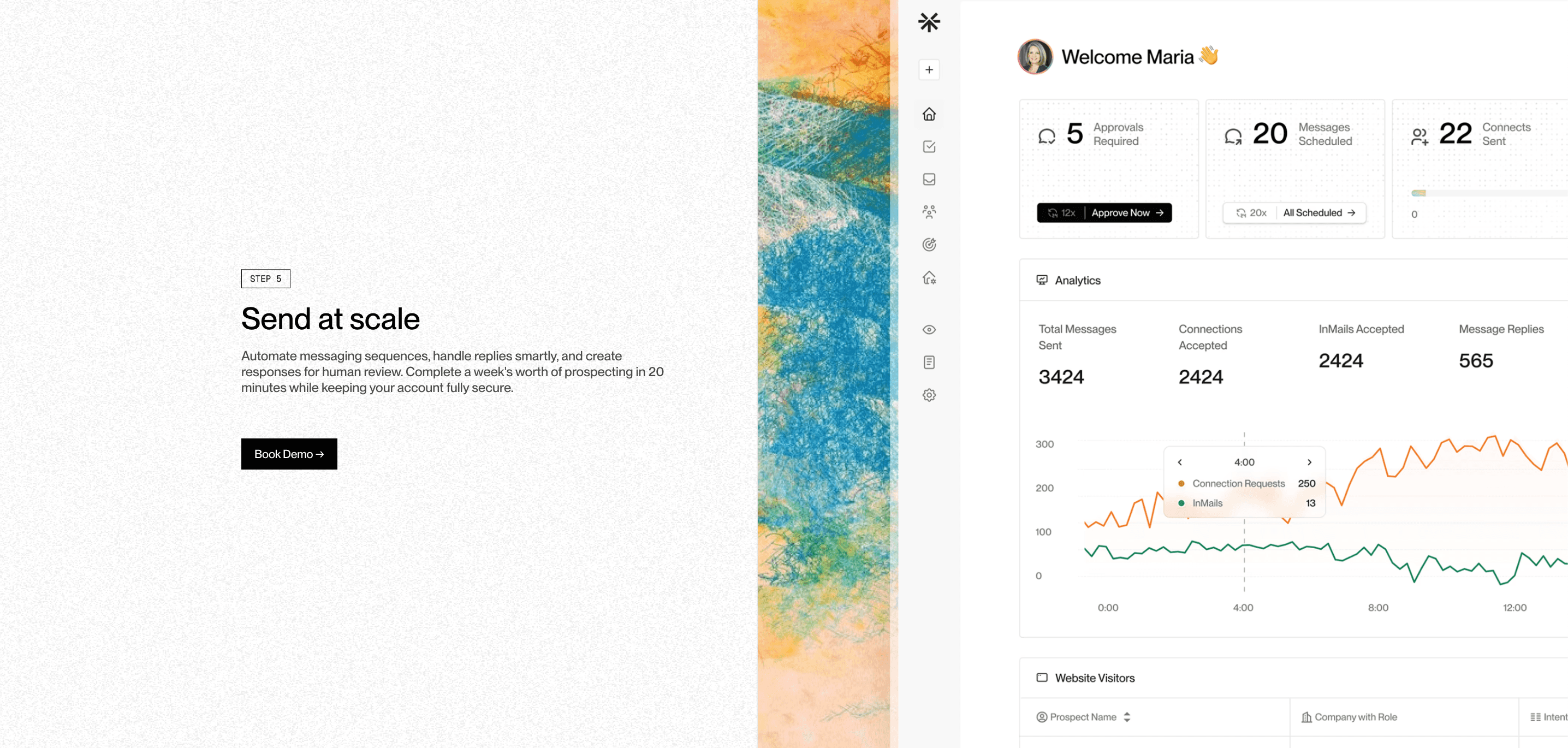
Agencies typically run both InMail and connection request campaigns in parallel for each client, maximizing reach within LinkedIn's limits. One agency approach: "We generally recommend running both InMails and connection requests in tandem, as effectiveness varies by industry." This dual-channel approach on LinkedIn ensures maximum coverage while maintaining Valley's specialization advantage.
Do Agencies Book Meetings for Clients or Take Meetings Themselves?
The overwhelming agency model is direct meeting booking for clients. As Valley experts confirm: "Agencies rarely take the meeting, if at all - they typically just book meetings for their clients." This approach maintains authenticity - prospects believe they're communicating with the company directly, not an agency intermediary.
The workflow is straightforward: Valley sends personalized outreach from the client's LinkedIn profile, when prospects respond positively, Valley drafts a response with the client's calendar link, and meetings book directly on the client's calendar. The agency manages the campaign but remains invisible to prospects, ensuring smooth handoffs and maintaining the client relationship integrity.
Some agencies do offer SDR-as-a-Service where they take initial qualification calls, but this is rare with Valley. The platform's deep research and qualification scoring means prospects are pre-qualified before outreach, reducing the need for initial qualification calls. Clients prefer receiving pre-qualified, interested prospects directly rather than filtered through agency qualification.

Valley offers comprehensive agency support recognizing that agency success drives platform growth.
The Growth and Scale plans include: 45-minute onboarding calls for agency principals, white-glove support for client onboarding, dedicated Customer Success Manager for strategic guidance, and option for Valley team to join client calls when needed.
The support extends beyond just technical assistance. Valley provides agency-specific resources including best practices for client onboarding, templates for common industries and use cases, ROI reporting frameworks for client retention, and pricing guidance for service packaging.
One agency noted: “If we want Valley to jump on calls with our clients, they can do that - it’s flexible.”
Valley University, the platform’s education resource, includes agency-specific training on multi-client management, efficient campaign structure, client reporting best practices, and scaling strategies. Agencies also get priority access to new features and beta programs, ensuring they can offer modern capabilities to clients.
How Do Agencies Report Valley Results to Clients?
Valley provides robust analytics that agencies transform into compelling client reports. The platform tracks all essential metrics: messages sent and response rates, acceptance and connection rates, positive response classification, meetings booked attribution, and ICP qualification scores. Agencies can segment this data by campaign, time period, or message type for detailed analysis.
Many agencies create automated reporting workflows using Valley’s webhook events. Common reporting includes: weekly activity summaries (messages sent, connections made), monthly performance reports (response rates, meetings booked), and quarterly ROI analysis (pipeline generated, cost per meeting). The data exports easily to visualization tools for professional client presentations.
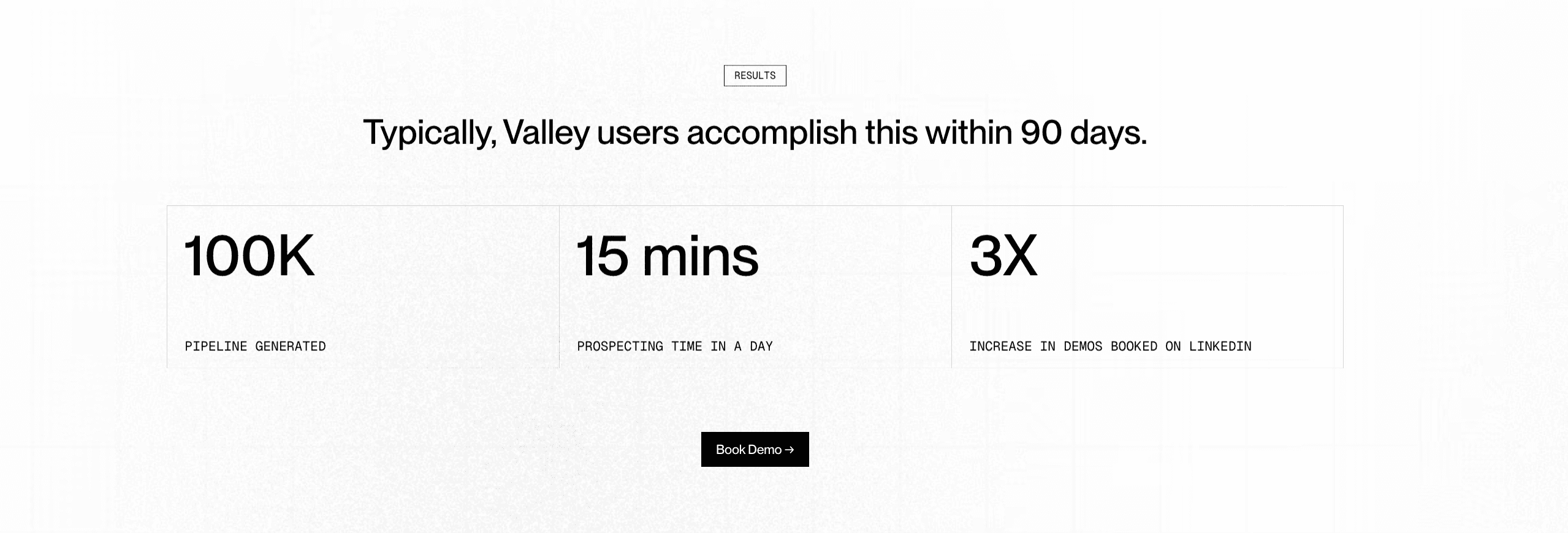
The key value for agencies is demonstrating clear ROI. Valley’s meeting attribution and pipeline tracking make it easy to show clients exactly which campaigns and messages generate results. Agencies report: “We’re able to show clients exactly how Valley outperforms their previous LinkedIn efforts with hard data, not just activity metrics.”
Smart agencies also leverage Valley’s qualification scoring in reports, showing clients not just volume but quality of outreach. By highlighting how Valley excludes low-fit prospects and focuses on high-value targets, agencies demonstrate strategic value beyond simple automation. This positioning helps justify premium pricing and long-term retainer relationships.
► Your use case is the real test: Valley is free for 7 days. No sales call needed to find out.
