Top Outbound Prospecting Strategies & Tips for 2025 Success

Try Valley
Make LinkedIn your Greatest Revenue Channel ↓

Saniya Sood
Published:
Updated:
What is Outbound Prospecting?
Published October 16, 2025 · Updated August 31, 2026
Why trust us on outbound: 30M+ messages across 1,000+ LinkedIn accounts, with reply rates of 15-45% on warm, signal-based outreach. The modern versions of this playbook: cold prospecting in 2026, warm outbound explained, and signal-based outbound.
TL;DR
Outbound Defined: Proactively reach out via email, calls, LinkedIn, etc., to prospects who haven’t yet engaged with your brand.
Outbound vs Inbound: Outbound is proactive and faster, while inbound requires waiting for leads to self-identify through content or ads.
Core Benefits: Enables you to control pipeline growth, target ideal prospects, access decision-makers, and build brand awareness.
Outbound Strategy Ingredients: Include a sharp Ideal Customer Profile, accurate lead lists, personalization, multichannel sequences, consistent follow-ups, flexible scripts, and performance tracking.
AI Power: Use AI tools to automate lead generation, score leads intelligently, and draft personalized messages that speed up outreach.
Hyper-Personalization: Pull data from CRM, social media, or content engagement to tailor messages that resonate deeply with each prospect.
Omnichannel + Video: Combine emails, phone, LinkedIn, SMS, and short personalized videos to stand out and maintain engagement.
Continuous Optimization: Trigger outreach based on prospect behavior and use analytics to refine messaging, channels, and conversion tactics.
Getting in front of the right prospects isn’t easy anymore. With inboxes overflowing, buyer habits shifting, and competition growing by the day, even the best products can slip through the cracks. That’s why understanding outbound prospecting and doing it well matters more than ever in 2025.
Outbound puts the power back in your hands. Instead of waiting around for leads to come to you, you’re starting the conversation with people who actually match your ideal customer.
In this guide, we’ll break down proven outbound prospecting strategies and share practical tips to help your team grab attention, build real connections, and keep the pipeline moving in the sales world.
What is Outbound Prospecting?
Outbound prospecting is a hands-on sales approach where your team actively reaches out to potential customers who have not yet shown interest but could be a strong fit for your solution. Instead of relying on leads to come through marketing channels, your team initiates the conversation directly. This can be done through cold emails, phone calls, LinkedIn messages, or other outreach methods.
The goal is to introduce your offering, spark curiosity, and create an opportunity for a meaningful sales conversation. To succeed, you must understand your audience well and tailor your message to their specific needs. When executed effectively, outbound prospecting helps you enter new markets, build a consistent pipeline, and accelerate growth.
Now that we’ve covered what outbound prospecting involves, it’s helpful to see how it stacks up against inbound prospecting in terms of strategy, timing, and lead intent.
Difference Between Outbound and Inbound Prospecting
In sales, prospecting is all about finding and connecting with potential customers. There are many ways to do it, but the two most common methods are outbound and inbound prospecting. While both aim to generate leads, they take distinctly different paths to achieve this goal. Outbound is about reaching out first, while inbound brings leads to you.
Each has its own strengths, and knowing how they differ is key to building a smart, balanced sales strategy. Let’s break down the main differences between outbound and inbound prospecting so you can decide what works best for your business.
Aspect | Outbound Prospecting | Inbound Prospecting |
Approach | The sales team initiates contact with potential customers. | Prospects find and engage with your business on their own. |
Target Audience | Broad audience, often individuals who haven’t shown interest yet. | Leads who have shown interest by engaging with content or ads. |
Lead Generation | Proactive outreach (cold calls, emails, direct mail, etc.). | Passive attraction (content marketing, SEO, social media, etc.). |
Timeframe for Results | Faster, immediate outreach with quick responses. | Slower, long-term strategy with delayed but qualified results. |
Cost | Often more expensive due to labor, tools, and resources needed. | Generally more cost-effective in the long run, but requires upfront investment in content. |
Sales Cycle | Often shorter due to quicker qualification, but may require more persuasion. | Longer sales cycle as leads are nurtured and warmed over time. |
Conversion Rates | Generally lower, as outreach targets cold leads. | Higher conversion rates, as leads are self-qualified and interested. |
Targeting | Sales team targets individuals or companies based on criteria. | Leads self-identify through engagement with content or ads. |
Lead Qualification | Requires more qualification and nurturing from the sales team. | Leads tend to be pre-qualified based on engagement or interest. |
Sales Rep Involvement | Requires active participation from the sales team in outreach. | Leads usually engage without direct involvement from sales. |
Understanding how outbound prospecting compares to inbound is just the start. What really matters is knowing why outbound is worth the effort and the real value it brings to your sales process.
Also Read: Signal-Based Outbound vs Cold Email

What are the Benefits of Outbound Prospecting?
Outbound prospecting is a proactive sales strategy where your team takes the first step, reaching out to potential customers. It’s about identifying people who might not know about your product or service yet, but who could really benefit from it.
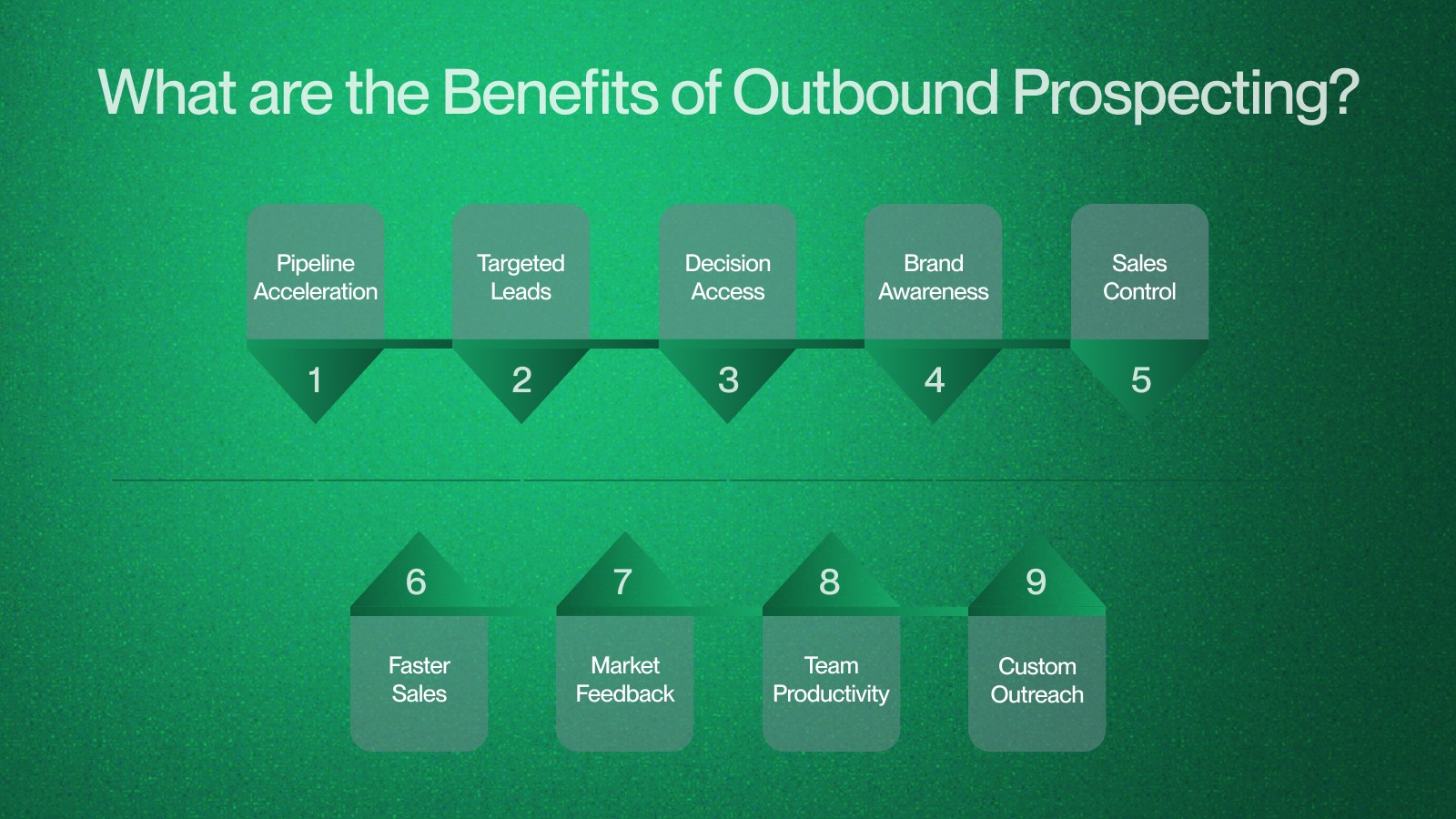
Outbound prospecting helps you build a stronger sales pipeline, grow your revenue, and get your brand in front of the right people. Here are some of the top benefits of outbound prospecting:
Quickly Fills Your Sales Pipeline: Outbound prospecting actively generates fresh opportunities, keeping your pipeline full and consistent, even when inbound is slow. You can use tools like Valley to automate lead identification and engage them instantly.
Target the Right Leads: You control who to reach, focusing on ideal-fit prospects by industry, size, or role for higher-quality conversions.
Direct Access to Decision-Makers: By bypassing gatekeepers, outbound connects you with key decision-makers early, speeding up the sales cycle.
Builds Brand Awareness: Every outbound touchpoint introduces your brand, increasing visibility and setting the stage for future conversations or referrals.
More Control Over Sales Strategy: Outbound lets you control messaging, timing, and targeting, allowing for real-time adjustments and continuous improvement.
Shortens the Sales Cycle: Proactive outreach often connects with ready-to-buy prospects, moving them through the funnel faster.
Real-Time Feedback from the Market: Direct prospect interactions give instant insights into objections, interests, and messaging effectiveness.
Boosts Sales Team Productivity: Structured outbound routines keep reps focused, motivated, and results-driven with clearer activity tracking.
Allows for Personalized Outreach: Tailored messages based on pain points or context increase engagement, build rapport, and drive better outcomes.
Once you’re clear on the benefits of outbound prospecting, the next step is knowing how to put those advantages into action.
What is an Outbound Strategy?
An outbound strategy is a proactive sales and marketing approach where businesses take the initiative to reach out to potential customers. It involves initiating the conversation directly through channels such as cold calls, cold emails, direct mail, or social media outreach.
Through targeted and personalized outreach, outbound strategies aim to qualify leads, spark interest, and turn cold contacts into warm sales opportunities. A solid outbound strategy sets the direction, but what really brings it to life are the specific elements that shape how you connect with prospects.
8 Crucial Ingredients for Successful Outbound Prospecting Strategies
Outbound prospecting plays a vital role in any sales strategy. It takes a thoughtful mix of targeting the right audience, crafting personalized messages, staying persistent, and being ready to adapt as you go.
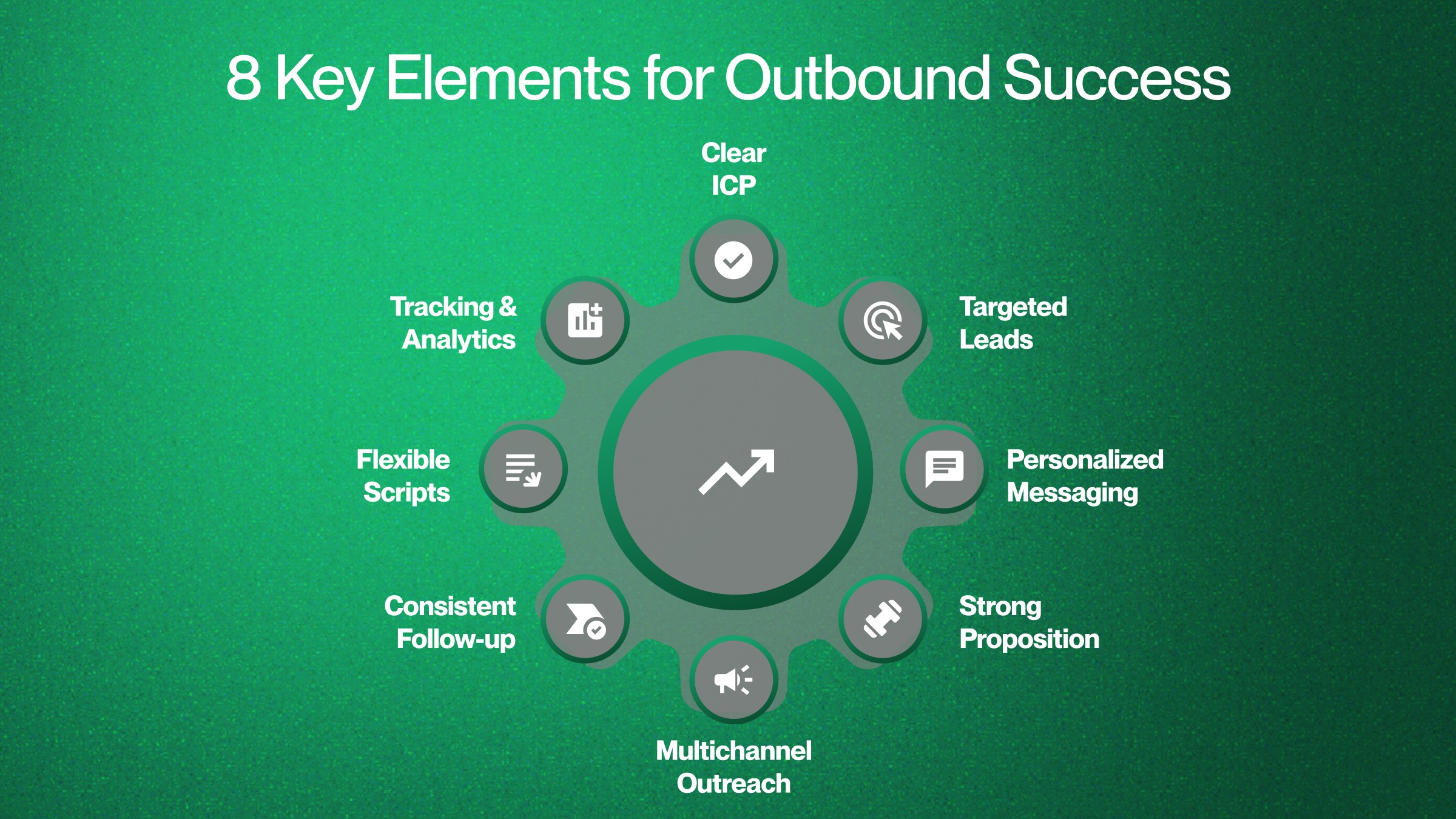
To help your sales team get the most out of their efforts, here are eight essential ingredients for building a successful outbound prospecting strategy.
A Clear Ideal Customer Profile (ICP): Define your ICP by industry, role, and pain points to ensure you're targeting high-potential leads and avoiding poor-fit prospects.
Accurate and Targeted Lead Lists: Use tools like LinkedIn or ZoomInfo to build lead lists aligned with your ICP, increasing conversion rates and minimizing wasted outreach. You can also use tools like Valley to tap into LinkedIn and company databases to surface high-quality leads that match your ICP.
Personalized Messaging: Tailor messages to the prospect’s role, challenges, or recent activity to boost engagement and show you’ve done your homework.
A Strong Value Proposition: Clearly explain the problem you solve and the business outcome you deliver to capture attention and drive meaningful interest.
Multichannel Outreach: Mix email, calls, LinkedIn, and video to meet prospects where they are and reinforce your message across channels.
Consistent Follow-Up Cadence: Use a structured, varied follow-up sequence to stay top of mind and improve engagement without becoming intrusive.
Flexible Sales Scripts: Scripts should guide, not dictate, and equip reps to stay consistent while adapting to each conversation naturally.
Tracking and Analytics: Monitor performance through CRM tools to refine your outreach strategy, improve conversion, and keep your team accountable.
Now that you know what makes a solid strategy, it's important to see how these elements come together in real-world prospecting.
Also Read: What is the Implementation Roadmap for Signal-Based Outbound Success?

Best Outbound Prospecting Strategies of 2025
In 2025, successful prospecting is shaped by smarter tech, deeper data, and a greater demand for personalization and speed. To stay ahead, sales teams must embrace modern strategies that improve targeting, boost response rates, and drive higher conversions.
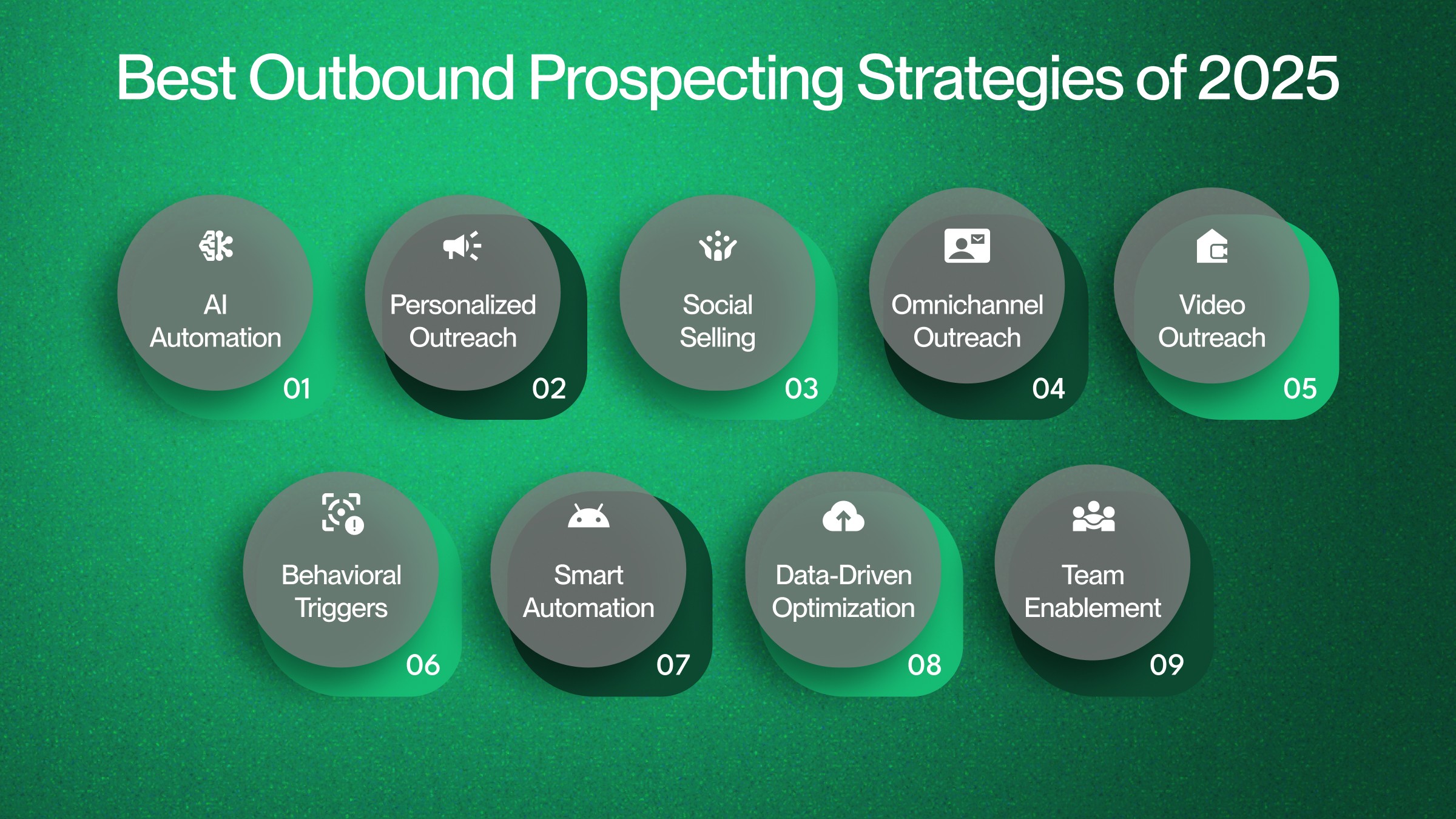
Below are the top outbound prospecting strategies to succeed in 2025:
Use AI to Automate Lead Generation and Personalization: Leverage AI tools like InsideSales or Conversica to identify high-potential prospects, prioritize outreach using behavioral signals, and auto-engage with personalized messages.
Craft Hyper-Personalized Outreach That Speaks to Each Prospect: Pull insights from CRM data, LinkedIn activity, or company news to tailor emails or DMs that directly address a lead’s recent post, pain point, or product launch.
Build Relationships Through Consistent Social Selling: Use LinkedIn to comment thoughtfully on a prospect’s posts, share relevant content, and message them with tailored insights using tools like Sales Navigator.
Execute Omnichannel Sequences That Keep You Top of Mind: Combine cold emails, calls, LinkedIn touches, SMS, and voicemails in a 5 - 7 step cadence to reach prospects across platforms.
Send Personalized Video Messages That Cut Through the Noise: Record 30 - 60 second custom videos referencing a prospect’s role, company update, or pain point, and send them via email or LinkedIn.
Trigger Outreach Based on Real-Time Buyer Behavior: Track actions like content downloads, site visits, or webinar attendance, and follow up instantly with tailored messaging. Whether a lead visits your site or clicks a case study, Valley can trigger a follow-up instantly.
Automate Repetitive Tasks Without Losing the Human Touch: Use AI-driven automation to send timely follow-ups, nurture sequences, and meeting reminders, freeing up your team to focus on real conversations.
Continuously Optimize Outreach with Data and Insights: Monitor campaign performance using tools like your CRM or analytics dashboard, and refine your tactics, channels, and messaging to double down on the strategies that convert best.
Train and Motivate Your Team: Even the best strategies fail without skilled execution. Provide regular training, coaching, and feedback. Celebrate wins to keep morale high and motivation strong.
Conclusion
Outbound prospecting isn’t just about filling the pipeline; it’s about starting meaningful conversations with the right people at the right time. When done right, it gives your team more control, better leads, and faster results.
Whether you're refining your outreach strategy or building one from scratch, the key is to stay consistent, personalize your approach, and keep learning from every interaction. With the right mindset and tools, outbound can be one of your most powerful growth levers in 2025 and beyond.
Want to turn consistent outreach into high-converting results? Valley can help you automate and scale your outbound strategy, without losing the personal touch. Talk to us today and discover how Valley transforms cold outreach into warm conversations that convert.
You Might Also Like: What are the Advantages and Limitations of Using AI SDRs in Outbound Sales?
Frequently Asked Questions
Q1. What is an example of an outbound?
A1. An example of outbound is a sales rep cold-calling or emailing a potential customer who hasn’t contacted the company before. It’s a proactive approach to generate new leads rather than waiting for them to come to you.
Q2. What is SDR in sales?
A2. SDR stands for Sales Development Representative. They focus on qualifying inbound or outbound leads by reaching out, gathering information, and booking meetings for account executives to close the deal.
Q3. What is the secret of outbound sales?
A3. The secret of outbound sales lies in personalization, timing, and consistency. Reaching the right person with a tailored message at the right moment increases engagement and opens the door to meaningful conversations.

Related Blogs

FEATURED READ
5 min
ZoomInfo Pricing Explained (2026): What It Actually Costs
Read
Read

FEATURED READ
5 min
Apollo Pricing and Credits Explained (2026): What You Actually Pay
Read
Read

FEATURED READ
5 min
Clay Pricing and Credits Explained (2026): The Post-March Math
Read
Read

FEATURED READ
5 min
LinkedIn Sales Navigator Cost Explained (2026): Every Tier, Real Numbers
Read
Read
Which channels does Valley support?
Valley supports LinkedIn outreach, including connection requests and InMails. Valley users safely send 1000-1200 messages per seat every month.
How safe is it and does Valley risk my LinkedIn account?
Do I have to commit to an Annual Plan like other AI SDRs?
How does Valley personalize messages?
Is Valley available in my country?

VALLEY MAGIC