
Try Valley
Put your outbound workflow to work.

Saniya
Published:
Updated:
Published February 2, 2026 · Updated August 31, 2026
Ninety-five percent of website visitors never fill out forms. They research your product, check pricing, read case studies, and leave, anonymously. This represents massive lost opportunity: these visitors demonstrated interest by investing time on your site, but you have no way to follow up.
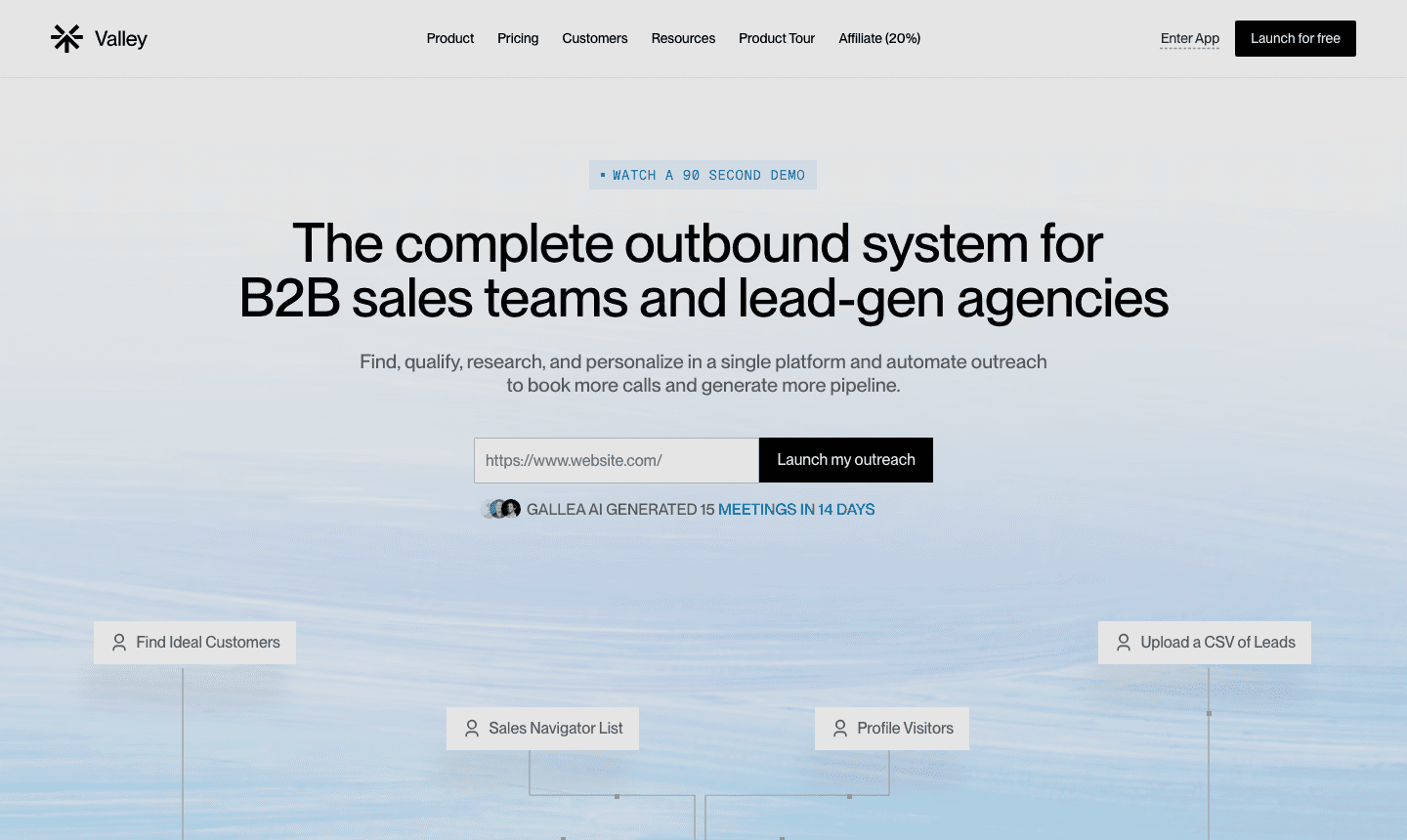
Valley solves this through website visitor identification technology that de-anonymizes traffic from target accounts and automatically creates LinkedIn outreach campaigns to convert visitors into conversations.
How De-Anonymization Works: Valley installs a tracking script on your website that captures visitor IP addresses, browsing behavior, page views, session duration, and referral sources. The platform then matches these IP addresses to company information using third-party business IP databases that map corporate networks to specific organizations.
When a visitor from a target account browses your site, Valley identifies the company, enriches it with firmographic data (size, industry, funding, technology stack), determines ICP fit based on your criteria, and finds relevant decision-makers at that company on LinkedIn.
Within hours of their website visit, those decision-makers receive personalized LinkedIn outreach referencing the visit: “I noticed someone from [Company] was checking out our case studies yesterday. I’d love to share how we’re helping similar companies achieve [specific outcome].”
This speed-to-contact is critical. Research shows that contacting leads within one hour of intent signal increases conversion rates 7x compared to waiting 24 hours. Valley enables same-day contact with website visitors while interest is fresh.
► Book a demo (teams of 5+)and explore how Valley can support your use case

Understanding what Valley tracks helps you optimize visitor identification effectiveness and create more relevant LinkedIn outreach based on browsing behavior.
Company Identification: Valley's primary function is identifying which company a visitor represents. The platform captures corporate IP addresses and matches them to business databases containing company names, sizes, industries, locations, and contact information.
For visitors from residential IPs (remote workers) or mobile networks, identification becomes more challenging. Valley's accuracy is highest for office-based workers accessing sites from corporate networks - typically 70-80% of B2B traffic during business hours.
Page-Level Activity: Valley tracks which specific pages visitors viewed: product pages, pricing, case studies, documentation, about page, contact information. This behavioral data reveals where prospects are in their buying journey and what aspects of your solution interest them most.
A visitor who spends 5 minutes on your pricing page is further along than someone who briefly scanned your homepage. Valley uses this context to personalize outreach appropriately.
Session Duration and Depth: The platform measures how long visitors stayed on your site and how many pages they viewed. Multi-page sessions lasting several minutes indicate genuine research, while brief single-page bounces suggest accidental visits or low intent.
Valley allows you to set minimum thresholds: for example, only creating campaigns for visitors who viewed 3+ pages or spent 2+ minutes on site, ensuring you focus on meaningful traffic.
Referral Source: Knowing how visitors arrived (Google search, LinkedIn post, direct type-in, referral from another site) provides context. Someone arriving from a Google search for "[your product] pricing" shows high intent. Someone clicking a LinkedIn post link demonstrates engagement with your content.
Valley includes referral data in prospect records, enabling references in outreach: "I saw you clicked through from our LinkedIn post about [topic] and spent time reviewing our pricing. Want to discuss how we could work together?"
Technology Stack Identification: For identified companies, Valley enriches data with technology stack information: what CRM they use, their marketing automation platform, sales engagement tools, and other relevant software. This reveals compatibility requirements, potential integration needs, and incumbent solutions you're competing against.
This comprehensive data capture transforms anonymous website traffic into actionable leads with rich context for personalized LinkedIn outreach.
► Check Out More of Valley's Incredible Outreach: A compilation of real time messages and responses!
How to Configure Valley's Website Visitor Campaigns for Maximum Results?
Effective website visitor identification requires thoughtful configuration. Valley provides multiple options to ensure you're targeting the right visitors with appropriate messaging.
Step 1: Install Valley's Tracking Script Add Valley's JavaScript tracking code to your website's header or through Google Tag Manager. The script is lightweight and doesn't impact site performance. Verify installation by visiting your site and checking that Valley's dashboard shows the test visit.
Step 2: Define Visitor Qualification Criteria Not all website visitors deserve outreach. Configure thresholds that indicate genuine interest: minimum pages viewed (recommend 2-3 pages), minimum session duration (recommend 90-120 seconds), specific high-intent pages that trigger immediate outreach (pricing, demo request, case studies), and company size and industry filters to match your ICP.
These filters prevent outreach to casual browsers or accidental visitors, focusing campaigns on prospects showing meaningful research behavior.
Step 3: Set Up Automatic Campaign Triggers Valley can automatically create LinkedIn campaigns when visitors meet your criteria, or you can manually review identified visitors before initiating outreach. Automatic triggers work best for high-intent pages (pricing, customers page) while manual review suits broader traffic.
Configure trigger rules like "Any visitor from a 50-500 person B2B SaaS company viewing 3+ pages including pricing gets added to 'Website Visitor - High Intent' campaign automatically."
Step 4: Create Visitor-Specific Messaging Your messaging should reference the website visit naturally: "I noticed someone from [Company] was exploring our pricing page yesterday" or "Saw that your team checked out our case studies for [industry]. Thought it might be helpful to connect."
Valley's AI generates these references automatically based on the pages visited, but you can provide messaging guidelines specific to different page types.
Step 5: Enable Slack Notifications Valley sends real-time Slack notifications when high-value visitors arrive: "VP Sales from [Target Company] just spent 5 minutes on your pricing page." This allows your team to manually reach out immediately for the highest-priority prospects while Valley handles automated outreach for others.
Step 6: Integrate With Your CRM Send identified visitor data to HubSpot, Salesforce, or other CRMs via Valley's integrations. This ensures sales teams have visibility into website research activity even if LinkedIn outreach doesn't immediately convert, enabling multi-channel follow-up.
Proper configuration transforms website visitor identification from noisy data into qualified pipeline.
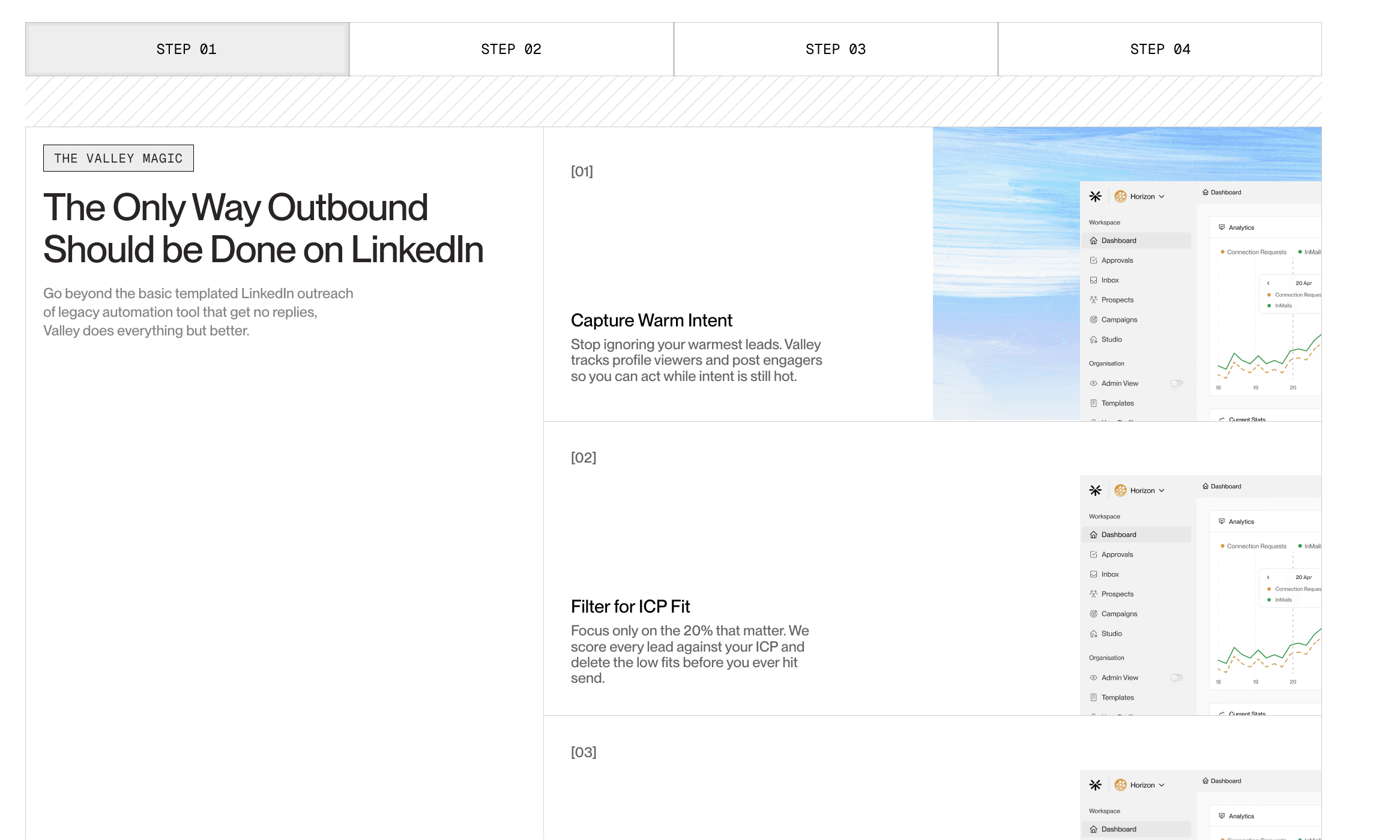

Several tools specialize in website visitor identification: Clearbit Reveal, Leadfeeder, Albacross, and others.
Valley integrates this capability alongside LinkedIn outreach automation, creating advantages through workflow consolidation.
Standalone Tool Workflow: Traditional approach requires multiple steps: install tracking script on website, identify visiting companies in the tool’s dashboard, export company lists manually, upload to LinkedIn automation or CRM, create outreach campaigns separately, and manage data across multiple platforms.
This fragmented workflow creates delays (often 24-48 hours between visit and outreach), manual work (exporting, uploading, mapping fields), and disconnected data (visitor behavior separated from outreach results).
Valley’s Integrated Workflow: Valley identifies visitors and automatically creates LinkedIn campaigns in one platform: no manual exports or uploads, campaigns launch within hours of visits, messaging references specific pages visited, and full attribution from website visit → LinkedIn conversation → meeting booked.
Cost Comparison: Standalone visitor identification tools cost $300-$1,000 monthly depending on traffic volume. LinkedIn automation platforms cost $100-$500 monthly. Using both costs $400-$1,500 monthly plus integration complexity.
Valley includes both capabilities in single seat pricing, eliminating redundant tool costs and integration overhead.
Data Depth Comparison: Standalone tools provide company names and firmographic data. Valley adds LinkedIn profile identification, finding specific decision-makers at visiting companies, enriching with role-based context, and qualifying against your ICP automatically.
This means you’re not just messaging generic contacts at visiting companies - you’re reaching the exact people likely making purchasing decisions.
The integrated approach removes friction between visitor identification and conversion, increasing speed-to-contact while reducing tool sprawl in your sales stack.
What Industries and Use Cases Benefit Most From Valley’s Website Visitor Identification?
Website visitor identification delivers varying results depending on traffic quality, deal size, and sales motion. Certain industries and scenarios see exceptional returns from this capability.
High-Traffic B2B SaaS Companies: Companies driving 1,000+ monthly visitors to product and pricing pages generate dozens of qualified visitor-based leads weekly. Valley identifies companies researching solutions, finds decision-makers, and books meetings with prospects already mid-evaluation.
A SaaS company with 5,000 monthly website visitors might see 200 identified companies, 100 ICP-fit matches, and 15-20 booked meetings from visitor campaigns - meaningful pipeline from traffic that would otherwise go to waste.
Enterprise Sales with Long Evaluation Cycles: Complex B2B solutions with 6-12 month sales cycles involve extensive research before prospects engage sales. Website visitor identification captures buying committee members during this research phase, allowing early engagement before they narrow vendor shortlists.
One Valley customer selling enterprise software identified a CFO and VP Operations from a Fortune 500 company visiting their pricing page repeatedly over two weeks. LinkedIn outreach based on these visits led to a $280,000 deal.
High-Ticket Professional Services: Consulting firms, agencies, and service providers often have lower website traffic but higher deal values. Even 50-100 monthly visitors can produce significant pipeline when individual deals range from $50,000-$500,000.
Valley’s qualification ensures outreach focuses on visitors from companies that match your target client profile and budget requirements.
Companies With Strong Content Marketing: Organizations publishing valuable blog content, case studies, guides, and tools that drive organic traffic can convert that engagement into conversations. Visitors consuming your content demonstrate interest in the problems you solve - perfect targets for warm outreach.
A company publishing LinkedIn outreach guides that drive 2,000 monthly visitors used Valley to identify sales leaders reading their content and booked 30+ meetings monthly with prospects already educated on their methodology.
Use Cases to Avoid: Website visitor identification works poorly for B2C companies (residential IPs don’t identify businesses), low-traffic sites (< 500 monthly visitors provide insufficient volume), and businesses with misaligned website content (technical documentation attracting engineers when you sell to executives).
When configured appropriately for the right use case, Valley’s website visitor identification transforms your website from a passive information resource into an active lead generation engine.
► btw, here’s the Valley Warm Outbound Launch Video which we spent way too much money on.
