
Try Valley
Put your outbound workflow to work.

Saniya Sood
Published:
Updated:
Published May 5, 2026 · Updated August 31, 2026
The ceiling is not a tool problem. It is a model problem. Volume-based outbound sales automation assumes that more messages produce more meetings linearly.
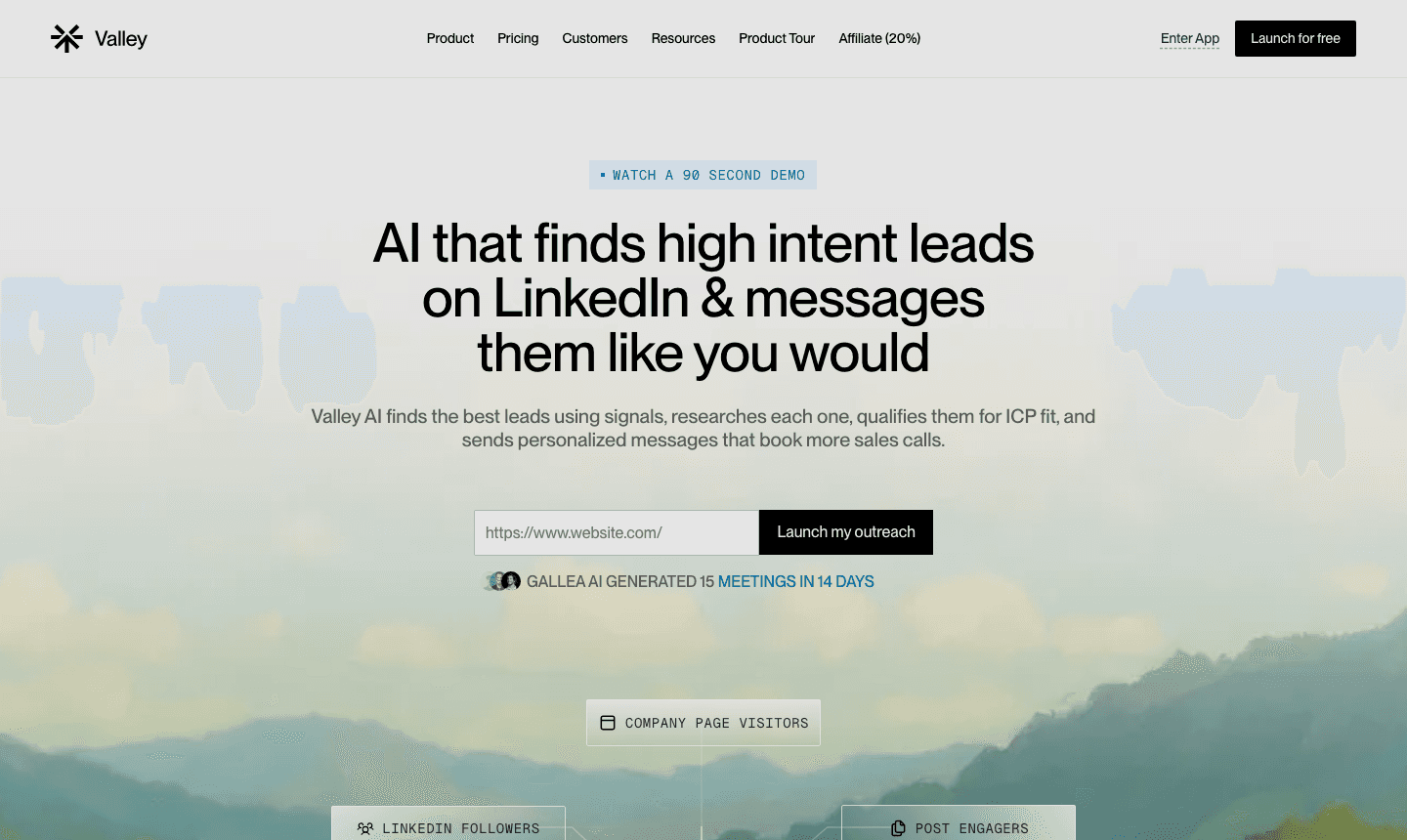
Signal-based automation assumes that better-timed messages to the right people produce meetings nonlinearly because the prospect is already interested when the message arrives.
GTM agencies that have made the shift to signal-based warm outbound on LinkedIn are reporting 8 - 15 meetings per seat per month. Agencies running generic outbound automation are reporting 2 - 4. That gap compounds across a client portfolio.
Outbound sales automation for GTM agencies shifts from volume-based to signal-based when the trigger for a message is prospect behavior a profile view, a post engagement, a website visit rather than a contact list.
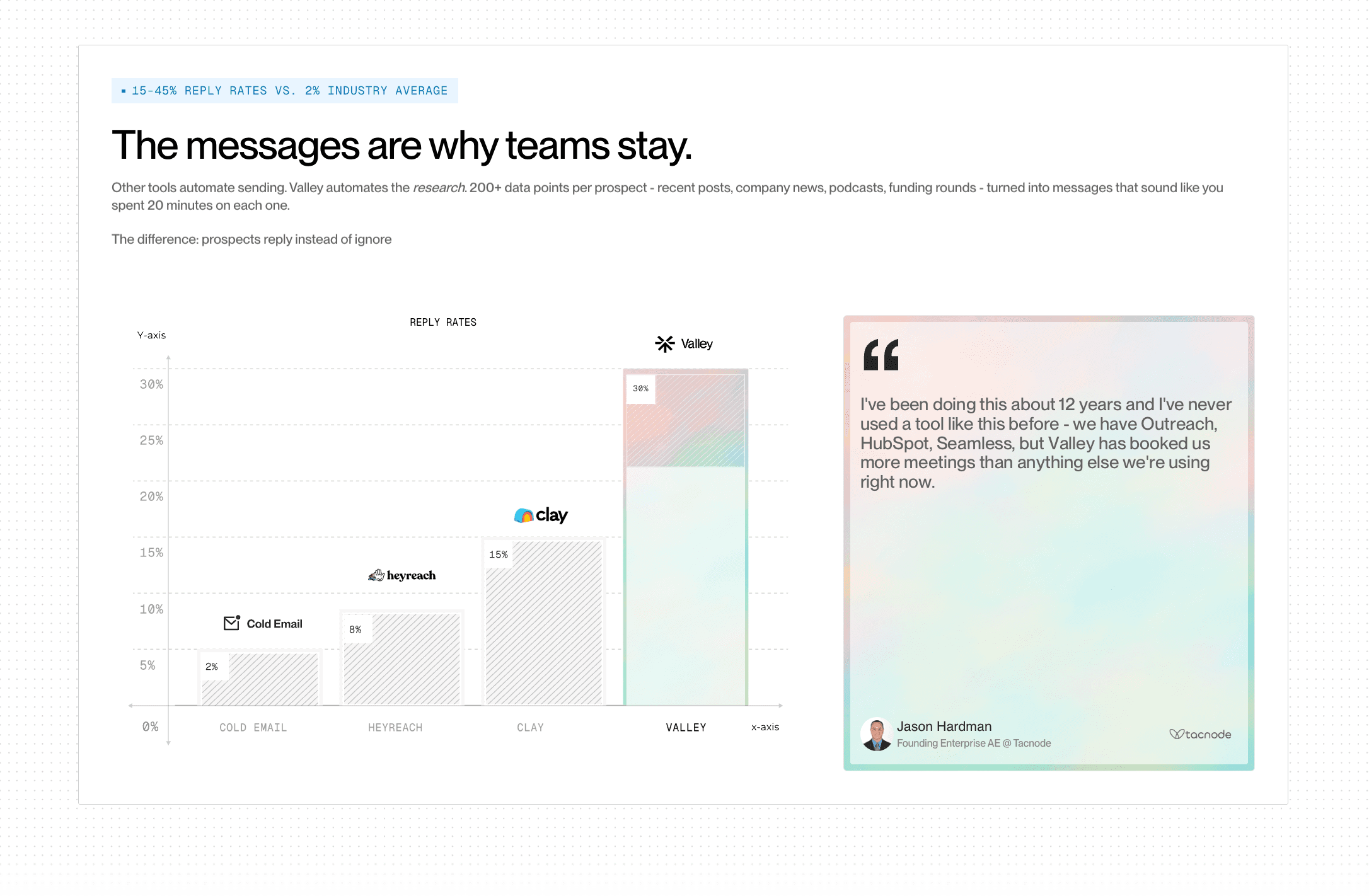
Signal-based automation produces 3 - 5x higher reply rates because outreach arrives with context rather than cold. Valley is the platform GTM agencies use to implement this at scale across multiple client accounts.
► Book a demo (teams of 5+)and explore how Valley can support your use case
Why Volume-Based Outbound Sales Automation Fails GTM Agencies
Volume-based outbound sales automation has one sustainable use case: mass lead generation in a very large addressable market where ICP fit is binary and personalization is irrelevant. If you are selling a commodity to anyone with a specific job title, blast volume can work.
GTM agencies rarely work with clients in that scenario. Most B2B clients have nuanced ICPs: specific company sizes, specific industries, specific buying triggers, specific pain points that map to their product. Messaging those prospects with a volume template produces the same result as spam it gets ignored, and repeated exposure makes the prospect less likely to respond in the future.
More damaging: it teaches the prospect’s inbox to filter out the client’s brand. By the time the agency switches to a better approach, the client’s LinkedIn presence has been associated with generic outbound messaging in that prospect’s mind.
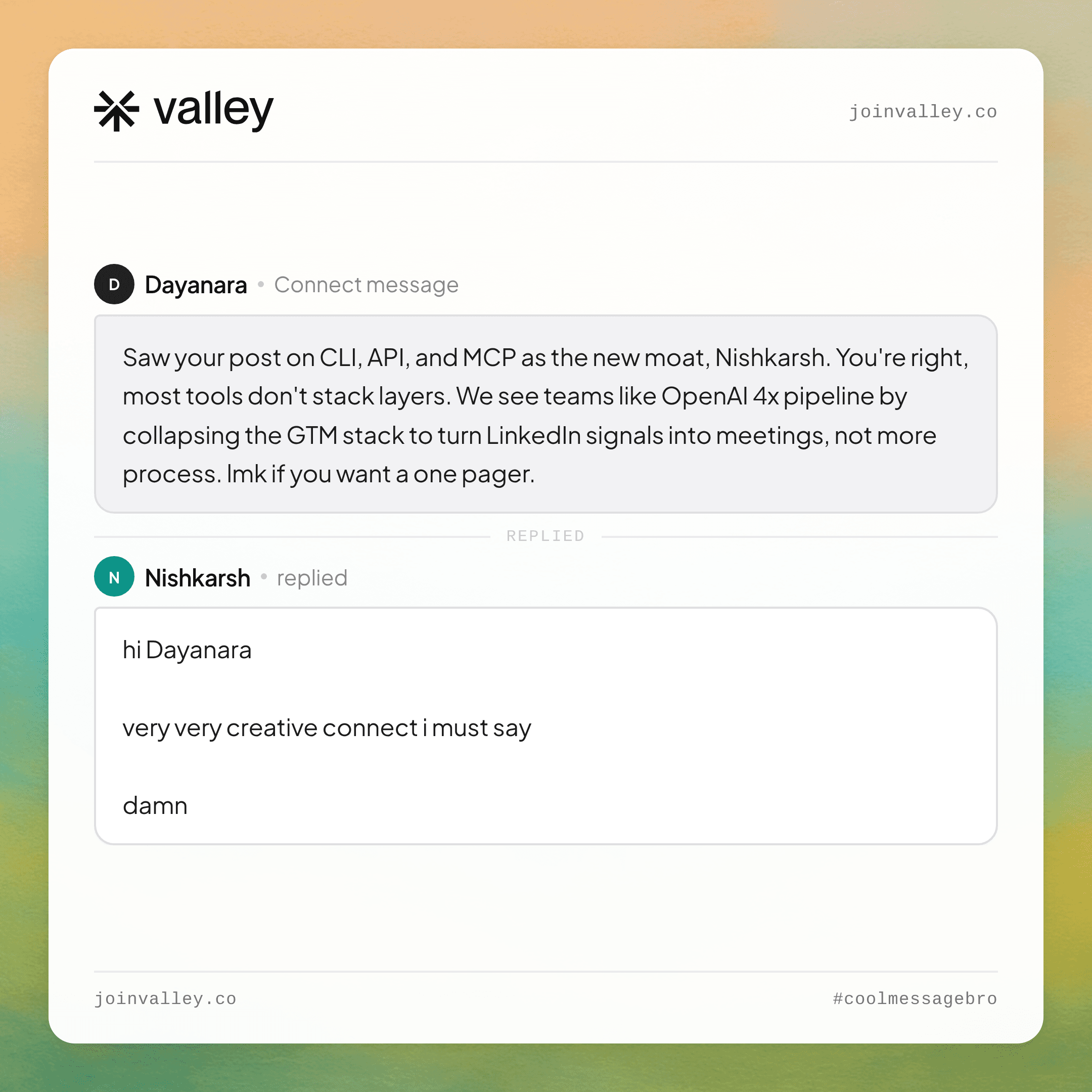
The agencies that retain clients longest are those that protect client brand positioning while generating pipeline. Signal-based warm outbound on LinkedIn does both: it only contacts prospects who have shown interest, with messages that are individually researched and written, at a volume that LinkedIn treats as human behavior.

Outbound sales automation, done with Valley, runs on a different logic than sequencers.
The platform does not start with a list. It starts with a signal. A prospect views a client's profile three times in one week. Valley registers this, checks whether the prospect matches the client's ICP, and if yes, runs deep research on that prospect their current role, recent LinkedIn posts, company news, pain points visible from their public content. It generates a message that references why they might have been looking at the profile and opens a conversation around a relevant business problem.
The same applies to post engagers. If a prospect comments on a client's LinkedIn post about a specific challenge, Valley identifies them, qualifies them against the ICP, researches them, and generates a message that references the post engagement with a specific follow-up angle.
This is not automation in the traditional sense. It is intelligence at scale doing what a very good SDR would do for every warm lead, but across hundreds of prospects simultaneously without degrading quality per prospect.
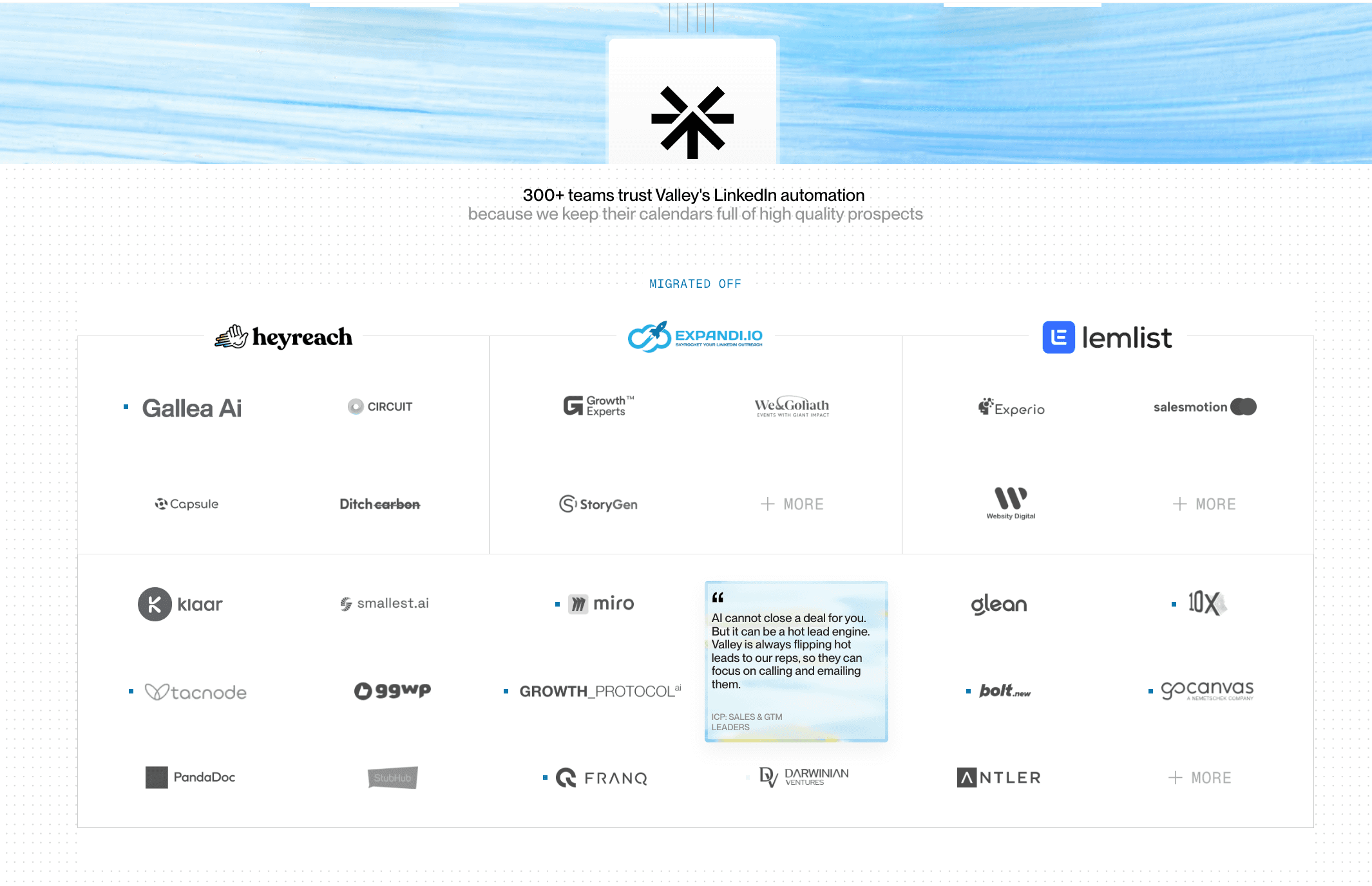
Sam Z at 10X Management described the difference from the buyer's side: "Valley gave us control of what we were doing as opposed to giving the keys and letting them go. But most importantly, it was a third of the price of the agency that we were using to do a similar type of outreach."
The Three Outbound Sales Automation Categories GTM Agencies Should Evaluate
Category 1: Sequencers (HeyReach, Expandi, Dripify, Waalaxy). Automate the delivery of pre-written messages. Strong at multi-account management, safe operation, and tracking delivery metrics. Do not automate research, personalization, or signal detection. Agency team writes all messages; tool handles scheduling and follow-up.
Category 2: AI SDRs (Artisan, various AI email tools). Generate messages at scale using AI. Often email-first or multi-channel. Higher message volume; lower personalization depth. Autonomous operation with less human review.
Category 3: Signal-based warm outbound platforms: Valley. Automate from signal to meeting: detect prospect intent signals, qualify against ICP, research prospects individually, generate personalized messages, schedule within safe limits, and manage the approval workflow. Agency reviews messages; Valley executes everything else.
For agencies building client pipeline on LinkedIn specifically, Category 3 is the only one that combines safety, personalization quality, and meeting volume at scale.
Key Metrics for Evaluating Outbound Sales Automation Performance
GTM agencies should measure outbound sales automation tools against outcomes, not activities.
Metric | Valley Benchmark |
|---|---|
Meetings per seat per month | 8 - 15 average |
Positive reply rate | 25 - 35% of those who reply |
Connection acceptance rate | 30 - 40% |
Pipeline per seat per month | $50K - $150K+ depending on ACV |
Time to first meeting | 72 hours typical |
Message approval rate | 40 - 80% from day one |
Agencies that track these metrics and present them to clients in monthly reporting change the conversation from "are you sending enough messages?" to "are you generating enough pipeline?"
That shift protects retainer value and creates the conditions for long-term agency relationships.

Running outbound sales automation on behalf of clients carries an account safety obligation. A client’s LinkedIn account that gets restricted or suspended is not just a tool problem it is a relationship problem. The client trusted the agency with their professional reputation on a platform they have been building for years.
Valley’s safety architecture is designed for agency use: dedicated IPs per account (not shared IPs that flag automation), built-in daily limits that stay within LinkedIn’s human-behavior range, automatic exclusion of public profiles and competitors (which LinkedIn flags when messaged at scale), and no browser-level automation that LinkedIn can detect through behavioral fingerprinting.
The track record matters: Valley has operated since 2023 with zero reported client account suspensions. That is the baseline any agency should require from an outbound sales automation tool they run on client accounts.
► Book a demo (teams of 5+)and Check Outbound Sales Automation Built for GTM Agencies at Scale
If your agency is managing client LinkedIn outbound and the results have plateaued, the constraint is the model not the execution.
Signal-based warm outbound on LinkedIn with Valley converts the attention your clients’ LinkedIn presence is already generating into meetings, without cold lists, generic templates, or account safety risk.
Book a demo with the Valley team and walk through a client-specific setup and see the operational difference in under an hour.
Frequently Asked Questions
What is outbound sales automation?
Software that automates the identification, qualification, messaging, and follow-up of outbound sales prospects. Ranges from basic sequencers (automate delivery) to signal-based platforms like Valley (automate from intent detection to message generation).
How does signal-based outbound sales automation differ from volume-based?
Volume-based automation starts with a contact list and sends messages on a schedule. Signal-based automation starts with a prospect’s behavior (profile view, post engagement, website visit) and sends a message when the prospect is demonstrably interested. Reply rates are 3 - 5x higher with signal-based.
Is outbound sales automation safe for LinkedIn?
With Valley, yes. The platform uses dedicated IPs, respects LinkedIn’s daily limits, and excludes public profiles and competitors automatically. Agencies managing client accounts through Valley have not reported account restrictions.
What outbound sales automation metrics should GTM agencies track?
Meetings booked per seat per month, positive reply rate, connection acceptance rate, and pipeline generated. Avoid tracking only volume metrics (messages sent, connection requests dispatched) without corresponding outcome data.
Can outbound sales automation produce qualified meetings not just replies?
With Valley’s ICP qualification layer, yes. Valley excludes prospects that do not match the defined ICP before any message goes out, so replies come from prospects who fit the profile and are appropriate to route to the client’s sales team.
