Try Valley
Put your outbound workflow to work.

Zayd
Published:
Updated:
Published May 16, 2026 · Updated August 31, 2026
I was talking to a founder who spent three months obsessing over his outbound sequence, his ICP, his LinkedIn profile photo. Real details-guy energy.
Then I asked him how he landed on his pricing.
He said: “I just looked at what the guy above us was charging and went a little lower.”
Which is fair. I did it too, initially.
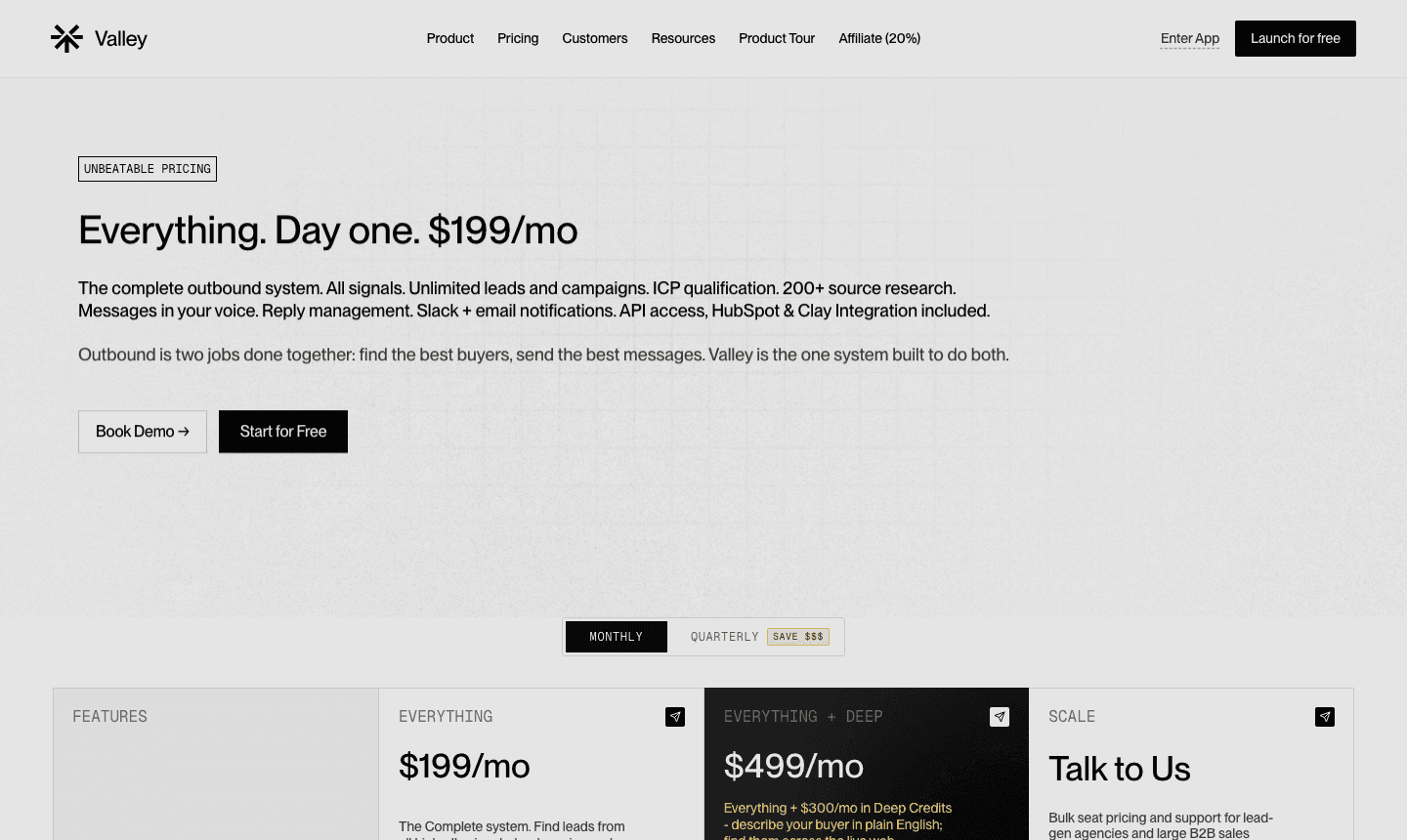
But your price is doing more selling than you think. Most founders have no idea what it’s actually communicating.
A discount offered in the first conversation, a “starter tier” designed to remove all friction, a number picked because it felt safe: all of it is telling your prospect what your product is worth before you’ve said a single word about what it does.
► Book a demo (teams of 5+)and explore how Valley can support your use case
My favorite finds of the week:
Tools to generate 200+ demo calls every month (link)
Key to a valuable lead magnet people can’t refuse (link)
5 important learnings from the founder of Default (link)
Alex Hormozi’s secret to building a $100m sales team (link)
Key to a valuable lead magnet people can’t refuse (link)
Warm intro template to grow your pipeline (link)
What Your Price Is Actually Communicating
When a prospect sees your price for the first time, they form an opinion about what kind of company you are and who you built this for.
Low pricing reads one of two ways: either this product isn’t serious, or this company is nervous. Neither is a strong start, especially when you’re asking someone to bet on a company they’ve never heard of with a product that doesn’t have ten years of case studies behind it.
The prospect who pushes hardest on price in the first conversation is almost never the one who becomes a great customer. Your best customers are looking for something that works. They’ve already bought cheap and regretted it. The ones who want to negotiate before they’ve even seen a demo are telling you exactly how this relationship is going to go: high maintenance, low margin, first to churn, and definitely not referring anyone.
You’ve built a filter with your pricing. The question is whether you’ve set it to catch the right people.
► Before you budget another line item, run Valley free for 7 days

Lead qualification happens well before discovery. It happens when a prospect decides whether to engage with you at all, based on what your product appears to be worth.
Price above what feels comfortable and something interesting happens. The prospects who don't flinch are signaling that they take the problem seriously enough to pay to solve it.
The ones who immediately try to negotiate downward are signaling the opposite. You haven't even gotten on a call yet and you're already learning something useful about who you're talking to.
Founders who reflexively offer discounts in the first conversation, who have a "just to get you started" tier designed to remove all friction, are optimizing for a closed deal when they should be optimizing for the right closed deal.
There is always a cost to customers who were never a good fit from the start. Support hours, product roadmap noise, churn, and the particular demoralizing experience of working really hard for someone who still leaves. That cost doesn't show up anywhere obvious, which is why it keeps happening.
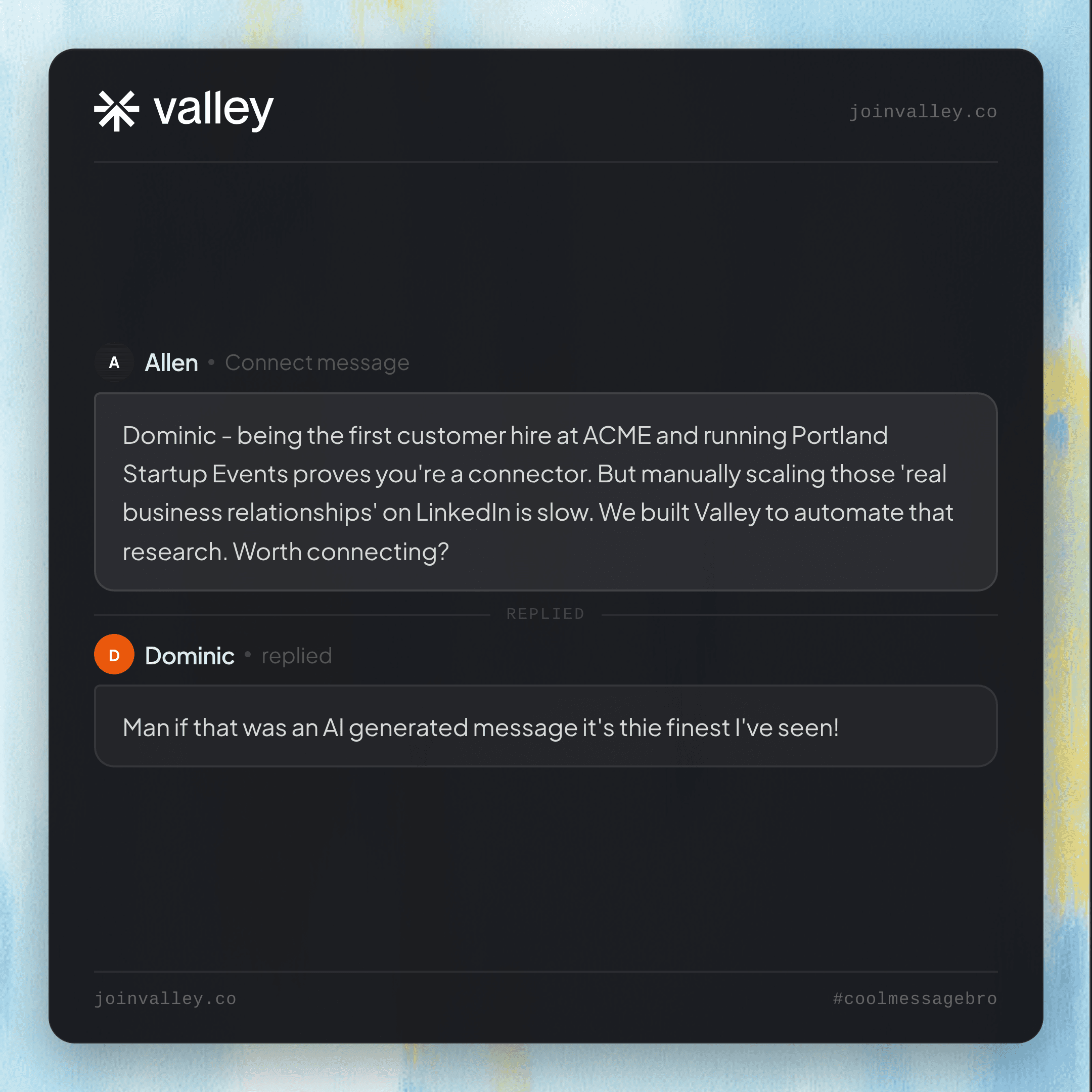
► Check Out Valley's Incredible Outreach: A compilation of real time messages and responses!
💡 LinkedIn Tip of the Week
The phrase "I'm sure you're busy" actually decreases response rates. It gives the prospect permission to ignore you. Cut it from every message.
Why Founders Underprice
Fear
When you're trying to get your first ten customers and every deal feels like it could make or break the month, "I'd rather close this at a lower number than lose it" is a very human calculation.
The problem is that it compounds fast. You set a reference price that becomes hard to move. You build a customer base that's price-sensitive by design. You end up with unit economics that don't give you room to grow.
Knowing Every Flaw
Founders know every flaw in their product. Every missing feature, every edge case, every item on the roadmap that isn't done yet. Customers don't see any of that. They see whether this solves the problem they have right now.
The gap between how a founder values their own product and how a customer values it is almost always wider than expected, and founders almost always land on the wrong side of it.
🎁 Free Resource
The best performing LinkedIn outreach message examples: claim here.

Find your best current customer: the one getting the most out of the product, who has never complained, who has probably already referred someone.
Figure out what you’re actually worth to them. Time saved, pipeline generated, headcount they didn’t have to hire, revenue they can attribute to using you. Whatever the unit is for your product.
Then look at what you’re charging them.
In most cases there’s a significant gap, and that gap is information. It means your pricing might not be reflecting what your product actually does for people who use it well.
The best pricing conversations with prospects feel like making the value so clear that the number becomes an afterthought. Getting there is a product positioning problem as much as a pricing problem. But it starts with having enough conviction in what you built to charge accordingly.
Frequently Asked Questions
Why do early-stage SaaS founders underprice their products?
Two primary reasons. First, fear: when every deal feels critical, closing at a lower price feels safer than risking a loss. Second, founders know every flaw in their product and discount it accordingly. Customers don’t see missing features or roadmap gaps. They see whether the product solves their problem right now. The founder’s internal valuation is almost always lower than what the market would actually pay.
How does low SaaS pricing filter the wrong customers?
Low pricing attracts prospects who are optimizing for cost rather than outcomes. The buyer who negotiates hardest before seeing a demo is almost never the one who becomes a high-value, low-churn customer. Pricing communicates what kind of company you are and who you built it for. A low price signals either that the product isn’t serious or that the company lacks confidence in it.
Should early-stage SaaS founders offer discounts to close deals?
Reflexive early discounting creates compounding problems: it sets a reference price that’s hard to increase later, builds a price-sensitive customer base, and degrades unit economics before you’ve established a growth foundation. Discounting in the first conversation also signals to the prospect that your stated price was inflated, which damages trust before the relationship starts.
What is the “value gap” in SaaS pricing?
The value gap is the difference between what a founder charges and the actual economic value delivered to their best customers. Most founders significantly undercharge relative to the time saved, pipeline generated, or headcount avoided that their best customers experience. Identifying this gap by quantifying outcomes for your top customers is the starting point for pricing with conviction.
How does pricing affect lead qualification?
Price is a pre-call qualification filter. Prospects who engage without flinching at your price are signaling that they take the problem seriously and are prepared to invest in solving it. Prospects who immediately push for discounts before seeing a demo are signaling price-sensitivity and misalignment with your ideal customer profile. Pricing above the “comfortable” number surfaces this signal earlier, saving sales time on misfit deals.
See more of Valley’s outreach examples: coolmessagebro.com
Generate more demos using LinkedIn: Book here
Become a Valley partner and earn 20% recurring commission: Join the affiliate program
► Test before you spend: Valley’s 7-day trial is free and unrestricted
