
Try Valley
Put your outbound workflow to work.

Zayd Ali
Published:
Updated:
Published May 30, 2026 · Updated August 31, 2026
Closing a deal feels like winning.
Celebratory Slack messages with 75 emoji reactions, team dinners, updated pipeline numbers. For about 48 hours you genuinely feel like you’ve figured this whole thing out.
Then the customer ghosts.
They half-finish onboarding. They stop responding. And three months later you’re on a call you didn’t see coming, trying to talk someone out of churning who made their decision six weeks ago and was just being polite about it.
This happens over and over at companies that are obsessed with closing and treating everything that comes after the signature as logistics.
At the two agencies I ran before Valley, the AE got the champagne. The CS rep got the mess.
Onboarding was managed by whoever had capacity that week. An afterthought. In the end, it was obviously so much more, and a major revenue problem hiding in plain sight.
The average SaaS customer decides whether they’re renewing in the first 90 days. Some research puts the window even shorter than that.
Which means by the time you’re two months in and they haven’t had a single meaningful win, you’re already losing a renewal that won’t technically appear as lost for another four months. The sales cycle is visible. Onboarding is invisible. That gap is where companies quietly bleed.
btw get Enabled in your inbox each week!
My favorite finds of the week
Use cost of inaction to show prospects the magnitude of their problems (link)
The 7 things GTM orgs need to run effectively (link)
LinkedIn tactic that got 32 sales calls in 40 days (link)
Growth 101 (link)
Consistently close sales in 30 min meetings (link)
Navigate sales cycles in long enterprise deals (link)
The Gap Between Signed and Successful
During onboarding, every promise made during the sales process gets tested in real time. Most of the time, the people on the selling side aren’t watching closely enough to notice when things start slipping until it’s too late to do anything about it.
Most early-stage companies treat onboarding like a relay race. Close the deal, pass the baton, someone else takes it from there.
The problem is that the baton pass is where all the context dies.
The AE knew exactly why the customer bought, what they were anxious about, what success looked like to them. Then the deal closes, all of that lives in a CRM field nobody reads, and the customer ends up re-explaining themselves to someone new. Trust partially resets. The relationship starts a few steps behind where it left.
► Book a demo (teams of 5+)and explore how Valley can support your use case
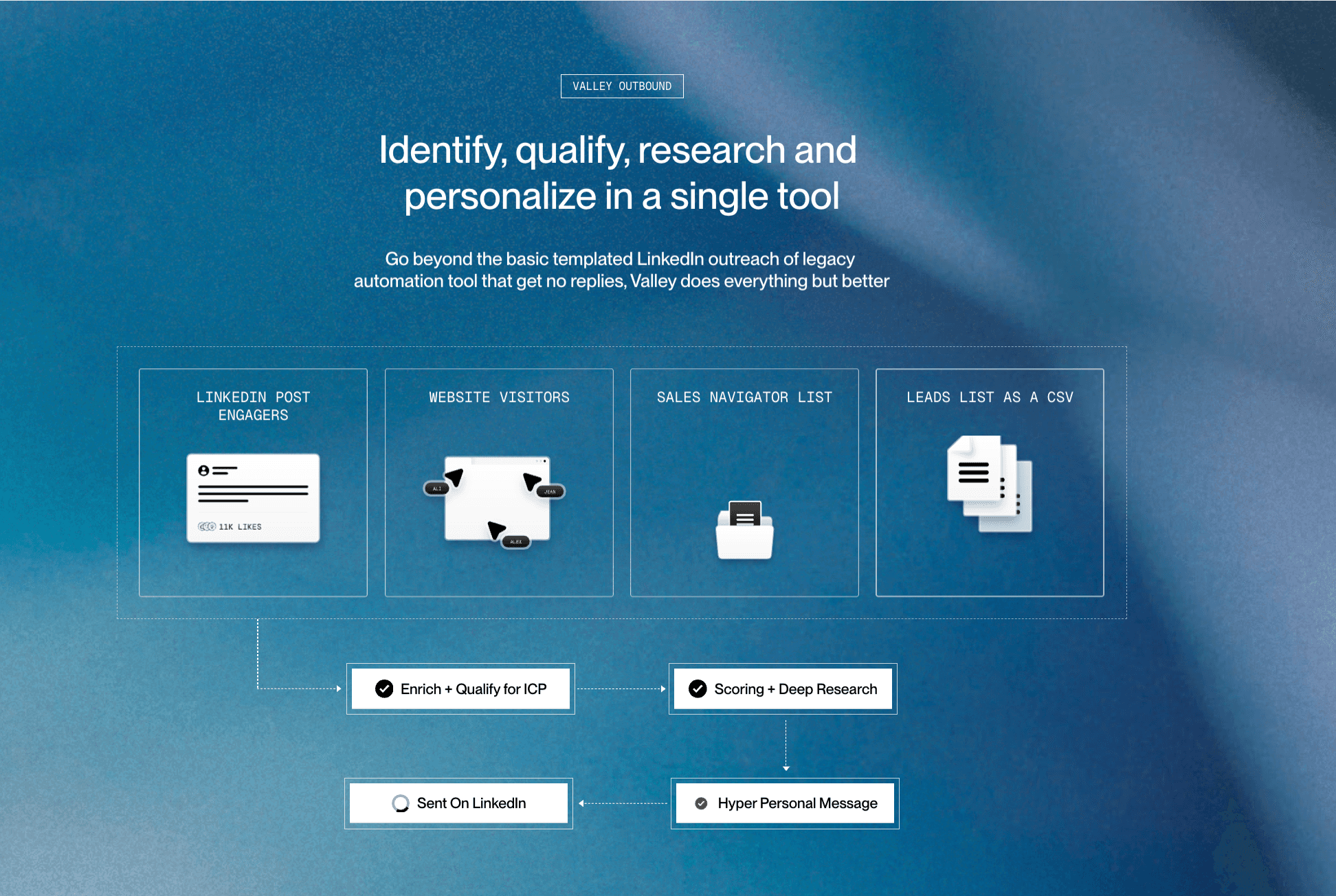
► Your buyers are already on LinkedIn; reach them with a free 7-day Valley trial

Give your sales team
an unfair advantage.
Time-to-value is the day your customer gets a result that makes them feel like they made the right call.
The question worth tracking and obsessing over: when is the first moment a customer thinks “yes, this was worth it”?
Everything before that moment is runway. Everything after it is momentum.
For every product, that moment looks different. A project management tool might reach it when a team ships something using the new workflow for the first time. A recruiting tool might reach it when the first qualified candidate shows up. Whatever that moment is for your product, your entire onboarding should be designed to reach it as fast as possible.
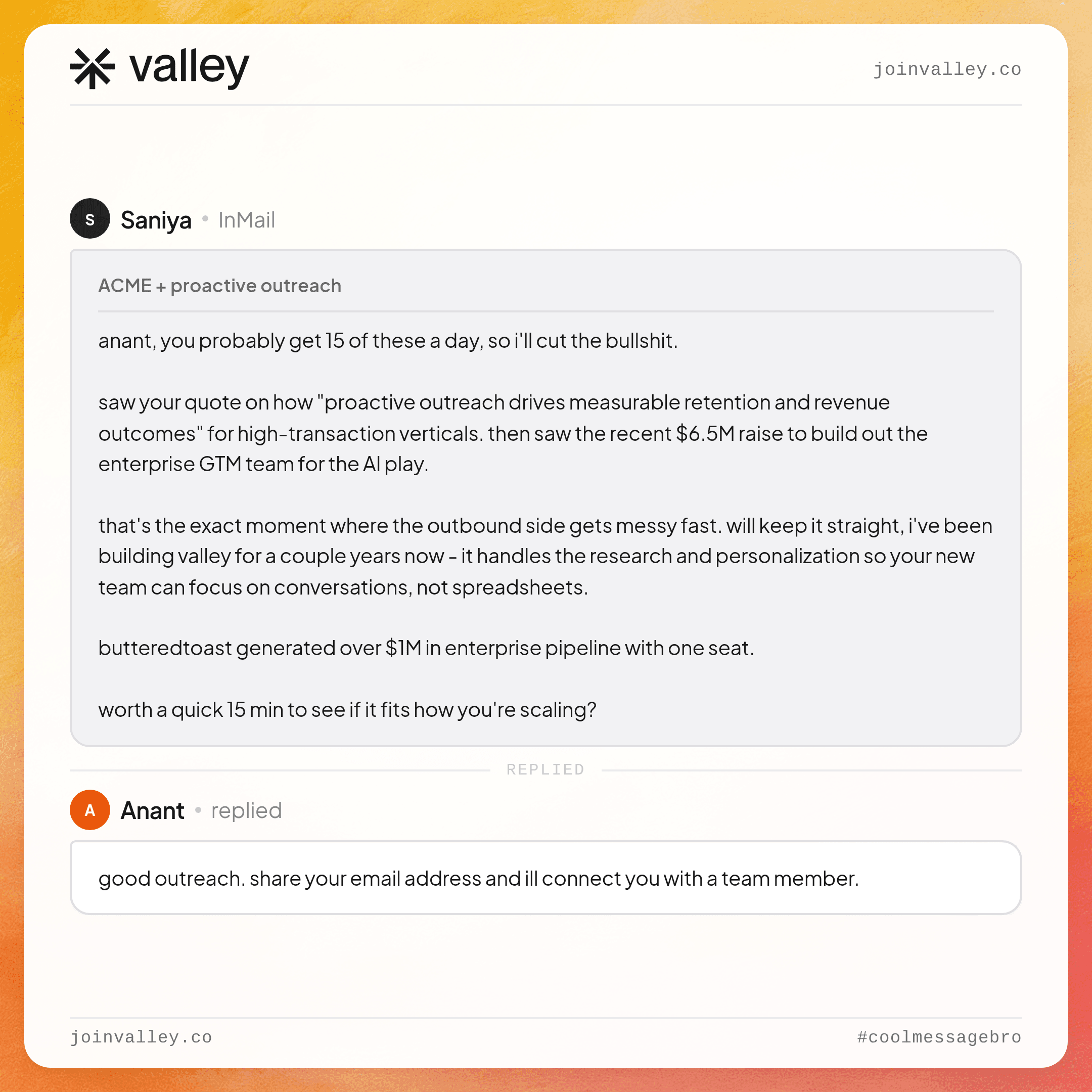
► Check Out Valley’s Incredible Outreach: A compilation of real time messages and responses!
💡 LinkedIn Tip of the Week
Connection requests sent within 24 hours of someone viewing your profile have 3x higher acceptance rates. Strike while warm.
Why Onboarding Actually Breaks
At most early-stage companies, onboarding breaks in one of two ways.
The handoff problem. Information dies at the close. The customer re-explains themselves. Context is lost. Trust drops.
Pace mismatch. Your company assumes the customer has the bandwidth to get up to speed on a reasonable timeline. The customer is managing seventeen other priorities and treats onboarding as one more item on an already-crowded list. Two weeks pass and they’ve barely opened the product. Both of these are process failures, not customer failures.
🎁 Free Resource
The B2B Growth and Sales Creator Handbook: claim it here.

Give your sales team
an unfair advantage.
The best onboarding is opinionated.
It tells the customer exactly what to do, in what order, and why, in enough detail that they can actually follow it. Three things this week. One call next week. First result by day fourteen.
There’s no ambiguity about what the next step is. No customer should ever be left wondering “what am I supposed to do now?”
The other thing good onboarding does is catch drift early.
If a customer hasn’t done what they committed to by the day they committed to it, that is a signal. Treat early disengagement with the same urgency as a late payment. By the time a customer is formally disengaged, the renewal decision is usually already made.
The gap between signed and churned is not where you recover it. The gap between signed and the first meaningful win is where you either keep or lose them.
See more of Valley’s outreach examples: coolmessagebro.com
Generate more demos using LinkedIn: Book here
Become a Valley partner and earn 20% recurring commission: Join the affiliate program
Frequently Asked Questions
When do SaaS customers decide whether to renew?
Research consistently shows that the average SaaS customer forms their renewal decision within the first 90 days of using the product, with some studies placing the window even shorter. Churn that appears in months four or five was typically decided in month two. The renewal is won or lost during onboarding, not during the renewal conversation.
What is the handoff problem in SaaS onboarding?
The handoff problem is the loss of context that occurs when a deal closes and ownership transfers from the AE to a CS rep or onboarding team. The AE held detailed knowledge of why the customer bought, what they were worried about, and what success looked like to them. When that context isn’t passed along, the customer is forced to re-explain themselves, trust partially resets, and the relationship starts behind where it left off.
What is time-to-value in SaaS and why does it matter for retention?
Time-to-value is the point at which a customer first experiences a result that confirms they made the right purchase decision. Everything before that point is risk: the customer is spending time and effort without yet feeling the payoff. The faster a customer reaches their first meaningful win, the more likely they are to stay and expand. Every week of onboarding without a tangible result increases churn risk.
What causes pace mismatch during onboarding?
Pace mismatch happens when the vendor’s onboarding timeline assumes the customer has dedicated bandwidth to get up to speed, but the customer is managing multiple competing priorities. The customer treats onboarding as one item among many rather than a top priority. Without a structured, specific onboarding plan that tells them exactly what to do and when, customers drift and disengage before reaching their first meaningful result.
What does good SaaS onboarding look like in practice?
Good onboarding is opinionated and specific: three actions in week one, one structured call in week two, a first measurable result by day fourteen. It sets clear expectations, removes ambiguity about next steps, and monitors engagement closely enough to catch drift before it becomes disengagement. Early warning signals (missed tasks, low logins, skipped calls) should be treated with the same urgency as a late payment.
Related: LinkedIn lead generation for B2B SaaS.
► The use case above is a template; make it yours in a free 7-day Valley trial
See also: Sales Navigator Buyer Intent Filters: The Category Interest Filter Nobody Is Using · The $750 Stack Problem: Consolidating Clay + HeyReach + ChatGPT Into One Motion · It takes someone 33 milliseconds to make their mind up about you


