Valley vs Expandi: Which LinkedIn Outreach Tool Is Right for Your Team?

Try Valley
Make LinkedIn your Greatest Revenue Channel ↓

Saniya
Published:
Updated:
Valley vs Expandi: Which LinkedIn Outreach Tool Is Right for Your Team?
Published June 21, 2026 · Updated August 31, 2026
Trial and pricing, verified hands-on (August 2026): Expandi’s 7-day free trial requires a card upfront - $0 today, then $99/month per seat (or $79/month billed yearly). Each seat connects one LinkedIn account.
If you're evaluating LinkedIn automation tools in 2026, Valley and Expandi are two names that consistently come up. They both automate outreach on LinkedIn, but they take fundamentally different approaches, serve different goals, and produce very different results. This comparison breaks down exactly where they differ so you can make a clear decision.
Valley makes one of the tools in this category. We've marked our entry clearly and included tools that beat us for specific jobs.
► Book a demo (teams of 5+) and explore how Valley can support your use case

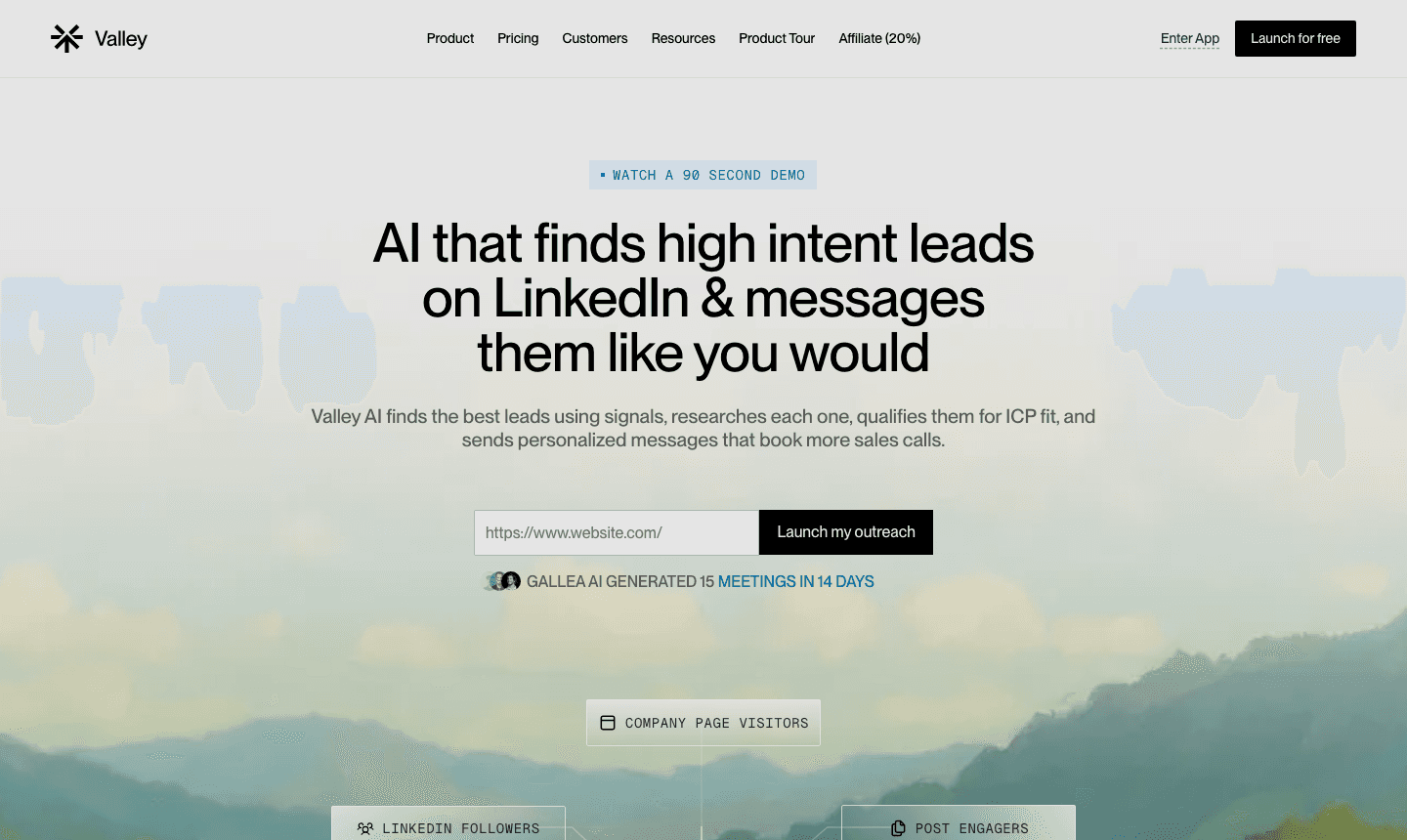
Valley is an AI outbound platform that finds the people most likely to buy from you - from live buying signals, natural-language search, or your own lists - qualifies them against your ICP, researches each one, and sends personalized messages across email and LinkedIn that get 15-45% reply rates, against a category average of about 2%.
► Start a free 7-day Valley trial and run this Expandi comparison on your own pipeline

What each tool actually does
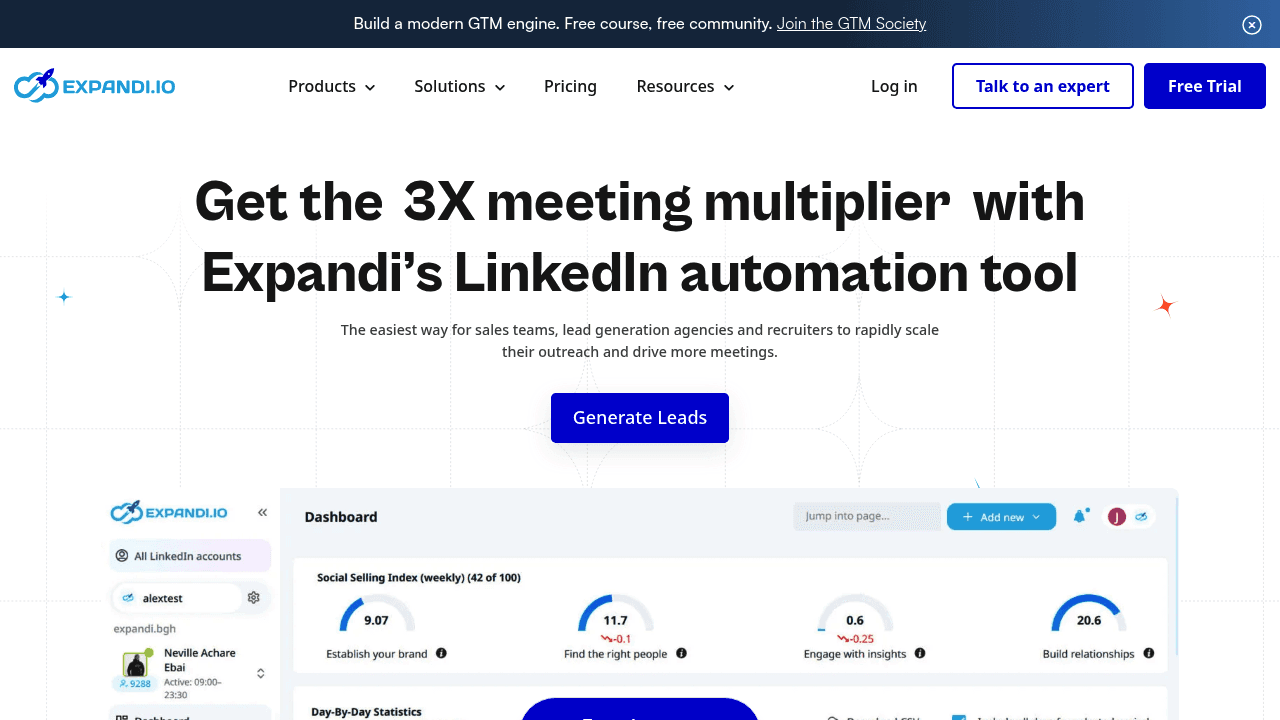
Valley is an AI-powered LinkedIn outreach platform built around signal-based warm outbound. Instead of blasting a cold list, Valley captures people already showing intent, profile viewers, post engagers, competitor followers, company page visitors, and qualifies them against your ICP before a single message is written. Its AI then researches 60+ signals per prospect (blogs, podcasts, recent posts, company news) and drafts outreach in your tone, from your account.
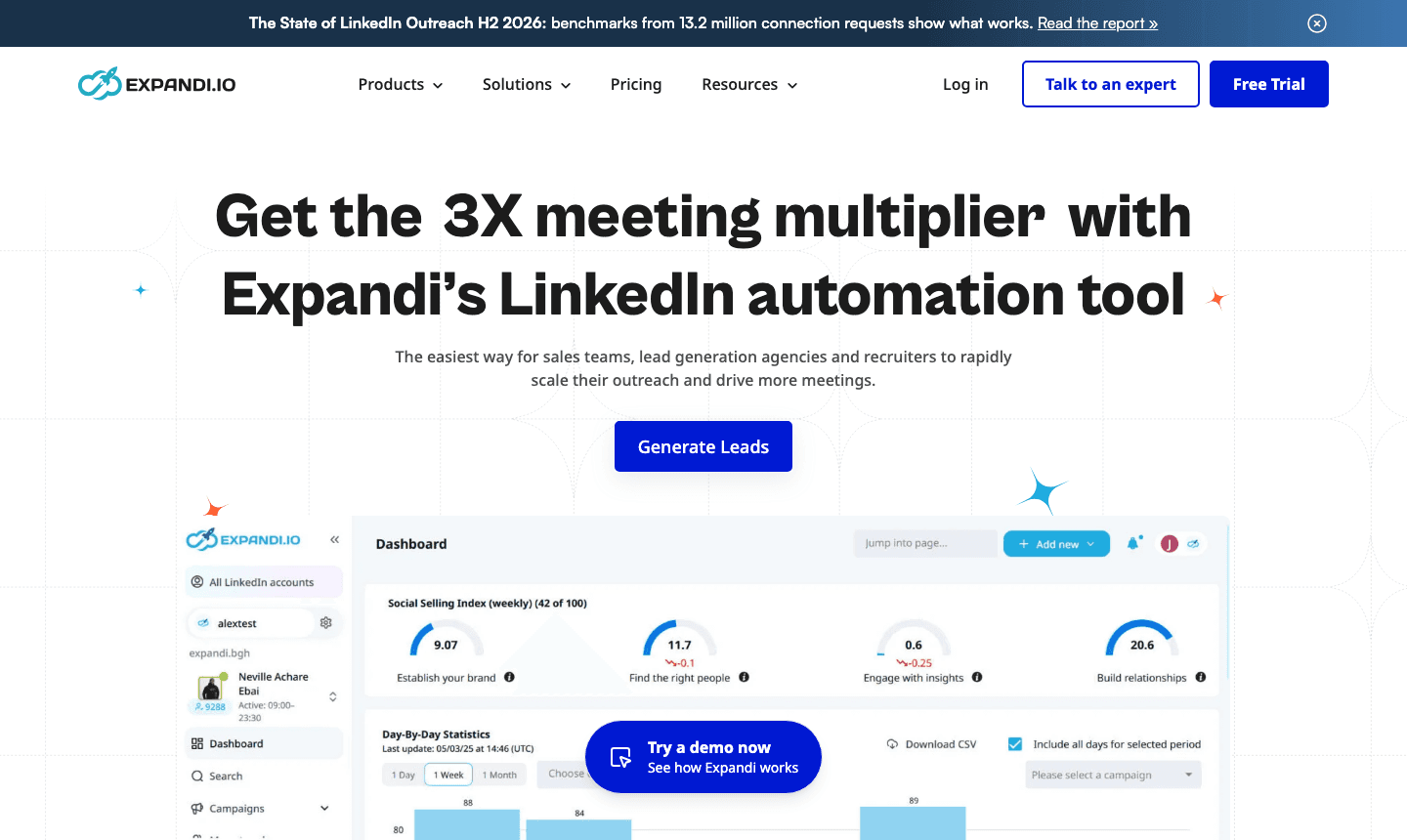
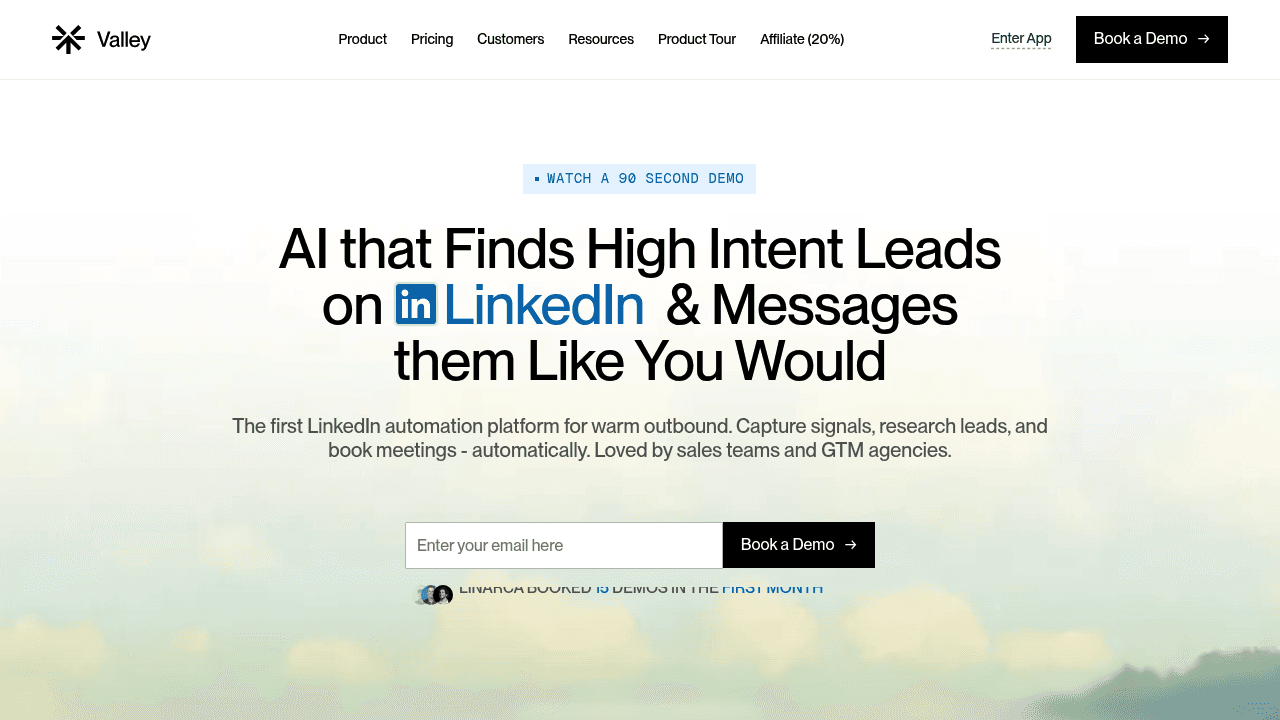
Expandi is a cloud-based LinkedIn automation tool with optional email follow-ups. Its core strength is conditional sequences, meaning you can build if/then workflows (if accepted, send message A; if no reply after 3 days, send message B). It runs in the cloud so campaigns continue when your computer is off, and it uses dedicated IPs to reduce ban risk. Personalization relies on dynamic placeholders and optional GIF/image integrations through third-party tools like Hyperise.
Feature-by-feature comparison
Feature | Valley | Expandi |
|---|---|---|
Lead source | Warm intent signals (engagers, viewers, competitor audiences) | Imported lists, Sales Navigator, LinkedIn searches |
ICP scoring | Automated, AI-driven, auto-removes unfits | Manual filters and targeting criteria |
Personalization | AI research on 60+ signals, clones your writing style | Dynamic placeholders, GIF/image personalization via third-party tools |
Channels | LinkedIn-only | LinkedIn + email |
Message generation | Fully AI-written per prospect | Template-based with variable insertion |
Safety | Native LinkedIn limits, dedicated IPs, zero account suspensions reported | Cloud-based dedicated IPs, daily action caps |
Agency/multi-account | Yes | Yes |
Pricing | $149/mo billed quarterly ($199 monthly) | $99/month per seat ($79/month annually) |
Reply rates reported | 15 - 45% | ~10 - 25% across channels |
How they differ on personalization
This is where the two tools diverge most clearly. Expandi's personalization is template-driven. You write a message, insert {{firstName}}, {{company}}, maybe pull in a custom field from your CSV, and that's what goes out. It's functional and fast, but the output reads like a template. Users can add dynamic images or GIFs through Hyperise (at extra cost), which helps response rates for some audiences.
Valley's approach is different. Its LinkedIn AI message generation doesn't start with a template. It starts with research: what did this person post about last week, what podcast did they appear on, what's happening at their company right now? The message is then drafted to reference a specific, real detail that signals you actually paid attention. The model also clones your writing voice so the output doesn't read as AI-generated. That's the reason Valley reports 15 - 45% reply rates versus the 1 - 2% teams typically see from generic automation stacks.
Expandi is honest about what it is: a sophisticated sequencer with volume and workflow flexibility. Valley is attempting something harder, quality at scale through research.
Lead sourcing: warm signals vs. cold lists
Expandi requires you to bring your own data. You supply a list (Sales Navigator export, Apollo, CSV), and Expandi automates the sending. Lead quality depends entirely on your sourcing work upstream.
Valley captures leads from intent signals directly inside LinkedIn. Profile viewers, people who commented on your posts, followers of competitor accounts, these are prospects already in your orbit. The platform's ICP qualification system then scores and filters these leads so you're only messaging the top 20% of inbounds. This removes the dependency on an external prospecting tool and eliminates a whole layer of the outbound stack.
For teams already running Clay + Apollo + a sequencer, Valley replaces most of that stack with one workflow. Expandi slots into an existing multi-tool setup.
Pricing and value
Expandi is priced at $99/month per seat ($79/month on annual billing). That's the full platform, no feature tiers. However, if you want advanced visual personalization, you'll need Hyperise or Sendspark on top, adding $30 - $80/month. For agencies managing 10+ accounts, custom pricing applies.
Valley is priced at $149/month billed quarterly, or $199 month-to-month. That's roughly 1.5x Expandi's base price. Whether it's justified depends entirely on results: teams that need volume sequencing on existing lists will find Expandi more cost-efficient, while teams prioritizing reply rates and pipeline quality will find the math works differently. According to Valley's customer data, users typically generate over $100K in pipeline per seat within three months.
Customers like Bolt.new booked 25 enterprise demos in 45 days and generated seven figures in pipeline within 60 days. GGWP generated $4M in pipeline. Those numbers are hard to replicate with template-based outreach alone.
Pros and cons
Valley
Warm intent signals eliminate cold list dependency
AI research and voice-cloning produce genuinely human-sounding messages
Built-in ICP scoring filters out non-fits automatically
15 - 45% reply rates reported across customer base
No LinkedIn account suspensions reported
Higher cost per seat
LinkedIn-only (no email channel)
Expandi
Strong conditional sequence logic with if/then branching
LinkedIn + email outreach in one platform
Cloud-based safety with dedicated IPs
Lower price point at $79 - $99/seat
Wide CRM integrations (HubSpot, Pipedrive)
Requires you to bring your own list data
Personalization is template-based, not research-driven
Dynamic image personalization requires paid third-party tools
Steeper learning curve for advanced workflows
Keep exploring: Expandi alternatives · Valley pricing, explained · real customer results.

Which tool suits which buyer
Choose Valley if your team is LinkedIn-first, you want to convert warm signals into pipeline without building a complex stack, personalization quality is more important than raw send volume, or you're a GTM agency that needs to show measurable meeting results for clients. The warm outbound approach for GTM agencies is particularly strong for agencies trying to move away from cold lists.
Choose Expandi if you already have a solid prospecting list and need reliable sequence automation, you want LinkedIn and email in one tool, you're cost-sensitive and can trade some personalization quality for lower per-seat pricing, or you're comfortable with a setup that requires additional enrichment tools upstream.
► Book a demo (teams of 5+)
Both tools protect LinkedIn accounts using cloud infrastructure and daily limits. Both support agency-style multi-account management. The real question is whether your bottleneck is send volume (Expandi handles that well) or reply rate and lead quality (that's Valley's core strength). For B2B teams where LinkedIn is the primary revenue channel and every meeting booked matters, Valley's signal-based outbound methodology is a meaningful step up from template automation.
Frequently Asked Questions
Q: How does Valley compare to Expandi for LinkedIn outreach?
A: Valley is AI-powered signal-based warm outbound it captures intent signals, auto-qualifies against your ICP, researches 60+ signals per prospect, and writes in your voice. Expandi is a cloud-based sequencer whose strength is conditional if/then workflows on lists you import.
Q: Is Valley worth the higher price compared to Expandi?
A: Valley is $149/month billed quarterly ($199 monthly) versus Expandi’s $99/month ($79 annually). The premium turns on results for Valley customers typically generate $100K+ in pipeline per seat within three months, while Expandi is more cost-efficient for volume sequencing on existing lists.
Q: Does Valley or Expandi have better personalization?
A: Expandi uses template placeholders and optional paid GIF/image tools like Hyperise. Valley starts from research: recent posts, podcasts, company news and clones your writing voice, which is why it reports 15 - 45% reply rates versus the 1 - 2% of generic automation.
Q: Do I need to bring my own lead list to use Valley or Expandi?
A: Expandi requires you to supply data from Sales Navigator, Apollo, or a CSV. Valley captures leads from intent signals inside LinkedIn (profile viewers, post commenters, competitor followers) and scores them automatically, removing a whole layer of the stack.
Q: Should I choose Valley or Expandi for combined LinkedIn and email outreach?
A: Choose Expandi if you need LinkedIn and email in one tool with advanced sequence branching on existing lists. Choose Valley if you’re LinkedIn-first and want warm-signal pipeline and research-driven personalization without building a stack.

Related Blogs

FEATURED READ
5 min
ZoomInfo Pricing Explained (2026): What It Actually Costs
Read
Read

FEATURED READ
5 min
Apollo Pricing and Credits Explained (2026): What You Actually Pay
Read
Read

FEATURED READ
5 min
Clay Pricing and Credits Explained (2026): The Post-March Math
Read
Read

FEATURED READ
5 min
LinkedIn Sales Navigator Cost Explained (2026): Every Tier, Real Numbers
Read
Read
Which channels does Valley support?
Valley supports LinkedIn outreach, including connection requests and InMails. Valley users safely send 1000-1200 messages per seat every month.
How safe is it and does Valley risk my LinkedIn account?
Do I have to commit to an Annual Plan like other AI SDRs?
How does Valley personalize messages?
Is Valley available in my country?

VALLEY MAGIC