Website Visitor Intent for GTM Agencies: Turning Anonymous Traffic Into LinkedIn Conversations

Try Valley
Make LinkedIn your Greatest Revenue Channel ↓

Saniya Sood
Published:
Why Website Visitor Intent Is the Highest-Value Signal for B2B LinkedIn Outreach
Most GTM agencies know this intellectually. Most do nothing with it, because the workflow between "someone visited the pricing page" and "that person gets a personalized LinkedIn message" requires several tools and manual handoffs that do not exist in the typical agency stack.
Valley closes that gap. The intent tool de-anonymizes website visitors, matches them against the client's LinkedIn ICP, and automatically creates campaigns targeting the ICP-matched visitors with personalized LinkedIn outreach that references their website activity.
GTM agencies use Valley's website visitor intent tool to identify anonymous B2B website visitors, match them against the client's defined ICP, and launch LinkedIn outreach campaigns that reference their visit. This converts passive website interest into active conversations within 24–48 hours.
Tim O'Neil at GGWP described the tool: "When we think about intent, people don't stop on a lot unless they're willing to buy." High-intent visitors contacted in proximity to their visit produce higher reply rates than any other signal type in Valley's portfolio.
► Book a demo and explore how Valley can support your use case

Why Website Visitor Intent Is the Highest-Value Signal for B2B LinkedIn Outreach
In the hierarchy of warm signals that Valley captures, website visitors represent demonstrated research intent. The prospect navigated to the client's domain they did not stumble there. They searched for something specific, followed a link from a relevant context, or were referred by a colleague or review platform.
Time spent on high-value pages (pricing, case studies, product documentation) intensifies the signal. A 3-minute visit to a pricing page followed by a view of the case studies page is a compelling research signal. That behavior, identified and acted on within 24 hours, produces a different kind of outreach than messaging a cold prospect from a Sales Navigator list.
Tim O'Neil at GGWP articulated why website intent converts well: "The Valley intent tool has been the icing on top. It's been a good conversation opener and obviously when we think about intent, people don't stop on a lot unless they're willing to buy, right? So having that contextual relevance and that speed to contact has been really, really awesome for me to have as well."
He also noted Valley's technical advantage in this area: "We actually had tested one concurrently at the same time as we were using Valley. And it was literally like 8 to 10x the number of hits that we were getting on Valley versus the other product that we were using at the time."
The Website Visitor Intent Workflow for GTM Agencies Using Valley
Step 1 Connect the intent tool: Valley installs a JavaScript snippet on the client's website. This tracks visitors and enables identification against Valley's B2B company and contact database.
Step 2 ICP filtering: Of all identified visitors, Valley filters for those who match the client's defined ICP (title, industry, company size, geography). Consumers, job applicants, and off-ICP visitors are excluded. This typically yields 20–40% of identified visitors as genuinely ICP-qualified.
Step 3 Slack notification: When an ICP-matched visitor is identified, Valley sends an immediate Slack notification to the agency operator. This gives the agency the option to act on high-priority visitors (e.g., known target accounts) immediately.
Step 4 Campaign enrollment: ICP-qualified visitors are automatically enrolled in a LinkedIn outreach campaign. Valley researches each visitor (role context, recent LinkedIn activity, company news) and generates a first message that references their interest in the client's offering without directly saying "I saw you on our website" which can feel invasive. Instead, the message references a relevant business problem the client solves and invites a conversation.
Step 5 Agency review and send: The agency reviews generated messages in Valley's Training Center. Approves and schedules. Valley sends within safe LinkedIn limits.

What B2B Website Visitor Tracking Tools GTM Agencies Should Know
What B2B Website Visitor Tracking Tools GTM Agencies Should Know
The B2B website visitor tracking market has grown significantly as intent data has become more valued in outbound strategy. Key tools in the space include Valley's built-in intent tool, Clearbit Reveal (now Hubspot), ZoomInfo's website intent product, and specialized tools like Leadfeeder and Albacross.
Valley's advantage for GTM agencies is integration: the intent data flows directly into LinkedIn campaign creation without export, enrichment, or list-building steps. The visitor is identified, qualified, researched, and messaged all within Valley's platform, with agency review at the message stage.
Tools that require data export to a separate outreach platform introduce delays and manual steps that degrade the time-to-contact advantage that makes website visitor outreach effective. Valley's same-day identification-to-message workflow is the differentiator.
Read: Linkedln Prospecting Automation for GTM Agencies
What GTM Agencies Should Know About Website Intent and LinkedIn Safety
One concern agencies raise about website visitor campaigns: does referencing a website visit in a LinkedIn message feel intrusive? The answer depends on how the reference is handled.
Valley's message generation does not produce messages that say "I see you visited our website." Instead, Valley uses the visit as context for timing and the prospect's research interest as context for the message angle. The message might say: "Given your role in [Function] at [Company Type], I thought [Specific Problem] might be relevant to what you're working on." The message is relevant because of the visit; the visit is not mentioned directly.
This approach produces the contextual relevance that makes website visitor campaigns effective without the creepiness factor that makes explicit visit references counterproductive.
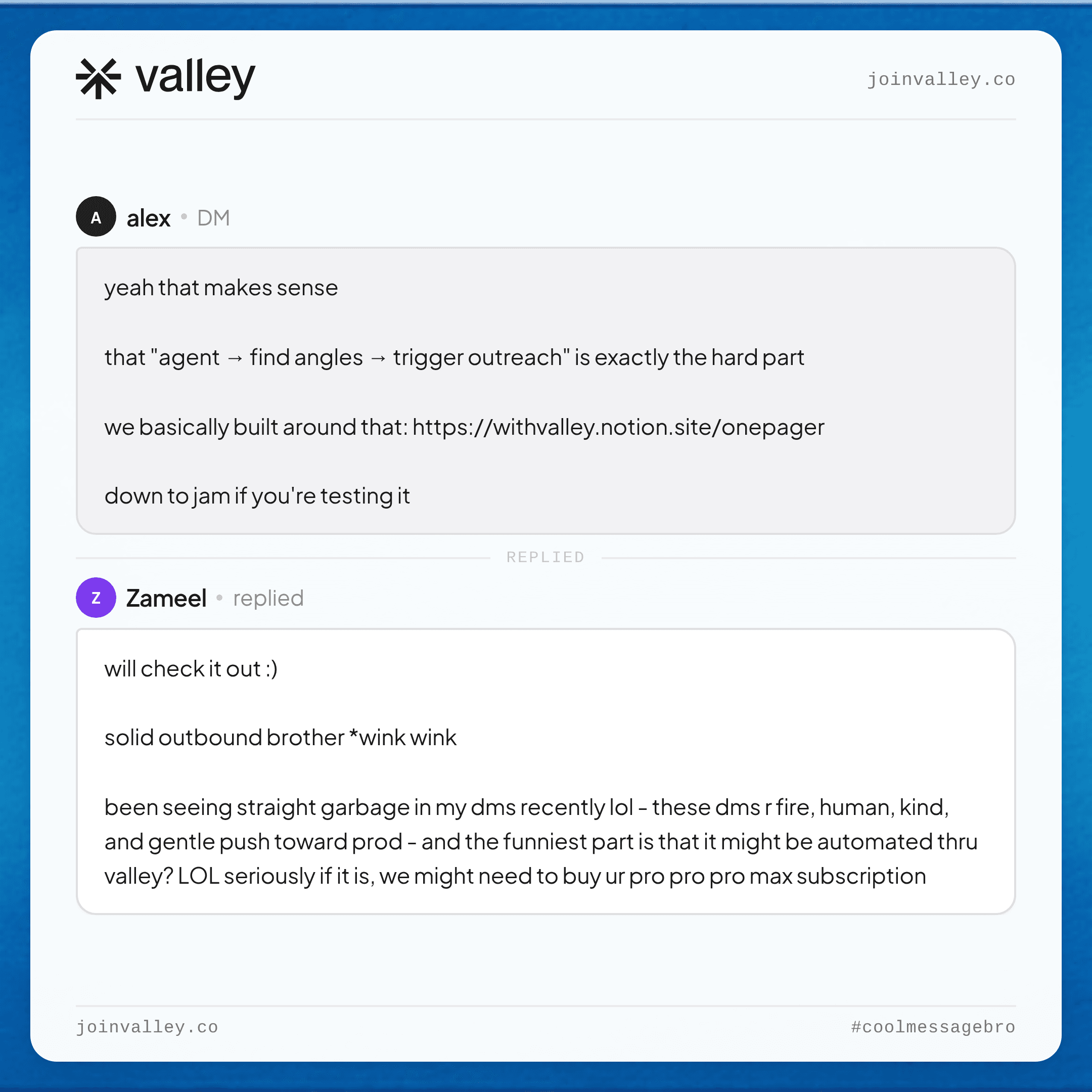
► Check Out More of Valley's Incredible Outreach: A compilation of real time messages and responses!

Website Visitor Intent to LinkedIn Pipeline for Agency Clients
If your agency's clients have website traffic and you are not converting that traffic into LinkedIn pipeline, you are leaving demonstrably warm prospects uncontacted. Valley's intent tool integrates this signal into the warm outbound workflow without additional tools or manual steps.
► Book a demo with the Valley team and see the intent tool setup and the full workflow from visitor identification to LinkedIn message for a client-specific use case.

Frequently Asked Questions
What is B2B website visitor intent tracking?
Technology that identifies which companies and individuals visit a B2B website by matching IP addresses and browser fingerprints against B2B contact databases. Used to identify anonymous website visitors for outreach.
How does Valley's website visitor intent tool work for GTM agencies?
Valley's intent tool identifies ICP-matched visitors in real time, sends Slack notifications to the agency, and automatically enrolls qualifying visitors in LinkedIn outreach campaigns. Valley researches each visitor and generates personalized messages all within the same platform.
How does Valley convert website visitors to LinkedIn prospects without feeling intrusive?
Valley uses the website visit as timing context, not message content. The first message references a relevant business problem rather than explicitly mentioning the website visit producing contextual relevance without the surveillance feeling.
What reply rates do website visitor campaigns produce?
Website visitor campaigns typically produce the highest intent scores of Valley's signal types, correlating with higher positive reply rates. The combination of ICP qualification, high-intent signal, and same-day contact timing drives above-average results.
How does Valley compare to other B2B website visitor tracking tools for agency use?
Valley integrates intent identification directly into LinkedIn campaign creation without data export or additional tools. Competitors in the intent space (Clearbit, ZoomInfo Intent) require separate outreach tools, adding steps and delays that reduce the time-to-contact advantage.

Related Blogs

FEATURED READ
5 min
Valley vs HeyReach: Which LinkedIn Outreach Tool Wins More Qualified Meetings?
Read
Read

FEATURED READ
5 min
Valley in 2026: Is the Price Worth the Pipeline?
Read
Read

FEATURED READ
5 min
Valley vs Dripify: Which LinkedIn Outreach Tool Actually Converts in 2026?
Read
Read

FEATURED READ
5 min
Valley vs. Hiring an SDR: The Real Cost and ROI Breakdown for 2026
Read
Read
Which channels does Valley support?
Valley supports LinkedIn outreach, including connection requests and InMails. Valley users safely send 1000-1200 messages per seat every month.
How safe is it and does Valley risk my LinkedIn account?
Do I have to commit to an Annual Plan like other AI SDRs?
How does Valley personalize messages?
Is Valley available in my country?

VALLEY MAGIC