Try Valley
Put your outbound workflow to work.

Saniya
Published:
Updated:
Published January 20, 2026 · Updated August 31, 2026
Valley data shows 50-75 word messages consistently outperform both shorter and longer alternatives. This length allows contextualization through specific personalization while maintaining scannable brevity. Shorter messages feel generic despite personalization. Longer messages lose readers before reaching the CTA.
The sweet spot varies by audience: executives prefer 40-50 words focusing on business impact, technical audiences tolerate 75-100 words with specific details, and mid-level managers engage with 60-75 words balancing context and efficiency. Valley automatically adjusts message length based on persona and context, though users can specify preferences through writing style configuration.
► Book a demo (teams of 5+)and explore how Valley can support your use case

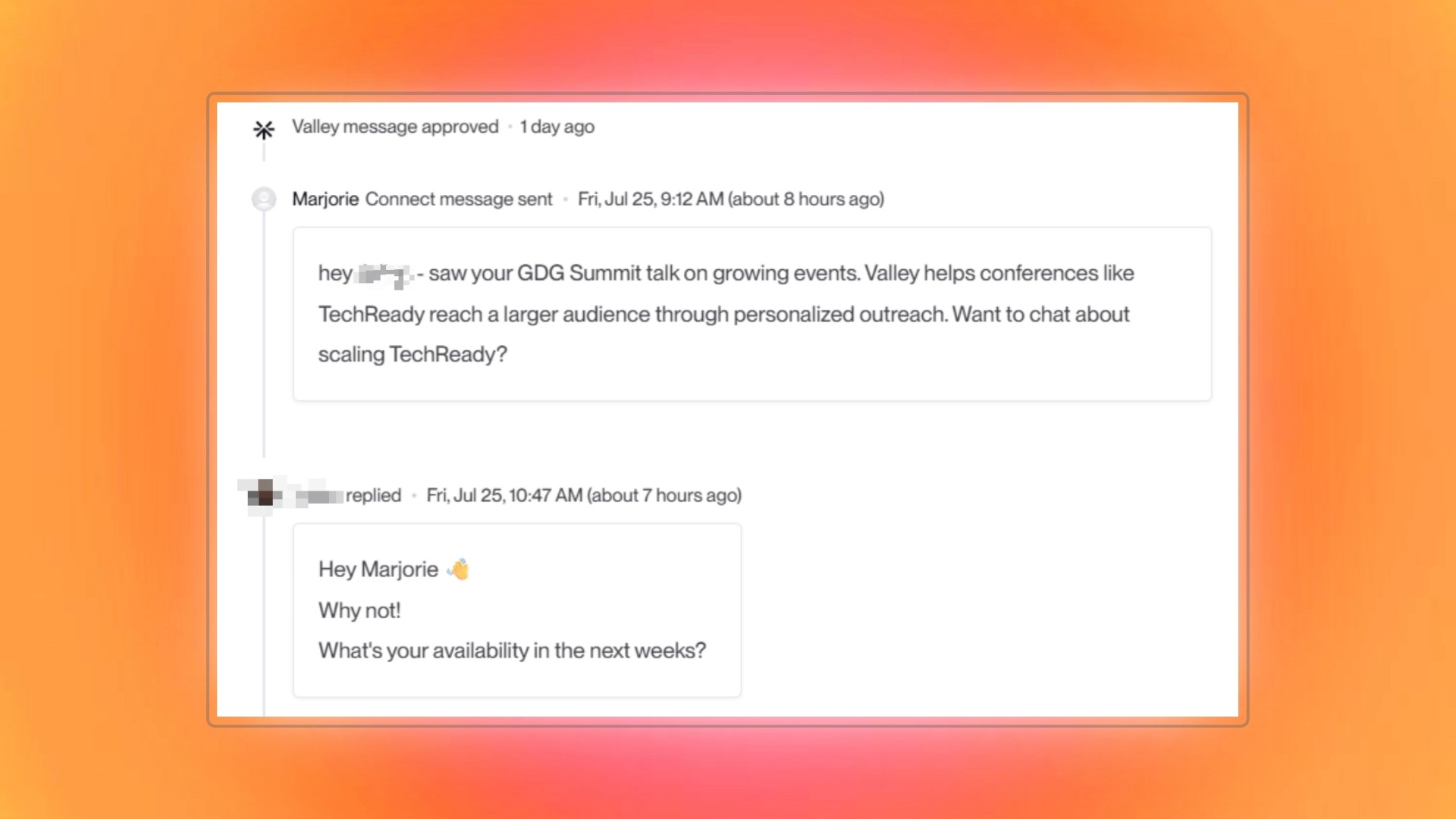
High-performing Valley openings share common characteristics: specific observation about recent activity, unexpected insight or question, and genuine value rather than false familiarity. Examples include: "Your post about [specific topic] resonated because [specific reason]," "Noticed [company] is hiring [specific role] - suggests [insight]," "Your approach to [specific initiative] is interesting because [observation]."
Avoid overused openings that trigger deletion: "I hope this finds you well," "I came across your profile," "I wanted to reach out," "Quick question," or "Following up." Valley's AI naturally avoids these patterns, but users sometimes override with poor instructions. Trust Valley's intelligence rather than forcing traditional templates.
► Check Out More of Valley's Incredible Outreach: A compilation of real time messages and responses!
How Should Valley Users Structure Their CTAs?
Effective Valley CTAs are low-commitment and specific. Rather than "Let's schedule a call," successful CTAs include: "Worth a quick conversation?" "Open to hearing how [specific company] solved this?" "Interested in seeing the data?" These CTAs feel conversational rather than salesy while maintaining clear next steps.
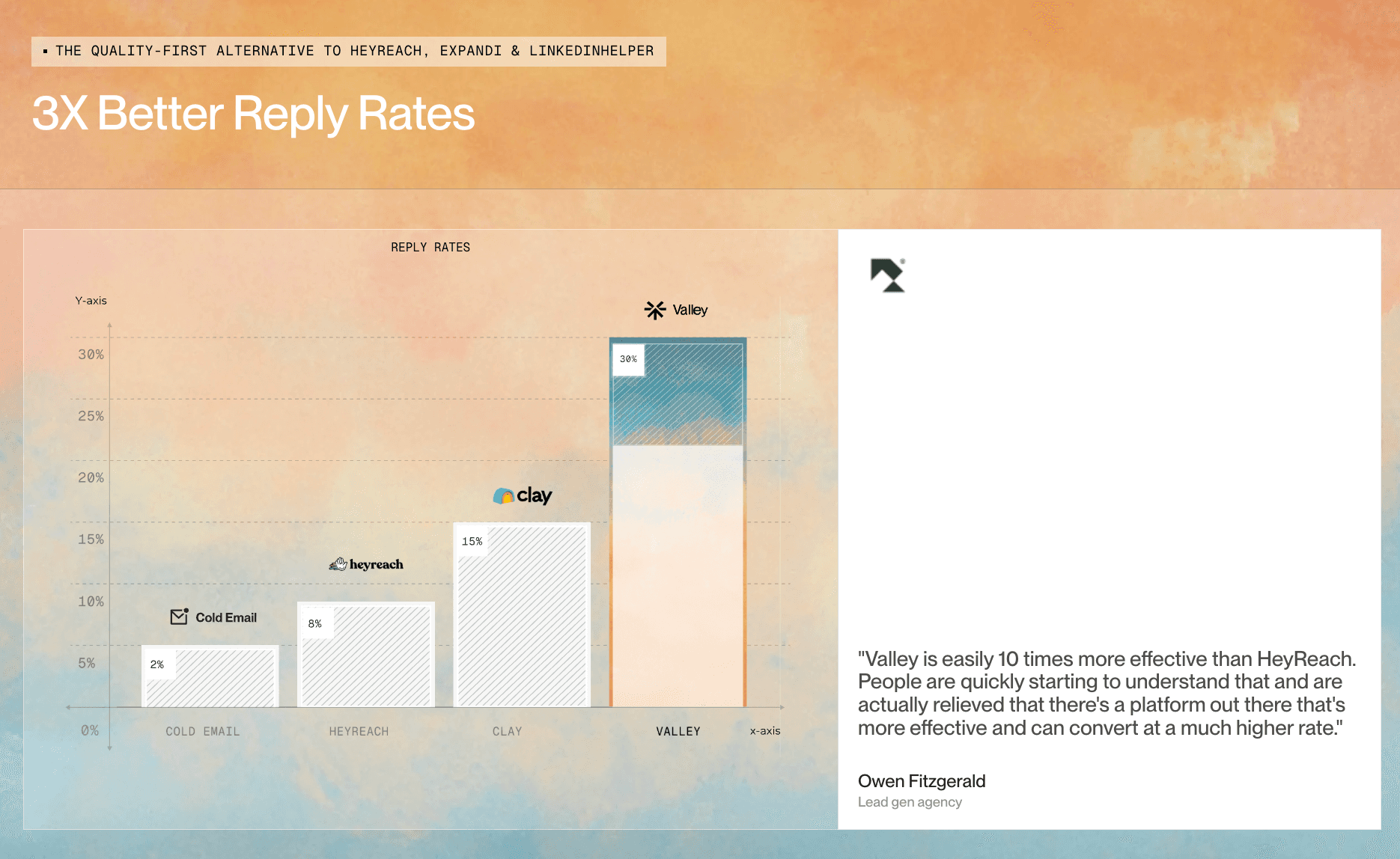
Valley automatically varies CTAs to prevent pattern detection. Sometimes questions, sometimes suggestions, sometimes leaving conversation open-ended. This variation maintains authenticity while driving action. Users report 2-3x higher response rates with soft CTAs versus hard meeting requests.
What Valley Message Cadence Maximizes Response?
Optimal Valley sequences follow expanding intervals: Day 0 (initial outreach), Day 3 (first follow-up), Day 7 (second follow-up), Day 14 (third follow-up), and Day 30 (final follow-up). This pattern balances persistence with respect. Compressed timelines appear desperate while extended gaps lose momentum.
Follow-up messages should evolve rather than repeat. First follow-up adds new information or insight. Second references different value propositions. Third suggests future reconnection. Final follow-up gracefully exits while leaving door open. Valley automatically generates evolutionary follow-ups, preventing the "just checking in" trap that destroys response rates.
Which Valley Personalization Types Drive Best Results?
Valley's highest-converting personalization involves specific, unexpected insights about prospects or their companies. References to specific initiatives, quotes from content they've created, observations about growth patterns, and connections between separate activities. Generic personalization like company size or industry actually decreases response rates.
The key is demonstrating genuine understanding rather than data access. Valley excels here - its research reveals connections humans would miss. One user reported a prospect responding: "How did you know about our expansion into that market? We haven't announced it yet." This deep personalization creates memorable first impressions.

While Valley lacks formal A/B testing, users successfully run parallel campaign experiments. Create 2-3 campaigns with identical targeting but different approaches: formal versus conversational tone, problem-focused versus solution-focused, question-based versus statement-based, and short versus detailed messages.
Run each campaign with 100-200 prospects for statistical significance. Valley’s analytics reveal performance differences within 2-3 weeks. Scale successful approaches while retiring underperformers. This iterative optimization consistently improves results. Valley’s AI learning ensures successful patterns propagate across future campaigns automatically.
What Valley Writing Styles Generate Premium Response Rates?
Premium response rates come from authentic, valuable communication rather than clever tactics. Valley’s most successful writing styles share characteristics: conversational rather than formal tone, specific rather than generic observations, value-first rather than request-first structure, and natural variation rather than rigid templates.
Configure these through dos and don’ts: “Do reference specific, recent activity,” “Don’t use marketing language or jargon,” “Do ask thoughtful questions,” “Don’t make assumptions about their challenges.” Valley interprets these guidelines intelligently, creating messages that feel genuinely helpful rather than sales-driven.
► Every step above runs inside Valley: see it free for 7 days. The first drafts tell you everything.
