Why B2B Teams Are Replacing Clay, PhantomBuster, and HeyReach With One Tool

Try Valley
Make LinkedIn your Greatest Revenue Channel ↓

Saniya
Published:
Updated:
Why B2B Teams Are Replacing Clay, PhantomBuster, and HeyReach With One Tool
Published June 16, 2026 · Updated August 31, 2026
If you're running LinkedIn outbound in 2026, you've probably built some version of the same stack: PhantomBuster for scraping, Clay for enrichment, HeyReach for sending. Each tool does one job reasonably well. Together, they look like a complete solution on paper.
The problem shows up once you're actually running it.
Data breaks at every handoff. CSV exports from PhantomBuster land in Clay, which waterfall-enriches them, then push to HeyReach for sequences. You become the glue. And before long, you've got a part-time RevOps problem disguised as a sales workflow.
► Book a demo (teams of 5+) and explore how Valley can support your use case

This comparison breaks down exactly what each tool does, what the three-tool stack actually costs, and whether an all-in-one platform makes more practical sense for most B2B teams.

What each tool actually does
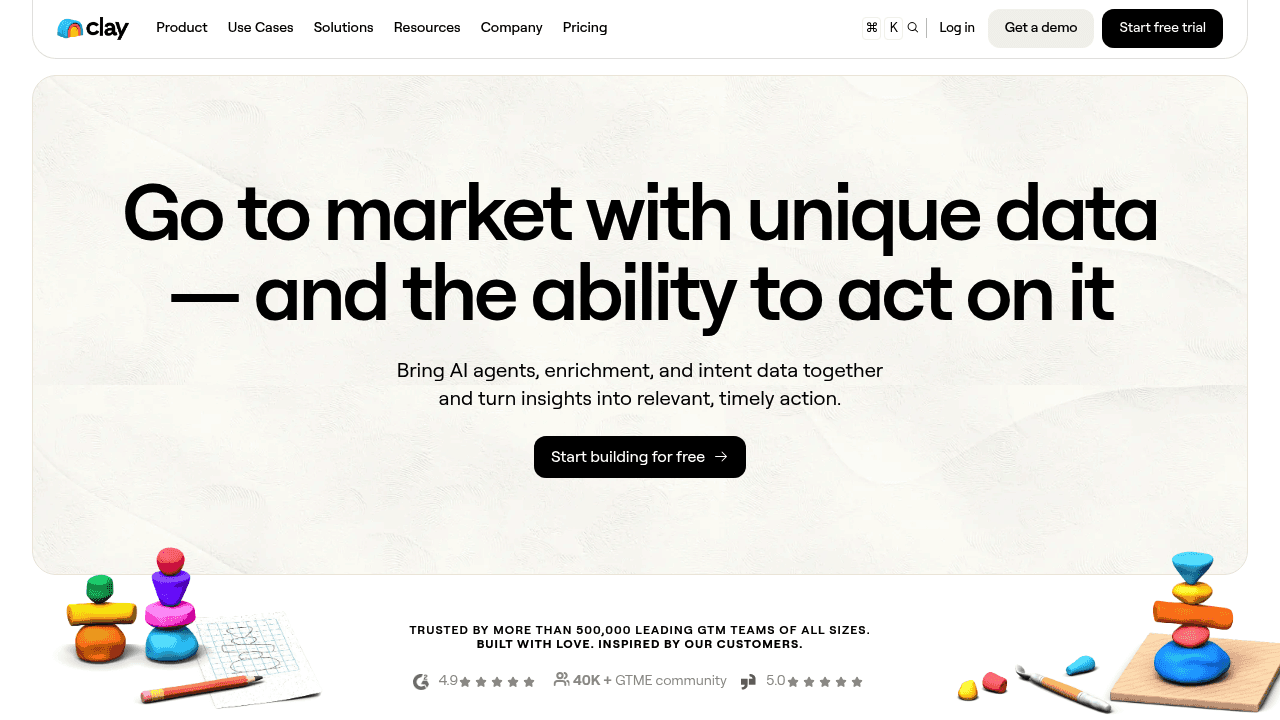
Clay is a data enrichment and workflow automation platform. Think of it as a programmable spreadsheet that connects to 150+ data providers including Apollo, Clearbit, and LinkedIn. Its "waterfall enrichment" queries multiple sources sequentially until it finds what it needs. Clay also has Claygent, an AI research agent that can scrape websites and summarize company information. What Clay doesn't do: send messages. It builds the list and enriches it. Everything downstream is your problem.
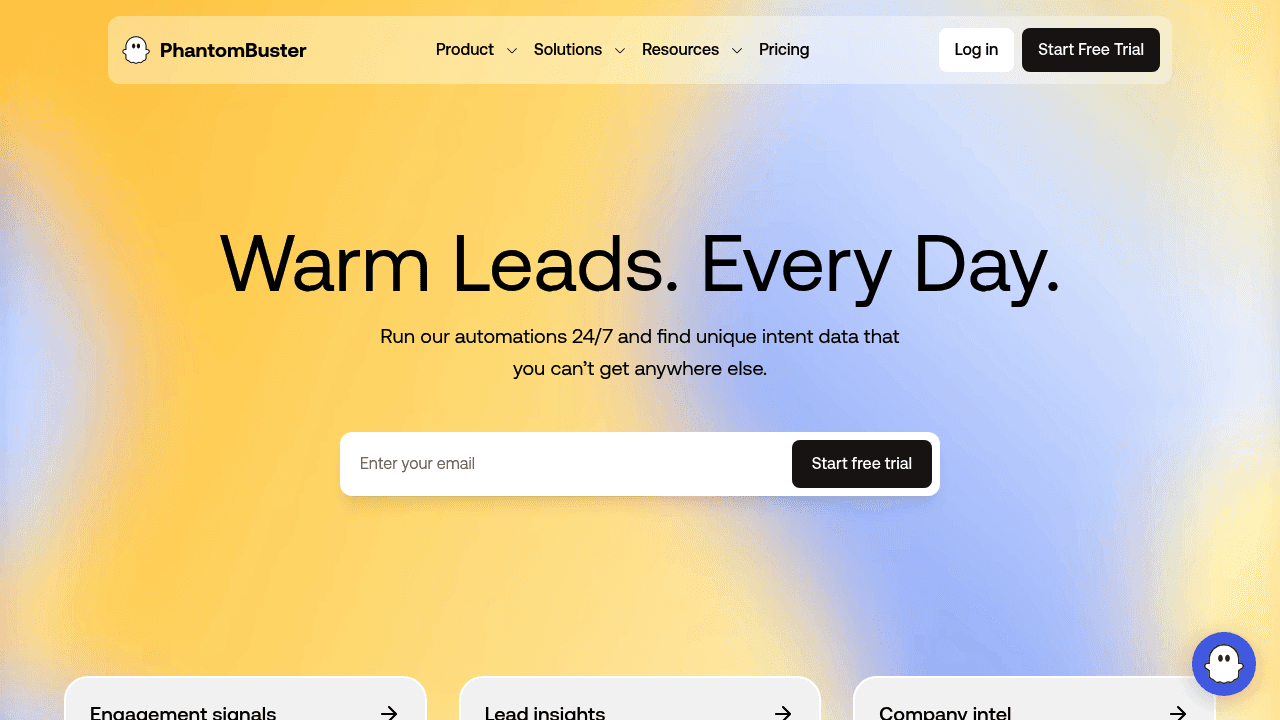
PhantomBuster is a cloud-based scraping and automation platform with 150+ pre-built "Phantoms" for extracting data from LinkedIn, extracting post engagers, and automating light actions like connection requests. It runs in the cloud so you don't need your laptop open. For raw data collection across social platforms, it's genuinely useful. The catch: it requires you to design every workflow yourself, and its personalization capabilities are minimal.
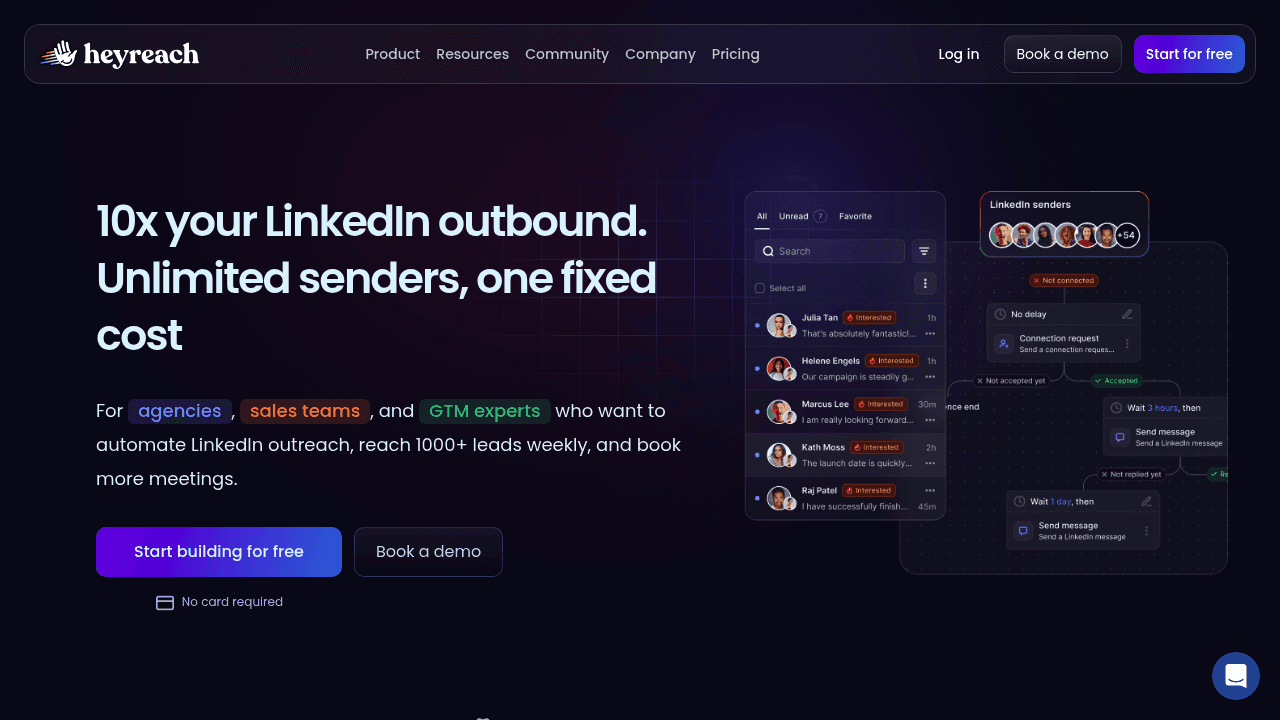
HeyReach is a LinkedIn outreach sequencer built for agencies and teams running high-volume multi-account campaigns. It solves LinkedIn's daily connection limit (20-40 requests per account) by rotating across multiple senders. Its unified inbox consolidates replies from all accounts. HeyReach handles the sending layer well. It doesn't handle lead sourcing, enrichment, or deep research.
Each tool covers one layer. None of them cover the full motion.
The real cost of running all three
According to Valley's own LinkedIn outbound stack cost breakdown, the combined monthly bill for this stack runs $709 to $1,800 per month in 2026, well above what most teams mentally budget.
Tool | Typical plan | Monthly cost |
|---|---|---|
Clay | Launch ($185/mo) or Growth ($495/mo) | $185 - $495 |
PhantomBuster | Starter or Pro | $69 - $159 |
HeyReach | Growth (per sender) to Agency | $79 - $999 |
Zapier / integrations | Required glue layer | $50 - $100+ |
Total | $383 - $1,753+ |
And that's before Clay's credit overages, which Amplemarket's April 2026 analysis noted can push a 25-user team's annual bill to $75K - $120K. Heavy enrichment workflows burn through Data Credits fast.
Then there's the human cost. Someone has to maintain the integrations, fix broken exports, update workflow logic when one tool changes its API, and troubleshoot why 200 leads vanished between PhantomBuster and Clay. That's not a task, it's a job.
Where the stack breaks down
The handoff problem is where the three-tool stack falls apart in practice. Clay enriches beautifully, but it doesn't know who's already warm. PhantomBuster can scrape post engagers, but it can't score them against your ICP. HeyReach sends at scale, but it has no idea why a prospect engaged or what message would be relevant to them specifically.
You end up with volume where you need precision. Messages go out to a list that was warm a week ago when you scraped it and is now stale. Personalization is limited to the fields Clay populated, job title, company, maybe a recent funding round, rather than anything genuinely contextual.
The other real issue: LinkedIn account safety. Running multiple disconnected tools that all touch LinkedIn increases detection risk. According to Valley's LinkedIn automation safety guide, tools that operate as browser extensions or that push heavy volume without native safety limits are the primary cause of account restrictions in 2026.
The all-in-one alternative: Valley
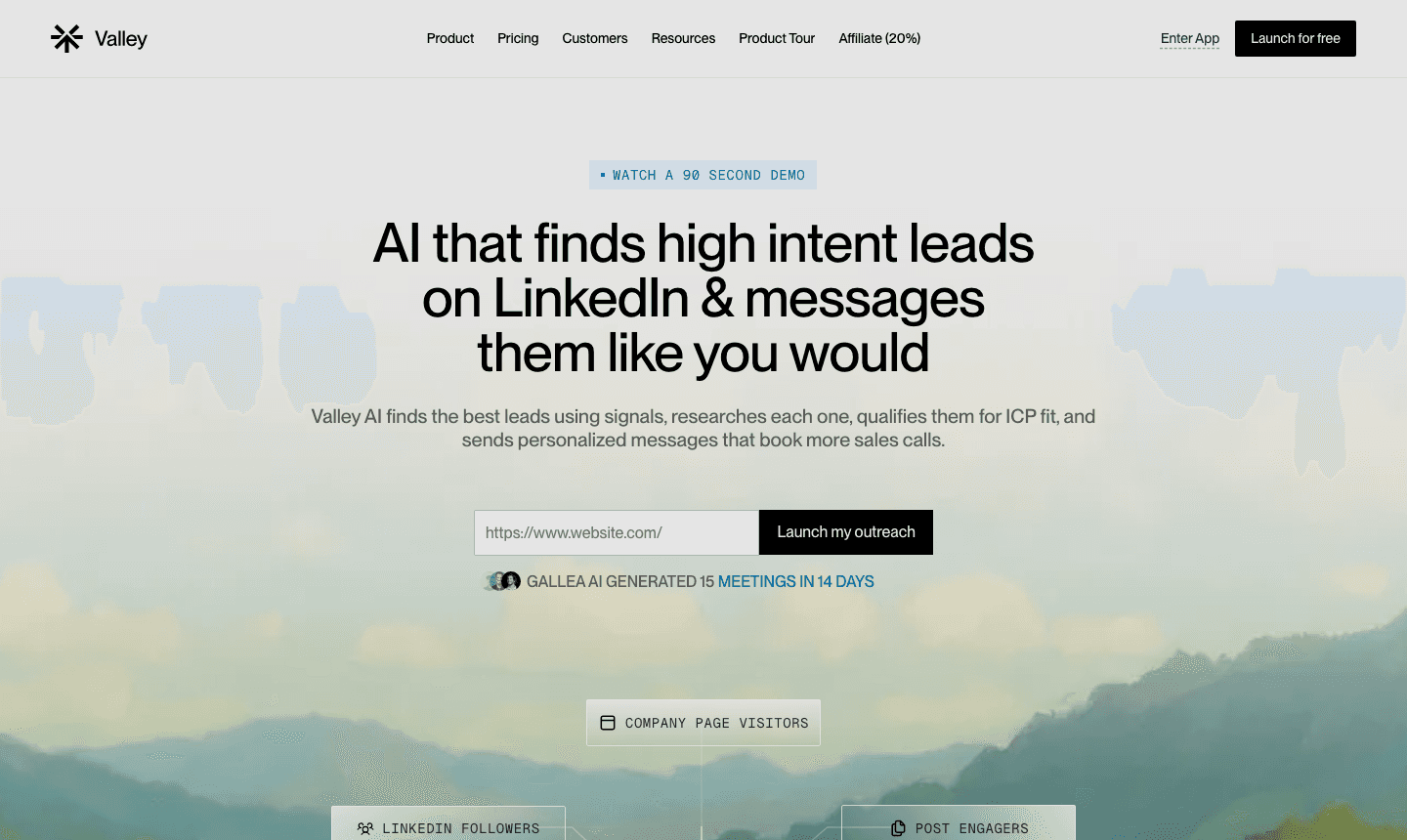
Valley was built specifically to replace this stack. It runs the full LinkedIn outbound motion, signal capture, ICP qualification, deep research, message generation, and sending, inside a single platform.
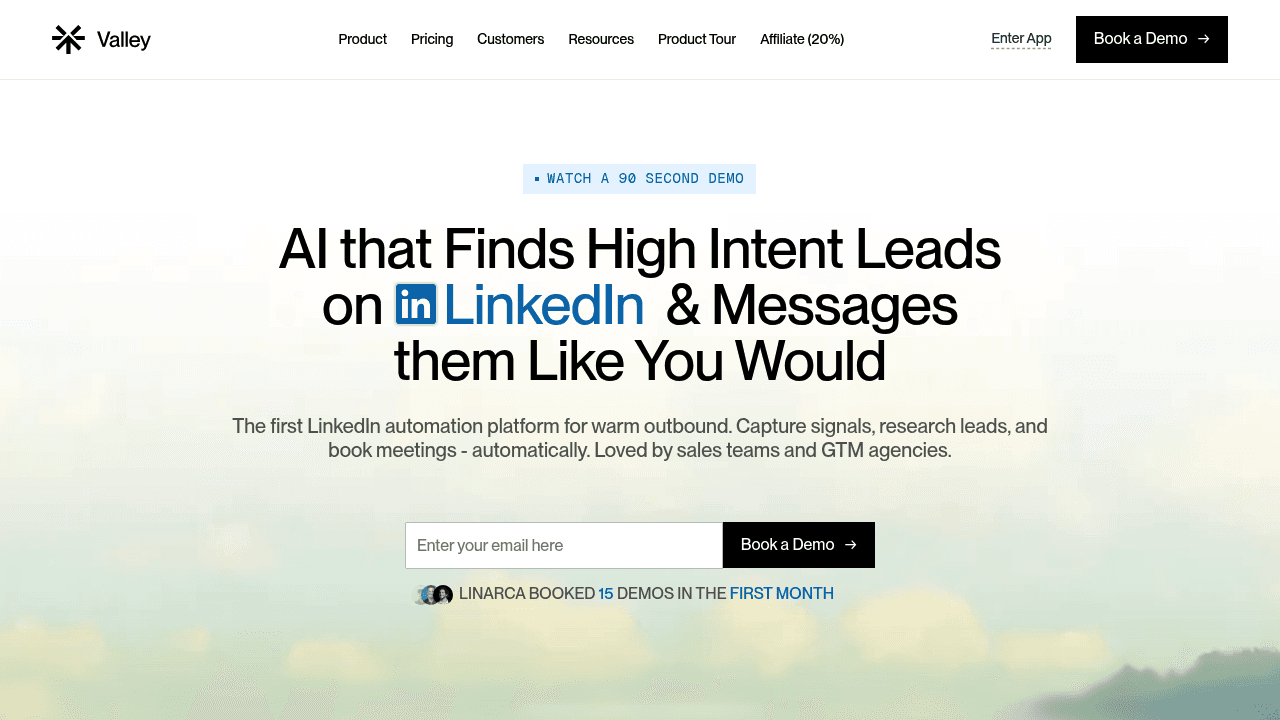
The core difference is where the workflow starts. Instead of building a list and pushing it through tools, Valley captures warm intent signals natively from LinkedIn: profile viewers, post engagers (yours and competitors'), company page followers, and website visitors. These are people already paying attention. They're warm before a single message goes out.
From there, Valley scores every lead against your ICP using 60+ data points and auto-removes poor fits, so your team only ever messages the top 20%. Then it researches each qualified prospect deeply (company context, role, industry, recent activity) and drafts outreach in your voice. Execution runs natively inside LinkedIn with safety rails built in.
The result is signal-based warm outbound rather than enriched cold outreach. That distinction drives the performance gap: customers report 15 - 45% reply rates on Valley versus the 1 - 2% conversion rates typical of multi-tool cold stacks.
Customers like Bolt.new booked 25 enterprise demos in 45 days. ThinkFish books 400+ meetings monthly. GGWP generated $4M in pipeline. Across Valley's customer base, $128M+ in pipeline has been generated.
For agencies, the model is particularly clean: one platform manages multiple client accounts, captures signals from each client's content and competitors, and scales outreach without scaling headcount.
Side-by-side comparison
Feature | Clay + PhantomBuster + HeyReach | Valley |
|---|---|---|
Lead sourcing | Manual scraping (PhantomBuster) | Automatic warm signal capture |
ICP scoring | Manual column logic in Clay | Built-in AI scoring, auto-removes unfits |
Deep research | Claygent (manual setup required) | Automated, 60+ signals per prospect |
Message personalization | Template + Clay field merge | AI-written in your voice, research-backed |
LinkedIn sending | HeyReach sequences | Native sending with LinkedIn safety limits |
Account safety | Multiple tools touching LinkedIn | Zero suspensions, native safety rails |
Monthly cost (base) | $383 - $1,753+ | $149/mo (billed quarterly) |
Setup complexity | High (requires integration work) | One-time configuration, no engineers needed |
Who it's for | RevOps-heavy teams with technical capacity | Lean sales teams, agencies, founders |

Who should still run the multi-tool stack
The three-tool stack isn't wrong for everyone. If you have a dedicated RevOps person or GTM engineer who lives in Clay, enjoys building workflows, and needs maximum flexibility across enrichment sources, the stack gives you power and customizability that's hard to match. Agencies running massive multi-account cold outreach at 500+ accounts may also find HeyReach's flat agency pricing difficult to beat on volume alone.
The stack also works if you're already deeply integrated into it, your workflows are stable, and you have the time to maintain them. For teams in that position, switching costs are real.
Who should replace it
For most lean B2B sales teams, agency operators, and founders running their own outbound, the multi-tool stack creates more overhead than it's worth. You're paying $700 - $1,800 per month to stitch together a workflow that still produces cold-list reply rates, while spending hours a week on maintenance.
Valley makes sense if your buyers are on LinkedIn, you want warm signal capture rather than list-building, and you'd rather spend 15 minutes in a dashboard than 15 hours in Zapier. The Clay alternative case is particularly strong post the March 2026 pricing overhaul, when Clay's costs jumped significantly for growth-plan users.
► Book a demo (teams of 5+)
The best single platform for LinkedIn lead gen is one that eliminates the handoff problem entirely, no CSV exports, no credit overages, no broken integrations. That's the practical argument for consolidating to one tool rather than maintaining three.
Frequently Asked Questions
Q: Can Valley replace Clay, PhantomBuster, and HeyReach?
A: Yes. Valley runs the full LinkedIn outbound motion; signal capture, ICP qualification, deep research, message generation, and native sending - in one platform, removing the CSV exports and broken integrations of a three-tool stack.
Q: Does Valley replace Clay or work alongside it?
A: Valley replaces most of what the stack does by starting from warm signals rather than building and enriching a cold list. Where Clay focuses on enrichment, Valley enriches, qualifies, researches, personalizes, and executes outreach in one workflow.
Q: How much does Valley cost compared to a Clay + PhantomBuster + HeyReach stack?
A: The three-tool stack runs roughly $383 - $1,753+ per month before Clay credit overages, plus the human cost of maintaining integrations. Valley is $149/month billed quarterly ($199 monthly) and removes the glue layer entirely.
Q: Why does Valley produce better results than a multi-tool stack?
A: A stitched stack sends to lists that were warm a week ago when scraped, with personalization limited to enriched fields. Valley starts from live warm signals, scores every lead, and researches before writing; driving 15 - 45% reply rates versus the 1 - 2% typical of cold stacks.
Q: Who should keep the multi-tool stack instead of switching to Valley?
A: Teams with a dedicated RevOps/GTM engineer who needs maximum enrichment flexibility, or agencies running 500+ accounts where HeyReach’s flat pricing wins on volume. For most lean teams, founders, and agencies, Valley removes the overhead.
► From insight to booked calls: Valley is free for 7 days. Seven days is enough to see real replies.

Related Blogs

FEATURED READ
5 min
ZoomInfo Pricing Explained (2026): What It Actually Costs
Read
Read

FEATURED READ
5 min
Apollo Pricing and Credits Explained (2026): What You Actually Pay
Read
Read

FEATURED READ
5 min
Clay Pricing and Credits Explained (2026): The Post-March Math
Read
Read

FEATURED READ
5 min
LinkedIn Sales Navigator Cost Explained (2026): Every Tier, Real Numbers
Read
Read
Which channels does Valley support?
Valley supports LinkedIn outreach, including connection requests and InMails. Valley users safely send 1000-1200 messages per seat every month.
How safe is it and does Valley risk my LinkedIn account?
Do I have to commit to an Annual Plan like other AI SDRs?
How does Valley personalize messages?
Is Valley available in my country?

VALLEY MAGIC