

Valley
Published:
Updated:
Published November 23, 2025 · Updated August 31, 2026
Can AI write personalized LinkedIn messages that actually feel human, not scripted or spammy? With inboxes crowded and buyers wary, the real question is whether AI can help you stand out while still sounding authentic.
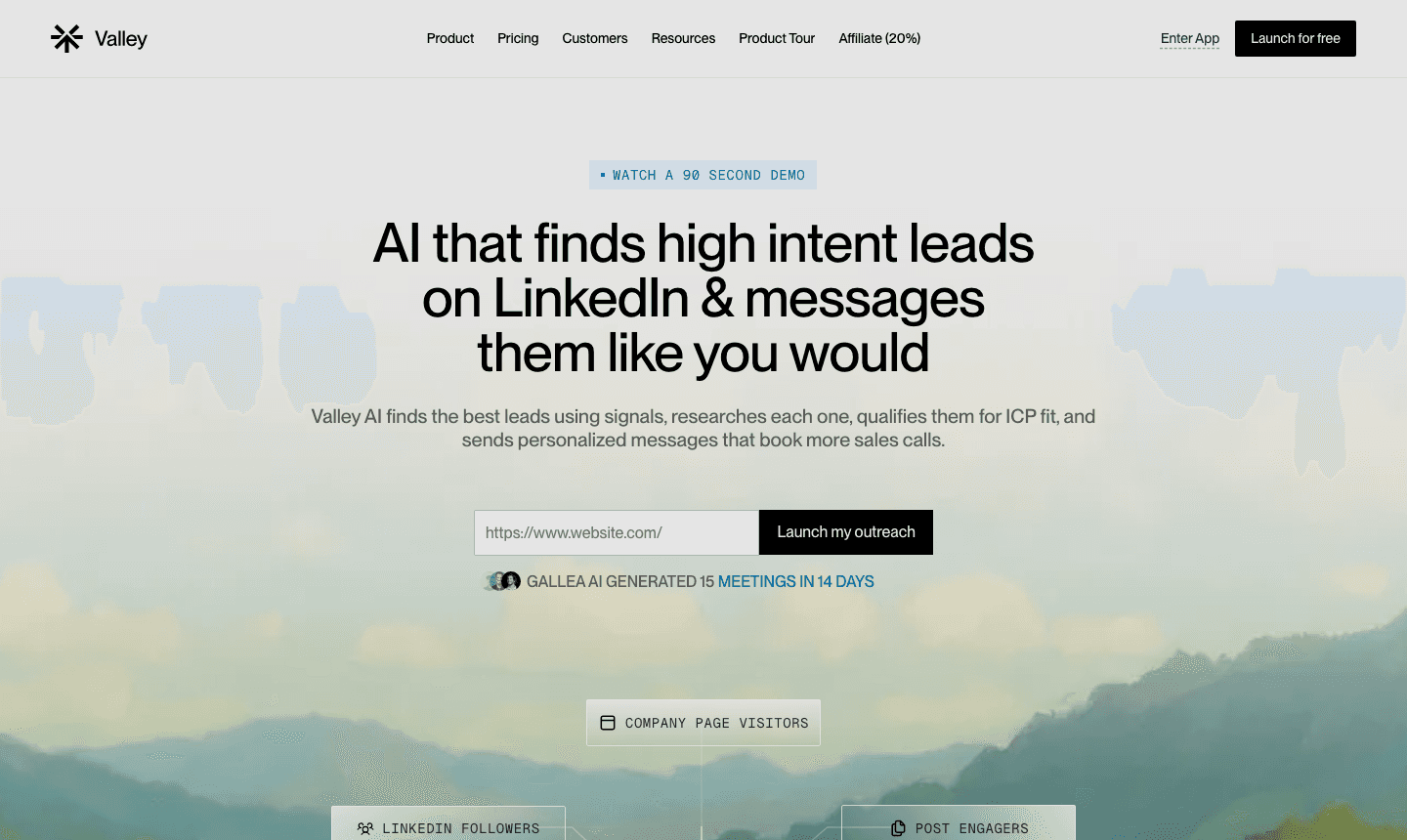
When you connect a safe LinkedIn automation workflow to AI, tools like Valley can analyze profiles, behavior, and intent signals to draft tailored messages in your voice. You get more relevant outreach in less time while staying within LinkedIn’s safety limits.
In this guide, you will see how AI personalizes messages, which data it uses, and how to keep your outreach human and respectful. If you want more replies and booked meetings without writing every line from scratch, keep reading.
What Is AI-Generated Personalized Messaging?
AI-generated personalized messaging means creating LinkedIn outreach that feels unique and tailored to each person. Instead of blasting the same script to everyone, AI uses data and smart technology to craft messages that fit your prospects’ needs and interests better than generic templates. This makes your outreach more relevant, more respectful, and far less like spam.
Definition and Overview
AI-generated personalized messaging uses artificial intelligence to write LinkedIn messages based on the specific details of each prospect. Rather than copying and pasting the same text, AI can analyze a person’s profile, behavior, and company information to customize every message.
This blends automation with a human touch so your messages do not sound robotic or disconnected. You still stay in control. Most systems let you review, edit, and approve the copy before it goes out.
That keeps quality high while staying faster than manual writing and more effective than simple template fillers that only swap in a name or company.
How AI Personalizes LinkedIn Messages
AI personalizes LinkedIn messages by using signals like job title, recent activity, company updates, and buying intent. It goes deeper than basic info, reading behavioral patterns that show whether someone might be ready to talk.
Based on those insights, the system picks relevant topics or pain points and matches your message tone to fit your brand’s voice.
If you usually write casually or with technical language, AI can learn and apply that style. Many tools can also run A/B tests to see which message versions get better responses. This kind of smart personalization helps you avoid generic outreach, increases relevance, and builds genuine connections faster.
The key is data-driven relevance combined with a natural, human-sounding flow that stands out in busy LinkedIn inboxes.
Key Benefits for Users
Saves time: AI handles research and message creation, so you are not writing every note from scratch.
Increases replies: Personalized messages get better response rates because they speak directly to the prospect’s situation and priorities.
Scales outreach: You can reach more prospects without losing the personal touch that matters in B2B sales.
Maintains authenticity: AI adapts to your voice so messages do not feel automated, spammy, or off-brand.
Reduces risk: The right AI tools follow LinkedIn’s safety rules so your accounts stay protected while you grow pipeline.
How AI Writes Personalized LinkedIn Messages
AI creates personalized LinkedIn messages that feel custom-made for each prospect by combining data, algorithms, and different levels of message detail. Done well, this makes your outreach faster and more effective without sounding mechanical or scripted.
Data Sources for Personalization
AI pulls data from multiple sources to personalize messages accurately. It looks at profile info like job title, company size, experience, and recent posts. Behavioral signals, such as who they follow, what they comment on, and how they engage with content, also play an important role.
Some platforms combine this with firmographic data and intent signals that indicate whether a prospect might be ready to buy.
This lets your messages speak to what the person cares about right now, not just generic facts anyone could see. Using multiple data points helps AI craft messages that connect with both the individual and their business needs.
AI Algorithms and Techniques
AI uses natural language processing (NLP) to understand and generate text that sounds human. It scans your prospect’s information, then adapts your message tone to match your voice or brand guidelines. Machine learning models rank and prioritize leads by intent and fit so you can spend your time on the most promising prospects.
Many systems also match the timing of your outreach to when recipients are most likely to respond. Some solutions learn from what works, adjust message style over time, and create unique outreach at scale.
This avoids the usual problem of overused templates and helps your interactions feel like a real conversation, not automation.
Levels of Customization
Personalization can range from basic to highly advanced. At the simplest level, AI inserts the prospect’s name and company in the right places. More advanced methods weave in relevant pain points, recent achievements, or mutual connections that matter to the buyer.
The highest level of customization mixes timing, context, and real-time data. Messages might reference a recent product launch, funding round, or hiring trend inside the organization. This deep personalization tends to drive better engagement and response rates.
With AI-driven tools, you get scalable outreach that still sounds handcrafted. Your messages feel tailored without taking hours of manual research and writing, which frees you to focus on actual conversations and closing deals.
Best Practices for Using AI in LinkedIn Outreach
Using AI to write LinkedIn messages can save you time and help you connect with the right people. To get the best results, you need to think about how you prompt the AI, how you keep messages human, and how you protect privacy and trust.
Creating Effective Prompts
Everything starts with clear and specific prompts that guide AI to craft relevant messages. Instead of vague directions, tell the system exactly what you want, including the prospect’s industry, job role, and recent activity to highlight. Details like a recent job change, promotion, or shared connection can make your outreach feel researched instead of random.
For example, mentioning a recent promotion and tying it to a relevant business challenge shows you did your homework. Avoid generic prompts like “write a LinkedIn message” because they lead to bland, copy-paste style texts. Test different prompt styles and angles to see which ones drive better responses.
Track open and reply rates to refine future prompts over time. As you collect data, you will see more clearly how AI can write personalized LinkedIn messages that consistently spark replies and conversations.
Maintaining a Human Touch
Even with powerful AI, your messages still need to feel real. AI can mimic your style, but you should review and tweak outputs to keep a conversational tone and avoid buzzwords. Use simple language, avoid heavy jargon, and stay away from pushy, hard-sell phrasing.
Focus on your prospect’s interests and context. Referencing recent posts, interviews, or company news shows genuine attention. Keeping sentences short and friendly makes the message easier to read on mobile and more likely to get a response.
Your goal is for recipients to feel like they are in a natural conversation with a real person, not reading a script produced by a machine.
Respecting Privacy and Permissions
Privacy and respect are essential when you use AI in outreach. Stick to public information from LinkedIn profiles and other professional sources, and avoid creeping into sensitive or overly personal topics. Always follow LinkedIn’s rules and avoid behavior that looks spammy or intrusive.
AI tools should support ethical outreach, not shortcuts that put your account at risk. Ask yourself whether your message would feel appropriate if you received it. Stay transparent, avoid deceptive tactics, and do not push unwanted sales pitches just because automation makes it easy.
Top Tools for AI-Powered LinkedIn Messaging
Choosing the right AI tool for LinkedIn messaging is critical if you want to scale outreach without losing the personal touch. The best platforms blend data-driven prospect research with automated, personalized follow-ups that still sound natural and human.
Overview of Leading Solutions
Some AI tools stand out by researching prospects, drafting messages in your tone, and automating multi-step follow-ups. They identify signals from LinkedIn activity, company updates, and external data to target the right leads at the right time.
Unlike basic automation, these tools are built to keep your outreach personalized and compliant with LinkedIn’s rules. This type of platform can handle the full outbound process, from lead qualification to message sequencing, while keeping your conversations authentic.
With AI doing the heavy lifting on research and drafting, you can focus more on real-time conversations and closing deals instead of endless manual prospecting.
Key Features Comparison
You will often see platforms compared across a few core feature areas:
Signal-based research: Detects high-intent leads using behavioral and firmographic data.
Personalization engine: Crafts messages in your unique voice based on your past communication.
Automation scope: Automates outreach steps, follow-ups, and reminders in a controlled way.
Compliance and safety: Follows LinkedIn safety limits to reduce the risk of restrictions.
Unified inbox: Lets you manage multiple LinkedIn accounts or profiles in one place.
Outcome metrics: Tracks reply rates, opportunity creation, and meetings booked.
Some tools combine prospect research, lead scoring, and messaging in one system, so you do not have to stitch together multiple products. Their AI models adapt to your style for truly personalized LinkedIn outreach.
That reduces time spent on manual messaging and boosts response rates without sacrificing authenticity. Used correctly, this kind of tool means more qualified meetings, clearer metrics, and less wasted effort on cold, generic messaging.
Measuring the Success of AI-Written LinkedIn Messages
To know whether your AI-written LinkedIn messages are working, you need to track the right metrics and run structured tests. This turns guesswork into a repeatable process for improving replies and booked meetings.
Key Performance Metrics
Start by watching response rates. This shows how many people reply to your messages compared to how many you send. Higher response rates usually indicate that your personalization and timing are on point.
Next, look at downstream engagement with your content and profile. If prospects view your profile, click through to your content, or interact with your posts after receiving a message, that is a sign of real interest. Track meetings booked and opportunities created that are directly linked to your AI-assisted outreach.
Use analytics tools to review these numbers regularly. The data helps you adjust your audience targeting, message structure, and follow-up timing so your strategy keeps improving instead of staying static.
A/B Testing Strategies
A/B testing means sending two different versions of a message to similar audience segments to see which one performs better. You can test subject lines, call to action language, message length, or personalization style. Keep tests simple and change one element at a time so you can clearly see what caused the difference in results.
Run tests with enough prospects to get reliable data. Small sample sizes can produce misleading signals that send you in the wrong direction. Use results to refine your prompts, templates, and follow-up structure continually.
You can also test send times for different segments. The right moment for your message, combined with strong personalization, can significantly boost reply rates.
Challenges and Limitations of AI Personalization
Using AI for personalized LinkedIn messages can speed up your outreach, but it introduces risks and limits you should understand. Knowing where AI falls short helps you use it as a smart assistant rather than a complete replacement for human judgment.
Risks of Over-Automation
If you automate too much, your messages may start to sound repetitive or detached from real conversations. Over-automation can also trigger LinkedIn’s spam filters and put your account at risk if volume and patterns look suspicious. Basic tools that rely only on merge tags and generic copy are especially prone to this problem.
The result is a flood of messages that prospects ignore because they feel mass-produced. You want your outreach to feel human and thoughtful. Even the best AI cannot fix a strategy that leans too heavily on volume instead of relevance and genuine value.
Accuracy and Relevance
AI generates messages based on the data it can access, but that data is not always complete or up to date. Sometimes tools misinterpret a prospect’s role, overemphasize old company news, or misunderstand industry context. When that happens, your message can feel off or even careless.
That is why you still need to review outputs before sending, especially to high-value targets. If a message misses the mark, the prospect may assume you did no real research at all. Keeping your AI models tuned and giving feedback on bad outputs helps them stay accurate and relevant over time.
Future Trends in AI-Driven LinkedIn Messaging
AI-driven LinkedIn messaging is evolving quickly as technology advances and user expectations rise. The next wave of tools will lean on deeper data, real-time signals, and more nuanced tone control while keeping a strong focus on safety and respect.
Emerging Technologies
New AI tools are getting better at spotting when buyers are ready to engage. They pull from signals such as LinkedIn activity, content engagement, and even web behavior to time your outreach precisely. This goes beyond simple templates by crafting messages tied to specific business challenges each prospect faces.
The AI learns your tone, highlights the exact value you bring, and uses that context to write messages that feel highly relevant. At the same time, automation is built to respect LinkedIn’s limits so you can send higher volumes of personalized messages without putting your account in danger.
This combination of smarter targeting and safer automation makes it easier to scale outreach while still giving prospects a respectful, one-to-one experience.
Evolving User Expectations
People increasingly expect LinkedIn messages to feel like genuine conversations, not mass campaigns. Generic, copy-paste outreach is easier to spot than ever, and buyers often ignore it.
To stand out, you need messaging that shows real understanding of the prospect’s role, company, and current priorities.
You also expect faster, clearer results from your outreach investment. AI tools help by automating research and message creation with real-time data, so you can spend more of your time engaging with qualified leads. Instead of writing dozens of messages, you can focus on replies, discovery calls, and next steps.
Finally, users want transparency and control over automation. You should be able to tune messaging styles, set limits on daily sends, and decide where AI assists versus where you write manually. That balance keeps your account safe, your network strong, and your pipeline growing.
From AI Messages To Real Conversations
AI can write personalized LinkedIn messages that feel relevant, timely, and human when it is driven by real data and guided by your voice. Used well, it helps you scale outreach without sacrificing authenticity or safety.
With Valley, you can turn AI from a copy machine into a sales co-pilot that respects limits, protects your account, and focuses on high-intent prospects. Your team spends less time drafting and more time in actual conversations.
If you are ready to get more replies and meetings without writing every message from scratch, now is the time to test this for yourself.
Frequently Asked Questions
Can AI really write personalized LinkedIn messages that feel human?
Yes. AI can write LinkedIn messages that feel human when it uses real prospect data and learns your tone. You still need to review and tweak outputs so they match your style and the context of each conversation.
What data does AI use to personalize LinkedIn outreach?
AI looks at public profile details such as role, company, and location. It can also use recent posts, comments, and company news, along with firmographic and intent data. This helps the system highlight relevant pain points and opportunities in each message.
How can I keep AI-generated messages from sounding generic?
Start with clear prompts that tell AI who you are writing to and why. Reference specific signals like a recent promotion, funding round, or post the prospect shared. Then edit the output to tighten the copy, remove filler, and keep your usual tone of voice.
Is it safe to send AI-generated messages in bulk on LinkedIn?
It can be safe if you respect LinkedIn limits and focus on quality over volume. Keep send volume reasonable, vary your messages, and avoid spammy behavior. Always prioritize relevance and consent, not just the number of messages sent.
How do I measure whether AI-written messages are working?
Track response rates, profile views, and meetings booked that come from AI-assisted outreach. Watch how often conversations move to calls or demos. Use these metrics to refine your prompts, targeting, and follow-up structure.
Can LinkedIn detect if my messages were written by AI?
LinkedIn can identify patterns that look automated, such as identical messages sent at high volume. You reduce the risk by personalizing each message, varying your copy, and editing AI outputs. Messages that read like real conversations are less likely to raise flags.
What are some best practices for using AI in LinkedIn communication?
Use AI as a writing assistant, not a replacement for your judgment. Keep messages short, specific, and respectful of the recipient’s time. Rely on public professional data, avoid overly personal references, and always review messages before you send them.