

Valley
Published:
Updated:
Published November 28, 2025 · Updated August 31, 2026
If you are asking what the best AI tools are for LinkedIn outreach, you are really asking how to scale genuine conversations. The right stack should help you find the best prospects, send messages that sound like you, and keep your account safe while you grow pipeline.
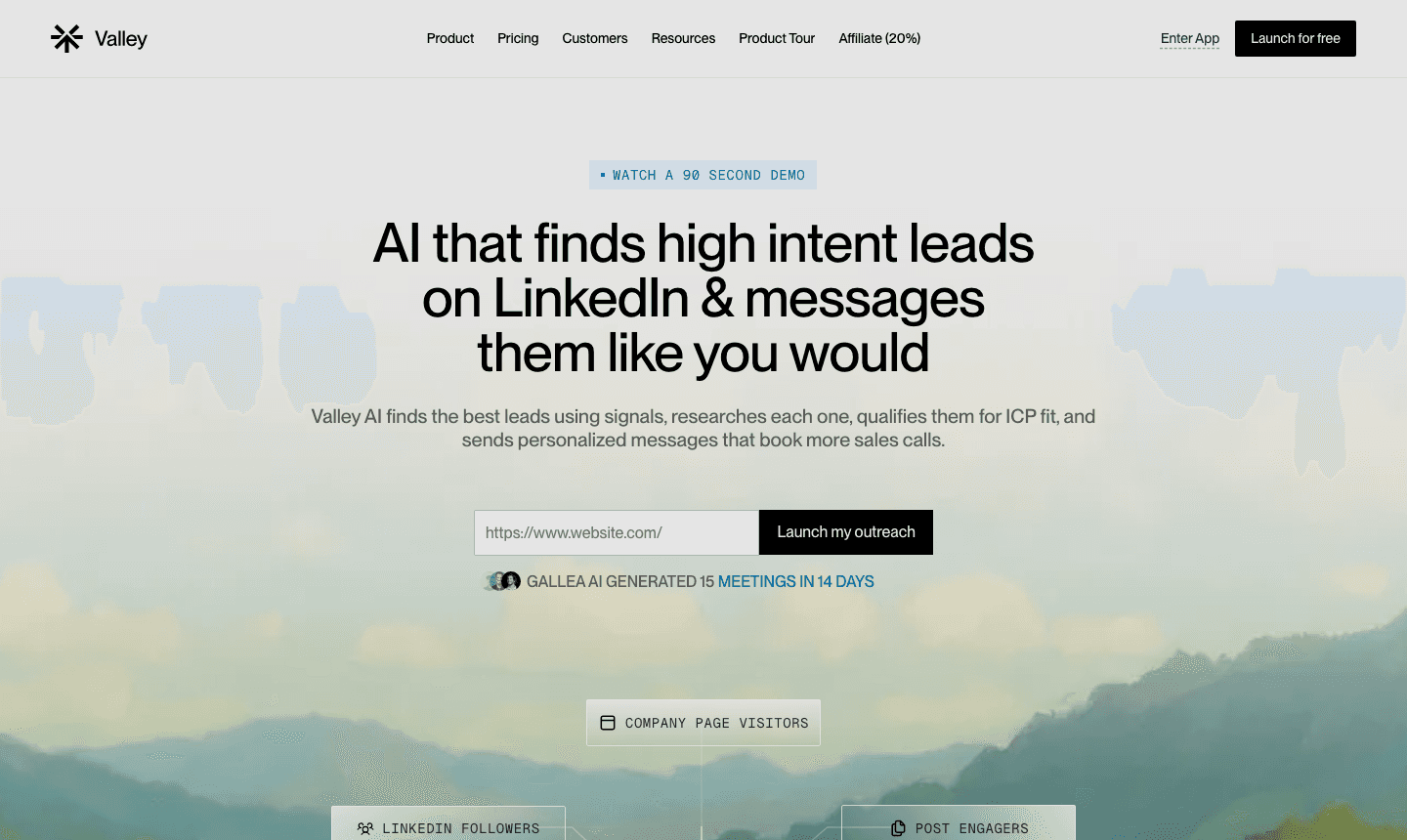
Valley helps teams combine AI prospecting, personalized messaging, and compliant automation so they move faster without burning their audience. Instead of copying and pasting scripts all day, your reps can focus on qualified replies and booked meetings.
In this guide, you will see how to choose LinkedIn outreach tools, plug them into your workflow, and avoid risky shortcuts that damage trust. Keep reading to learn how to use AI for smarter targeting, safer automation, and more consistent sales results.
What Are AI-Powered LinkedIn Outreach Tools?
AI tools for LinkedIn outreach focus on identifying the right leads, analyzing signals that show buying intent, and automating messaging while keeping a personal touch. These platforms help you reach prospects faster with smarter messages that match your style. They also balance automation and customization to improve response rates and save your time.
Key Features To Look For
When choosing AI LinkedIn outreach tools, prioritize features that take the heavy lifting off your plate while keeping outreach personal. Look for platforms that:
Identify and score high-intent leads based on behavioral signals and company data.
Research prospects deeply, including background, pain points, and context.
Automate message creation and follow-ups using AI trained in your unique tone.
Manage the entire outreach process in one place to avoid juggling apps.
Follow LinkedIn’s safety rules to prevent account restrictions.
These features ensure your outreach is efficient, targeted, and safe, helping you connect with the right prospects consistently.
How AI Enhances LinkedIn Prospecting
AI improves LinkedIn prospecting by quickly processing data and signals that would take you hours to analyze. It spots buying signals and ranks prospects by how likely they are to engage. AI tools automatically research your leads’ profiles and companies, then craft messages that sound like you.
This keeps conversations authentic and relevant. AI also handles scheduling follow-ups to keep prospects engaged without manual reminders. By automating research and messaging, AI frees you to focus on building relationships and closing deals instead of typing dozens of messages daily.
Automation vs. Personalization
Automation speeds up repetitive tasks like sending connection requests and follow-ups, but it can feel robotic if overdone. Personalization makes your outreach feel genuine but can take too long to do at scale.
The best AI tools combine both. They automate outreach but tailor every message based on detailed research and your communication style. This balance helps you send many messages without losing the human touch, which improves response rates and keeps your LinkedIn account safe.
Top AI Tools For LinkedIn Outreach
AI tools now handle much of the research, messaging, and lead scoring for LinkedIn outreach. The best platforms use intelligent automation to personalize messages, find ready-to-buy prospects, and keep your accounts safe from LinkedIn restrictions.
When you evaluate what the best AI tools for LinkedIn outreach are for your team, focus on how well they blend safety, personalization, and scale.
Best Overall AI Outreach Platforms
When you want an all-in-one solution, look for platforms that combine prospecting, research, and personalized outreach in one place. These tools find high-intent leads by tracking behavioral signals and firmographics. They then automatically send personalized messages that sound like you, not a bot.
AI Tools For LinkedIn Messaging
Messaging tools focus mainly on automating connection requests, follow-ups, and personalized outreach. The strongest tools use AI to draft messages that adapt to the recipient’s profile and your style. This increases the chances your message feels authentic and garners replies.
Look for platforms that let you automate sequences without losing control over timing or content. The AI should handle variations in messaging to avoid detection as automation but still sound natural. This way, you keep your outreach scalable and effective while saving hours on writing.
AI-Powered Contact Discovery Solutions
Contact discovery tools specialize in finding and qualifying leads based on intent signals from LinkedIn activity, company data, and online behavior. They use AI to score leads, so you know who to reach out to first.
The best discovery tools integrate with your outreach platform, giving you a filtered list of prospects that match your ideal customer profile. This prevents wasting time on contacts unlikely to engage and helps you focus your efforts where they count most.
Standalone LinkedIn Automation Software
These tools focus on automating specific LinkedIn tasks like sending invites, auto follow-ups, or visiting profiles. They can streamline routine actions, but don’t always offer deep personalization or lead qualification.
You should pick standalone tools if you want to add automation without changing your current workflow too much. However, watch for safety features that keep your LinkedIn account within activity limits to avoid restrictions or bans.
Integrating AI Tools Into Your Outreach Workflow
Using AI tools effectively means connecting them smoothly with your existing systems, automating your tasks without losing a personal touch, and crafting messages that feel genuine. This helps you save time, reach the right people, and keep your outreach human.
Syncing With CRM And Sales Platforms
Linking your AI tools with your CRM and sales platforms keeps all your data in one place. This makes it easy to track interactions and update prospect details automatically. When synced correctly, your system can log every message sent and reply received.
You avoid duplicates and work with fresh data. This saves hours spent on manual updates. Make sure your tool integrates smoothly with popular CRMs that your team already uses.
Look for features like two-way syncing, automatic lead capturing, and deal tracking. This helps you prioritize hot leads and keeps your pipeline accurate.
Automating Message Sequences
Automating message sequences lets you follow up consistently without forgetting prospects. AI tools can schedule outreach steps like connection requests, follow-up notes, and reminders.
Set your sequences to adjust based on replies or buyer signals, so you don’t waste time on uninterested contacts. Automation also helps you test different messages to find what works best. Keep your sequences natural and spaced out to avoid looking spammy.
Personalizing Connection Requests
Personalization matters most when you reach out on LinkedIn. Buyers respond better to messages that show you understand their needs and background. Use AI to research your prospects automatically.
It can pull data like recent posts, company news, or shared connections. Then, the tool suggests tailored opening lines that fit your style. Personalized requests are more likely to be accepted and open the door for meaningful dialogue.
Comparing Leading AI Outreach Tools
Choosing the right AI tool for LinkedIn outreach comes down to what fits your budget, how easy it is to use, and how well it connects with your existing tools. Each platform varies in pricing, user experience, and integration options, so knowing these details can help you pick the best match for your sales team.
Pricing Models And Subscription Options
Most AI LinkedIn outreach tools offer tiered pricing plans based on features, message limits, and the number of users. You can expect monthly subscriptions that range from basic plans with limited outreach to premium packages that unlock advanced AI personalization and multi-account management.
Some platforms charge more for unlimited messaging or extra automation capabilities, so consider what volume you need. Look for tools that provide clear pricing without hidden fees. Also, check if there are free trials or demos available so you can test the AI’s effectiveness before committing.
User Experience And Support
An intuitive interface saves you time managing campaigns and helps ensure your messages sound natural. The best tools use AI not only to personalize outreach but also to simplify your workflow. Reliable customer support is crucial, especially if you run multiple LinkedIn accounts. Look for companies that offer onboarding help, live chat, or responsive email support to get you up and running quickly.
Integration Capabilities
LinkedIn outreach works best when the AI tool fits into your sales tech stack smoothly. Top platforms allow you to connect with CRM software, email systems, and lead databases to automate follow-ups and update records automatically.
This reduces manual data entry and helps you keep all your communications in one place. Also, consider if the tool supports multi-channel outreach. While LinkedIn is primary, some automation platforms extend to email or social media, giving you more touchpoints to engage leads.
Making sure your chosen AI tool works smoothly with your existing software boosts efficiency and lets you focus on closing deals.
Best Practices For Successful AI-Driven LinkedIn Outreach
Using AI tools for LinkedIn outreach can save you time and increase your response rates if done right. To get the best results, focus on writing clear, tailored messages and follow LinkedIn’s rules carefully to keep your account safe.
Crafting Effective AI-Generated Messages
Your messages should feel personal, not robotic. Use AI to gather insights about your prospect, like their job role and recent activity. Then, write messages that speak directly to their needs or interests.
Keep your opening lines short and specific. Avoid generic phrases like “I’d love to connect.” Instead, make it easier for your prospect to reply by:
Mentioning something relevant about their work or company.
Using a friendly tone that matches your natural voice.
Including a clear call to action.
Asking a simple question or suggesting a quick call.
Staying Within LinkedIn’s Usage Policies
LinkedIn limits how many connection requests and messages you can send daily to prevent spam. Exceeding these limits puts your account at risk of suspension. Use AI tools that respect these limits and space out your outreach.
Always avoid aggressive or spammy language in your messages, and never send the same message to many people. Authenticity and timing are key. Send outreach during business hours, preferably in the morning or early afternoon, to improve response rates.
Emerging Trends In AI For LinkedIn Outreach
AI tools are getting smarter at helping you send more personal and timely messages on LinkedIn. They use better data and signals to know when and how to reach out to your prospects. These advances save you time and increase your chances of booking meetings.
Advancements In Personalization Algorithms
Personalization in LinkedIn outreach is no longer just adding a name or job title. AI now studies recent activity, company news, and even how a prospect responds to messages. This helps create messages that feel like they were written by a real person who knows the prospect’s interests.
AI can learn your tone and writing style, so messages sound like you, not a robot. It pulls together different signals like LinkedIn behavior and industry trends to tailor each message. By focusing on how your prospects behave and what they care about, personalization algorithms help your outreach stand out in a crowded inbox.
Future Predictions For AI Outreach Tools
AI tools will get better at predicting when your prospects are most open to conversations.
This means they won’t just send messages randomly but will time outreach to match the buyer’s readiness. Combining signals from LinkedIn and other channels will make this timing even more accurate.
These tools will automate entire outreach sequences safely, avoiding the risk of LinkedIn bans. They will handle research, messaging, follow-ups, and lead scoring all in one place. This integration lets you focus more on selling and less on admin work.
New AI features will also analyze sentiment in responses to help you adjust your approach faster. This smart feedback loop means your outreach will keep improving as you learn what works best for your audience.
Turning AI Outreach Into Real Conversations
Choosing the best AI tools for LinkedIn outreach comes down to safety, personalization, and alignment with your sales motion. When those three align, AI helps you find better prospects, write more relevant messages, and protect your account.
Valley gives your team one place to combine prospect research, tailored messaging, and compliant automation so every touch feels human at scale. That means less manual copy-paste work and more time spent on replies, meetings, and revenue.
If you are ready to modernize your LinkedIn outreach, now is the time to act. Book a demo (teams of 5+) to see how AI-powered LinkedIn automation can help you send smarter messages, reach the right people, and close more deals.
Frequently Asked Questions
What Are The Best AI Tools For LinkedIn Outreach?
The best AI tools for LinkedIn outreach help you find ideal prospects, personalize messages at scale, and protect your account. They should support lead scoring, message sequencing, and basic analytics so you can see which campaigns convert into meetings.
How Do AI Tools Improve LinkedIn Outreach Results?
AI tools speed up research, suggest tailored message angles, and schedule follow-ups automatically. This means you spend less time hunting for hooks and more time talking to qualified prospects who are ready to engage.
Are AI LinkedIn Outreach Tools Safe For My Account?
Safety depends on how the tool behaves and whether it respects LinkedIn limits and policies. Look for platforms that use human-like pacing, built-in daily caps, and clear safeguards rather than aggressive bulk actions.
How Much Do AI Tools For LinkedIn Outreach Typically Cost?
Most tools use tiered pricing based on users, features, and monthly message volumes. Entry plans often fit solo reps or small teams, while advanced tiers add features like multi-account management and deeper analytics.
Can AI Tools Fully Replace Human SDRs On LinkedIn?
AI tools handle research, drafting, and scheduling, but humans still drive strategy and real conversations. Think of AI as a smart assistant that prepares and sends outreach so your SDRs can focus on discovery calls and closing work.
How Do I Choose The Right AI Tool For My LinkedIn Strategy?
Start with your goals, volume, and tech stack, then map tools to those needs. Prioritize platforms that are easy to use, integrate with your CRM, support safe automation, and keep your outreach sounding like you.
► Reading is step one; step two is a free 7-day Valley trial. Judge the message quality yourself.