
Try Valley
Put your outbound workflow to work.

Saniya Sood
Published:
Updated:
Published July 2, 2026 · Updated October 6, 2026
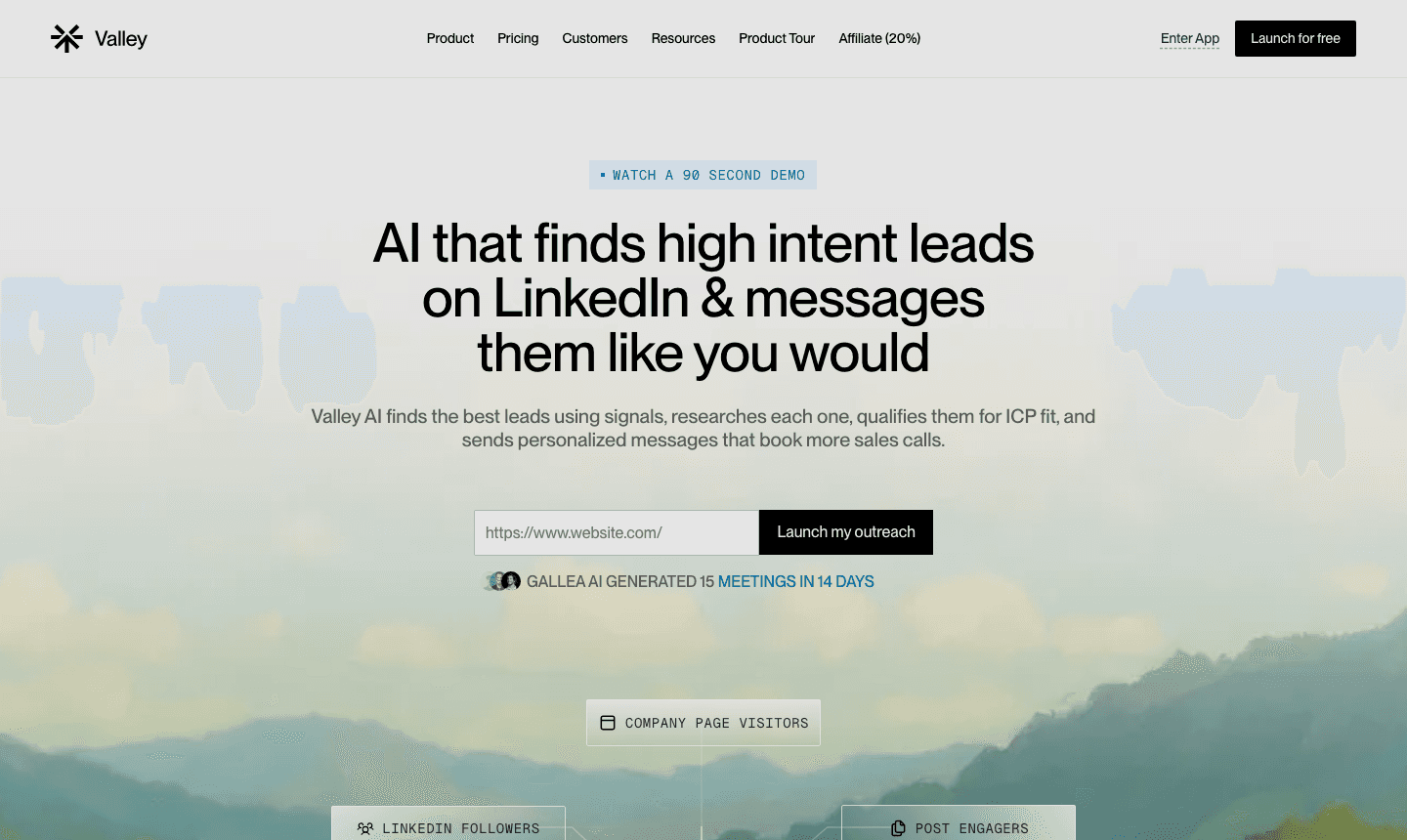
The umbrella question: what’s actually better than lemlist in 2026 - and for which job? lemlist is the best-known multichannel sequencer: email as the spine, LinkedIn as steps, per-seat pricing ($69 - 109/user/mo). The alternatives split by what you’re really shopping for: Valley ($149/mo flat) if you want both channels driven by signals and research instead of lists and steps - the biggest change on this page, since Valley added native email in August 2026; Instantly ($47/mo) or Smartlead ($39/mo) if the job is scaled cold-email volume lemlist was never built for; Expandi ($99/mo) if LinkedIn sequencing depth is the draw; Apollo (free plan up) if you want the data layer bundled in. Every option below with verified pricing, real cons - including ours - and the honest cases where lemlist keeps the crown.
Valley makes one of the tools in this category. We’ve marked our entry clearly and included tools that beat us for specific jobs.
TL;DR
Signals + research + both channels, flat price → Valley ($149/mo) (our tool - marked, cons listed)
Scaled cold email volume → Instantly ($47/mo) or Smartlead ($39/mo, agencies/API)
LinkedIn-only sequencing, professionally → Expandi ($99/mo)
Database + sequencing bundle → Apollo (free; ~$49/user/mo annual)
Stay on lemlist if you want to hand-drive multichannel sequences step by step and the per-seat math works for your team
► Moving on from Lemlist? Take Valley for a free 7-day run before you decide where to land

Give your sales team
an unfair advantage.
We build Valley - one entry below, clearly marked, with real cons. All prices verified on vendor pricing pages July 2026 (lemlist $69 Email / $109 Multichannel per user monthly, 20% annual discount, add-on data at $0.01/credit, 14-day trial; re-verify at purchase - pricing moves). Selection rule: each alternative answers a specific lemlist exit-reason. And one dated fact upfront, because it rewires the whole comparison and older pages contradict it: Valley added native email in August 2026 - it was previously LinkedIn-only. The classic advice "leave lemlist for Valley only if you're abandoning email" is obsolete; the question now is how you want both channels run.
Why people leave lemlist (the four exit reasons)
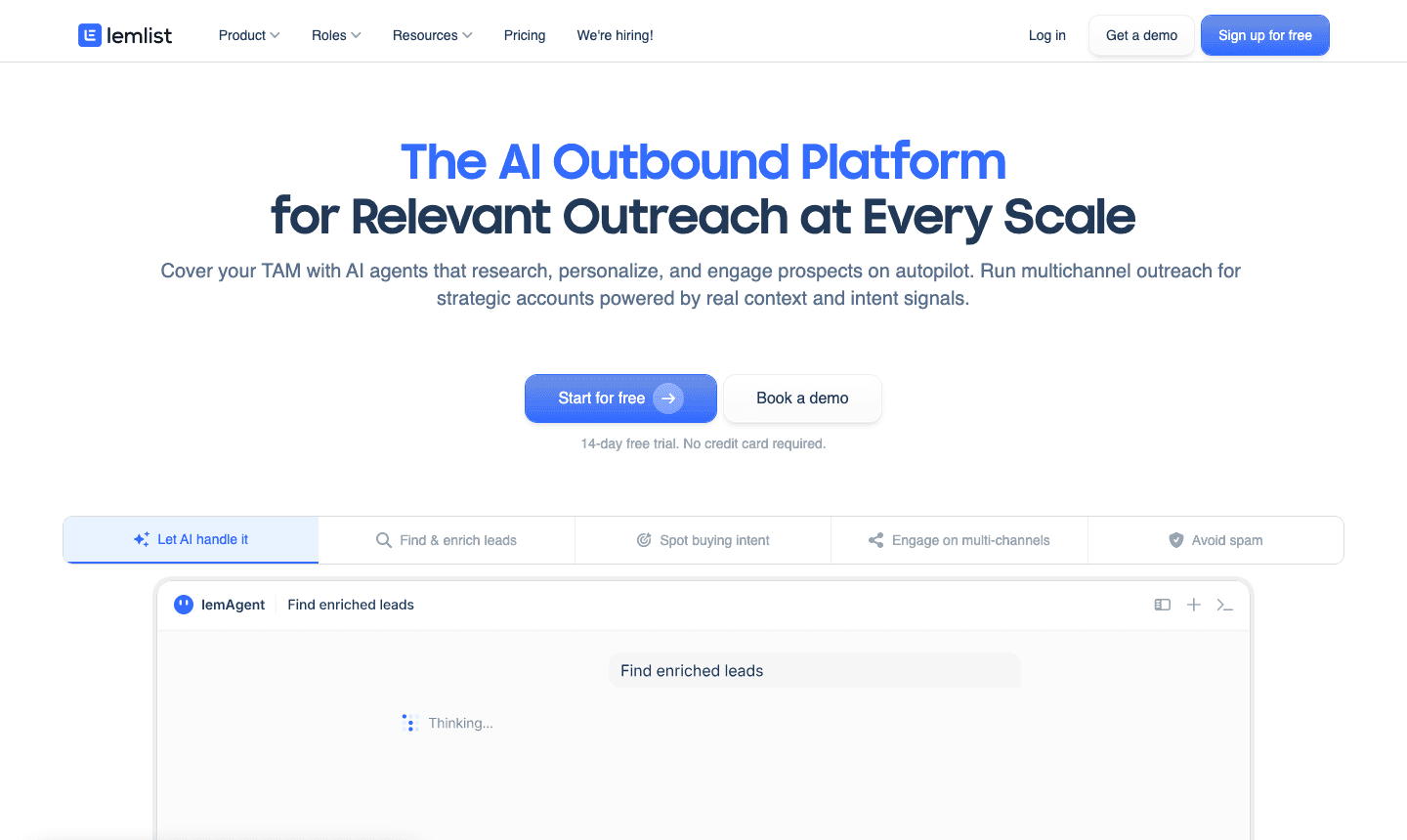
1. Channels as steps ≠ a targeting brain. lemlist executes sequences you design against lists you build. It has no opinion on who deserves outreach - no signal capture, no ICP scoring that deletes bad fits, no research layer deciding what's worth saying. In 2026, when execution is commoditized and cold reply rates sit at 1 - 3%, the missing brain is the exit reason that matters most.
2. Per-seat economics stack. $109/user/month for multichannel, times a growing team, plus credit add-ons for data (verification at 5 credits, phones at 20, intent signals at 100+ per hit) - the monthly total grows faster than results. Teams doing the stack-consolidation math keep landing on the same conclusion: per-seat multichannel is the expensive way to buy two channels.
3. LinkedIn is the side feature. lemlist's heritage is email - warmup tooling, deliverability features, the lemwarm ecosystem. Its LinkedIn steps (visit, invite, message) work, but without the channel's real asset: the warmth layer of profile viewers, post engagers, and site visitors. Teams whose replies increasingly come from LinkedIn eventually notice their best channel is the bolt-on. It's Valley's home field - and was even before the email launch.
4. Volume senders outgrow it upward. The opposite exit: teams that genuinely need scaled cold email (thousands of sends/day, inbox fleets) find lemlist's model - real personalization, per-seat costs - the wrong shape for pure volume. They belong at Instantly or Smartlead, and honesty requires saying so rather than pretending one alternative fits both exits.
The alternatives, honestly compared
1. Valley - signals in, both channels out (our tool)
What it is: the architectural inversion of lemlist. Instead of lists feeding sequence steps, signals feed a research engine: profile viewers, post engagers, followers, website visitors, and competitor audiences get captured continuously, ICP-scored (non-fits deleted before outreach exists), researched individually across 200+ sources, and drafted in your voice. Then the sequence runs across both channels - connection request → follow-up → InMail → email, with condition branching - from your own accounts: LinkedIn via cloud infrastructure with a dedicated IP, email via your own Gmail/Microsoft OAuth inbox at ~30 sends/day per seat, with waterfall enrichment, bounce verification, and opt-out suppression built in. Email is an add-on on Starter and included on Plus and Growth. You approve every message, or promote vetted sequences to autopilot.
What works: the input change is the output change - warm signal-based LinkedIn sends earn 15 - 45% replies against 1 - 3% cold norms (7.3M-prospect data: 2.3× replies, 2.6× interested responses vs cold, every segment). Flat pricing beats per-seat stacking: $149/mo billed quarterly ($199 monthly), unlimited leads and campaigns, no credit meters on core features. Safety as a record: zero LinkedIn restrictions across 1,000+ accounts in 2.5 years, 5× money-back guarantee. What doesn't (honest cons): no volume email - ~30/day/seat from a real inbox is a quality cap, not a scaling path; no inbox fleets, warmup, or rotation, ever; multichannel reply-rate data doesn't exist yet (the combined motion shipped weeks ago - LinkedIn-era numbers only); needs signals to harvest, so dormant presences ramp slower; per-seat teams doing pure hand-driven sequence design may find the system's qualification gate opinionated - it declines to blast non-ICP imports, which is the product working. Verdict: for teams leaving lemlist because the targeting brain was missing - the biggest single cohort on this page.
2. Instantly - the volume exit
What it is: the operationally complete scaled-email platform: unlimited inbox connections, warmup automation, deliverability tooling, a large lead database. From ~$47/mo. What works: if the exit reason is "we need real volume," this is the category benchmark - and lemlist's per-seat model was genuinely the wrong shape for you. What doesn't: it's email-only at heart, and it's still the volume model - bulk-sender rules, warmup arms race, compressed cold reply math. LinkedIn isn't its channel. Verdict: the honest lemlist-vs-Instantly answer: different jobs. lemlist for personalized multichannel sequences per seat; Instantly for scaled sending infrastructure. (Disclosure: Instantly is a Valley partner; for the volume job we'd route you there regardless - it's simply the right tool for it.)
3. Smartlead - the agency volume exit
What it is: scaled email with agency DNA: white-label, API-first, unlimited accounts, from ~$39/mo. What works: agencies selling cold email as a service get infrastructure economics and client separation lemlist's per-seat model can't match. What doesn't: same volume-model exposure; thinner ecosystem than Instantly; no LinkedIn. Verdict: the volume exit for agencies specifically.
4. Expandi - the LinkedIn-depth exit
What it is: the most mature LinkedIn-only cloud sequencer - country-based dedicated IPs, human-pattern simulation, image/GIF personalization, webhooks. $99/mo ($79 annual), 7-day trial. What works: if lemlist's LinkedIn steps felt shallow, this is what depth looks like on that channel. What doesn't: one channel - you're re-assembling the email side elsewhere; still list-driven, no signal layer. Verdict: for teams that concluded LinkedIn is the channel and want its best pure sequencer.
5. Apollo - the bundle exit
What it is: 275M+ contact database with email sequencing and a dialer attached. Free plan; ~$49/user/mo annual. What works: replaces lemlist's data add-ons and sequences in one self-serve subscription; the best free tier in sales tech. What doesn't: data freshness varies by segment; credit caps; LinkedIn isn't a sending channel; deliverability guilt-by-association at volume. (Apollo alternatives.) Verdict: the pragmatic consolidation for email-led teams that want data included.
Keep exploring: Valley vs Lemlist · real customer results.
The credits and team math: Lemlist pricing explained.

Give your sales team
an unfair advantage.
As a supplement - LinkedIn touches inside email-led sequences - yes, it’s fine: the steps execute, the workflow is mature. As a primary LinkedIn motion - no, and the reason is structural rather than quality: lemlist sequences LinkedIn, it doesn’t work LinkedIn. The channel’s actual advantage is visible intent - who viewed you, who engaged, who’s circling - and lemlist has no machinery for any of it. Teams whose pipeline should come from LinkedIn need either a dedicated sequencer with depth (Expandi) or, better, the signal layer itself (Valley) - with email as the follow-through rail rather than the spine.
When lemlist is still the right choice
Genuine cases, not manners: you want to hand-design multichannel sequences step by step, with full manual control over cadence and copy across email + LinkedIn + calls - lemlist’s workflow builder is the most mature in that specific shape. Your motion is email-led with light LinkedIn support and per-seat pricing fits your team size. You’re invested in the lemwarm/deliverability ecosystem and it’s working. lemlist didn’t get worse - the market got a targeting layer it doesn’t have, and the volume category it never claimed got better tools. Inside its actual lane, it remains a good product.
The credit math, worked out (lemlist’s real monthly total)
Because per-seat pricing plus credits is where lemlist evaluations go wrong, here’s the arithmetic for a realistic 3-rep team on Multichannel: base $109 × 3 = $327/month. Add the working data: email verification at 5 credits per address ($0.05), phone numbers at 20 credits ($0.20 each), intent signals from 100 credits per hit - a modest 1,000-prospect month of verification plus 200 phone lookups adds ~$90 in credits. Realistic total: $400 - 450/month before any warmup tooling or extra sending infrastructure. Against that: Expandi × 3 seats = $297 (LinkedIn only, add your email answer), Instantly ~$47 + infrastructure (email only), Valley from $149 per seat with signals and research (email is an add-on on Starter). None of these totals decides alone - the shape of your motion decides - but run your own row before assuming per-seat is the affordable option. (The full consolidation math.)
Migrating off lemlist (what moves, what doesn’t)
The practical bill for each exit: your lists and contact data export cleanly (CSV) from lemlist - that’s the portable part. Sequences rebuild by hand everywhere; no tool imports another’s campaign logic, so budget an afternoon. lemwarm history doesn’t transfer - if you’re moving to another volume-email setup, your new infrastructure warms from its own baseline; if you’re moving to a real-inbox model (Valley), warmup ceases to be a concept, which is rather the point. In-flight sequences should drain before cutover - prospects mid-cadence get finished or paused, never handed between tools mid-thread. And on the LinkedIn side, the standing rule: never run two automation tools against the same account, even during transition week. Total honest migration cost: 2 - 5 days of reduced sending - cheap against a quarter on the wrong architecture.
Related: running client outbound from one platform.
► Every tool above has a trial; start with Valley’s 7 free days and compare reply quality first
FAQ
What’s the best lemlist alternative in 2026? Valley ($149/mo) for signal-based targeting with both channels in one flow; Instantly ($47/mo) or Smartlead ($39/mo) for scaled cold email; Expandi ($99/mo) for LinkedIn-only depth; Apollo (free plan up) for data + sequencing bundled.
What’s the best lemlist alternative for LinkedIn specifically? Valley if you want LinkedIn’s signal layer (viewers, engagers, visitors) actually worked, with email included in the same sequence; Expandi if you want the deepest pure LinkedIn sequencer and will assemble email separately.
Lemlist vs Instantly - which is better? Different jobs: lemlist sells personalized multichannel sequences per seat; Instantly sells scaled sending infrastructure (unlimited inboxes, warmup). Volume economics → Instantly. Hand-crafted multichannel per rep → lemlist. Neither has a targeting brain - that’s the third category.
How much does lemlist cost in 2026? Email plan $69/mo; Multichannel $109/user/mo; Enterprise custom - ~20% off annually, 14-day trial. Add-on data bills by credit ($0.01/credit: verification 5, phones 20, intent signals 100+). Verified July 2026.
Is lemlist worth it in 2026? For hand-driven, email-led multichannel sequences at team sizes where per-seat math works - yes. For LinkedIn-first motions or volume email, the alternatives above fit better; for signal-based targeting, lemlist doesn’t play in that category at all.
Does Valley really replace lemlist’s email side? For quality motions, yes - native sends from your own OAuth inbox inside the same sequences as LinkedIn, with enrichment and verification built in, an add-on on Starter, included on Plus and Growth (August 2026 change; older comparisons predate it). For volume email - inbox fleets, warmup - no, deliberately: that job belongs to Instantly/Smartlead, and we route it there honestly.
What should I test in trials before switching? Run the same week’s prospects through both: in lemlist, your best hand-built sequence; in the alternative, its native motion. Count conversations started per hour of your time - not sends, not opens. That metric is where the architectural differences stop being abstract.
Related: Cold email vs LinkedIn in 2026 · Instantly alternatives for LinkedIn · Salesforge alternatives · Valley pricing


