
Try Valley
Put your outbound workflow to work.

Saniya Sood
Published:
Updated:
Published February 10, 2026 · Updated August 31, 2026
Signal | What it tells you |
|---|---|
Profile views | they looked at YOU - warmest single signal |
Post engagement | your thinking resonated; context built-in |
Website visits | solution-aware; page viewed = the opener |
Company followers | brand-warm audience compounding quietly |
Job changes | new budget, new priorities, 90-day window |
Five signals, one decision: act while they are fresh. The playbooks per signal: the complete signals guide, engagement into calls, and website visitor identification.
The signals are right there: who viewed your profile, who engaged with your post, who visited your site, who followed your company. Each is a person showing intent. The question is which tools detect them and turn them into outreach.
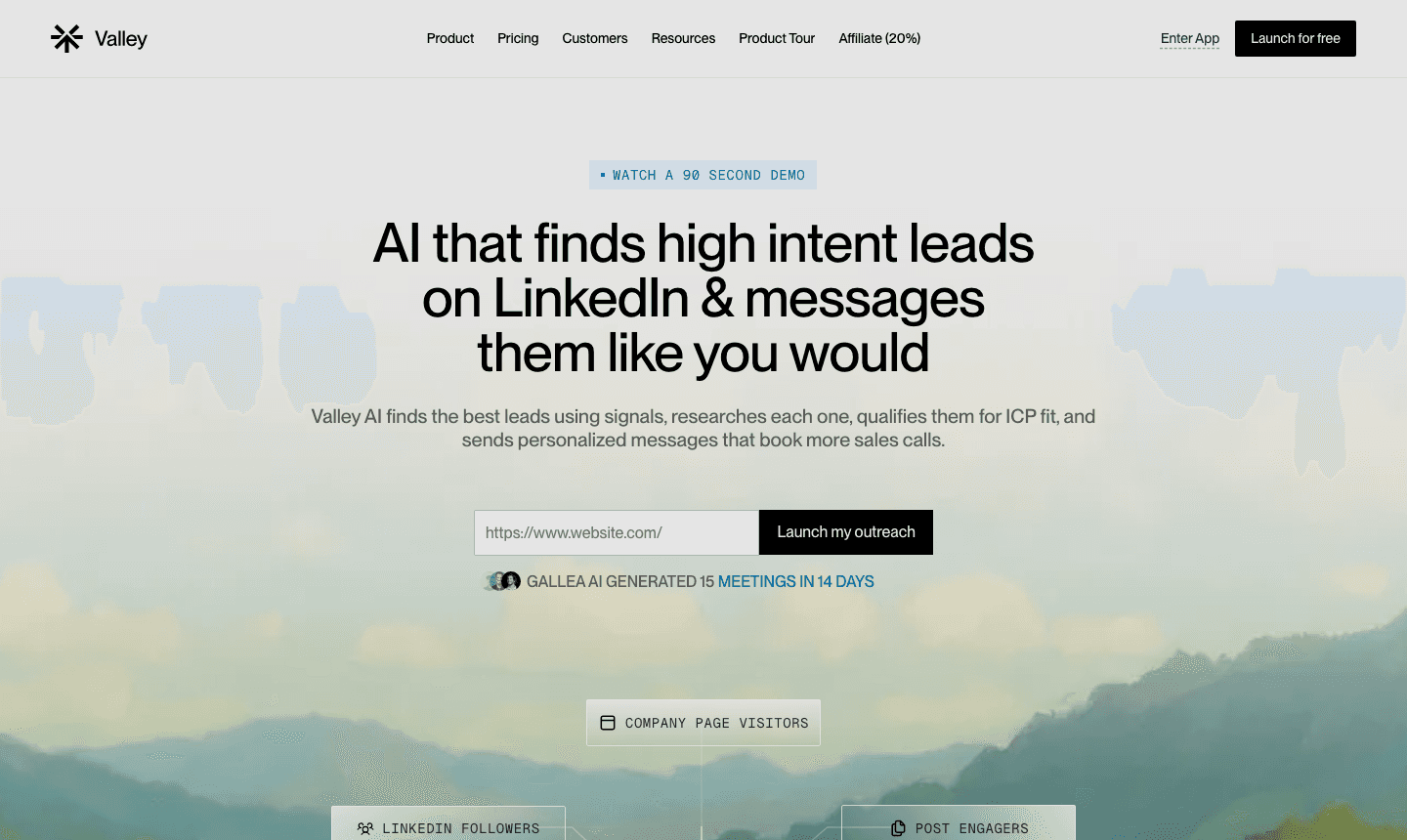
The LinkedIn tools that detect buying intent signals capture person-level, real-time signals, profile views, post engagement, website visits, new followers, and Sales Navigator activity, not just anonymized company-level intent.
Valley captures all of these, qualifies each signal against your ICP, and drafts outreach automatically, converting intent into warm outbound on LinkedIn that books meetings.

Give your sales team
an unfair advantage.
Traditional B2B intent signals and data operates at the account level and after the fact. It tells you that someone at a target company consumed content about your category. It does not tell you who, it does not tell you when precisely, and it does not give you a way to reach that person. By the time the signal surfaces in a dashboard, the window may have closed.
The result is a familiar pattern: teams buy intent data, get a list of "warm accounts," and then run the same cold outbound they always did because there is no person to contact and no context for the message. The intent never converts to a conversation because the last mile, identifying the human and reaching them with relevance, is missing.
LinkedIn intent signals do not have this gap. They are inherently person-level. A profile view is a named person. A post engagement is a named person who reacted to a specific idea. A website visitor can be identified and matched. The intent comes with a human and a context attached, if you have a tool that captures it.
Read Here: How Valley Turns LinkedIn Signals Into Meetings?
Person-Level, Real-Time, Actionable
Evaluate any intent tool on three axes: granularity (account or person), latency (days or real-time), and actionability (does it close the loop to outreach, or hand you a dead-end list).
This is where signal-based warm outbound on LinkedIn separates from generic intent data. The signals are person-level by nature, captured in real time, and, with the right platform, flow directly into researched, personalized outreach. There is no last mile to bridge manually, because the tool that detects the signal is the same tool that acts on it.
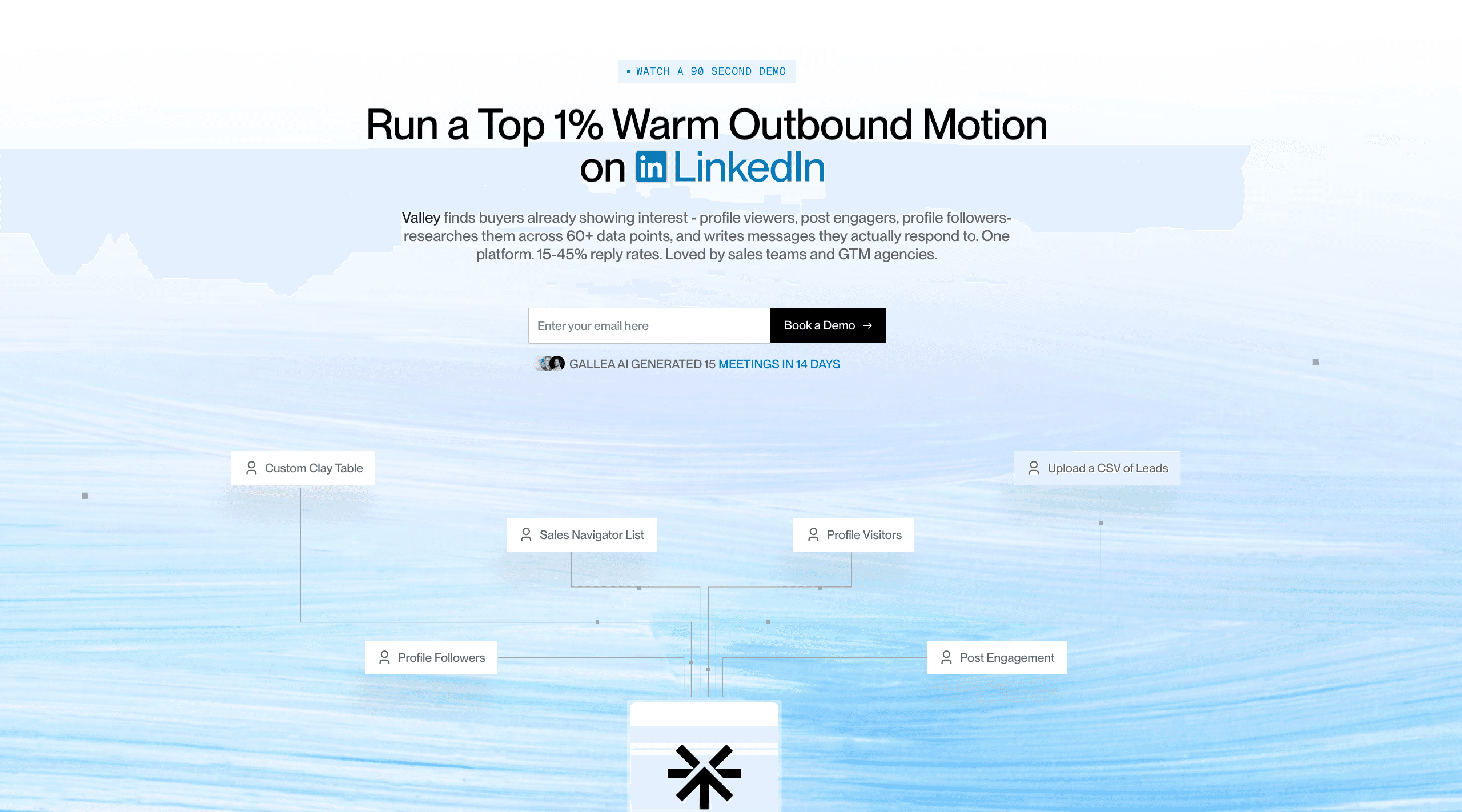
The Five LinkedIn Intent Signals Valley Detects
Profile views: What it indicates Someone sought you out, Intent level Medium - high.
Post engagement: What it indicates Reacted to a specific idea/problem, Intent level High (contextual).
Website visitors: What it indicates Actively researching your offer, Intent level Highest.
New company followers: What it indicates Tracking your brand, Intent level Medium.
Sales Navigator activity: What it indicates Deliberately targeted accounts, Intent level Targeted.
Valley captures all five, then does what generic intent tools cannot: it qualifies each signal against your ICP, researches the person behind it, and drafts a message that references the specific signal and context. A post engager gets a message about the idea they engaged with. A website visitor gets a timely message on the problem they were researching. The intent becomes a conversation, automatically, instead of a dead-end account in a dashboard.
The website-visitor signal is worth singling out. Tim O'Neil at GGWP, comparing Valley's intent capture to a standalone tool he ran concurrently, said Valley delivered "8 to 10x the number of hits", and called the intent capability "the icing on top" because "people don't stop on a lot unless they're willing to buy."
► Check Out Valley's Incredible Outreach: A compilation of real time messages and responses!

Give your sales team
an unfair advantage.
The results, in Tim O’Neil’s words: reply rates “at least double” cold email, and the concurrent intent comparison showed Valley pulling 8 to 10x the hits of the other product.
The reason intent converted here is that it never sat in a dashboard, Valley turned each signal into a researched, contextual message, closing the last mile that generic intent data leaves open.
Lukas Gelžinis at Salesforge described the trajectory precisely: “Valley generates good enough messaging 40% of the time straight away. With minimal training, I get that close to 80%.”
If you have bought intent data and watched it die as anonymized accounts nobody contacted, the fix is person-level signals that flow straight into outreach. Valley detects profile views, post engagement, website visits, and more, then researches and drafts the message.
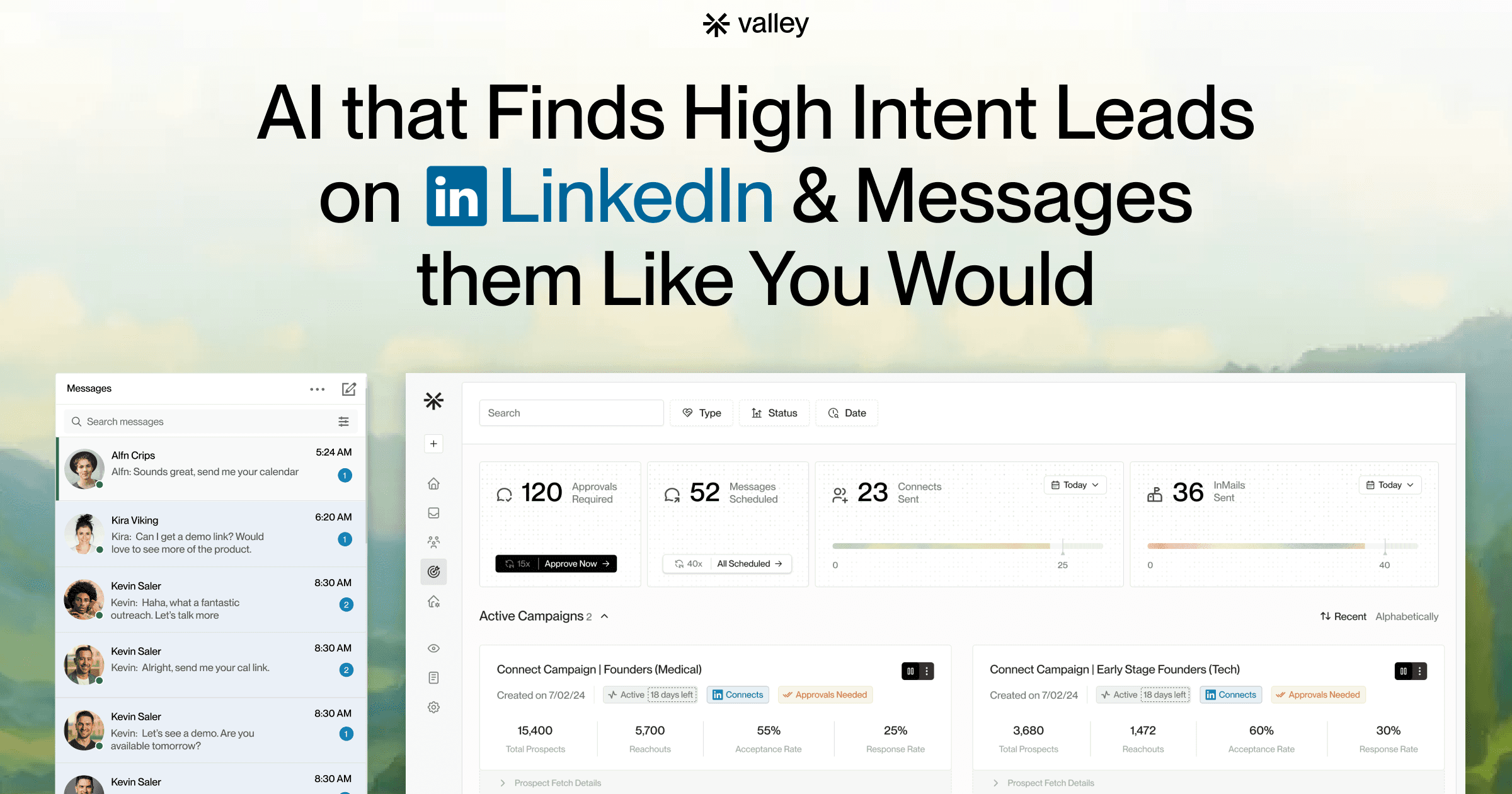
► Book a demo: see how Valley would find, research and message your buyers
Frequently Asked Questions
What LinkedIn tools detect buying intent signals?
Tools that capture person-level signals, profile views, post engagement, website visits, new followers, Sales Navigator activity. Valley captures all five and turns them into researched outreach.
How is LinkedIn intent different from traditional intent data?
LinkedIn signals are person-level and real-time, with a human and context attached. Traditional intent data is account-level and delayed, leaving you to find the person and craft the message yourself.
What is the highest-intent LinkedIn signal?
Website visitors are typically highest-intent, since visiting your site means active research. Post engagement is high and contextual. Profile views are medium-to-high.
Does Valley act on intent signals automatically?
Yes. Valley qualifies each signal against your ICP, researches the person, and drafts a personalized message referencing the signal, which you approve before sending.
Can intent signals be filtered by ICP?
Yes. Valley scores every captured signal against your ICP so outreach focuses only on people who match your target buyer profile.
Related: message the people who engage with your LinkedIn posts.
See also: LinkedIn Buying Signals: the Complete 2026 Guide (With the Tools That Catch Them) · Buying Signals in B2B: The Complete Map, Ranked by How Close the Buyer Is · LinkedIn Intent Signals That Will Transform Your B2B Outbound Strategy


