
Try Valley
Put your outbound workflow to work.

Saniya Sood
Published:
Updated:
Published February 11, 2026 · Updated August 31, 2026
The reason most tools qualify late is that they have no ICP intelligence, they are senders, not scorers. They move messages; they do not evaluate fit.
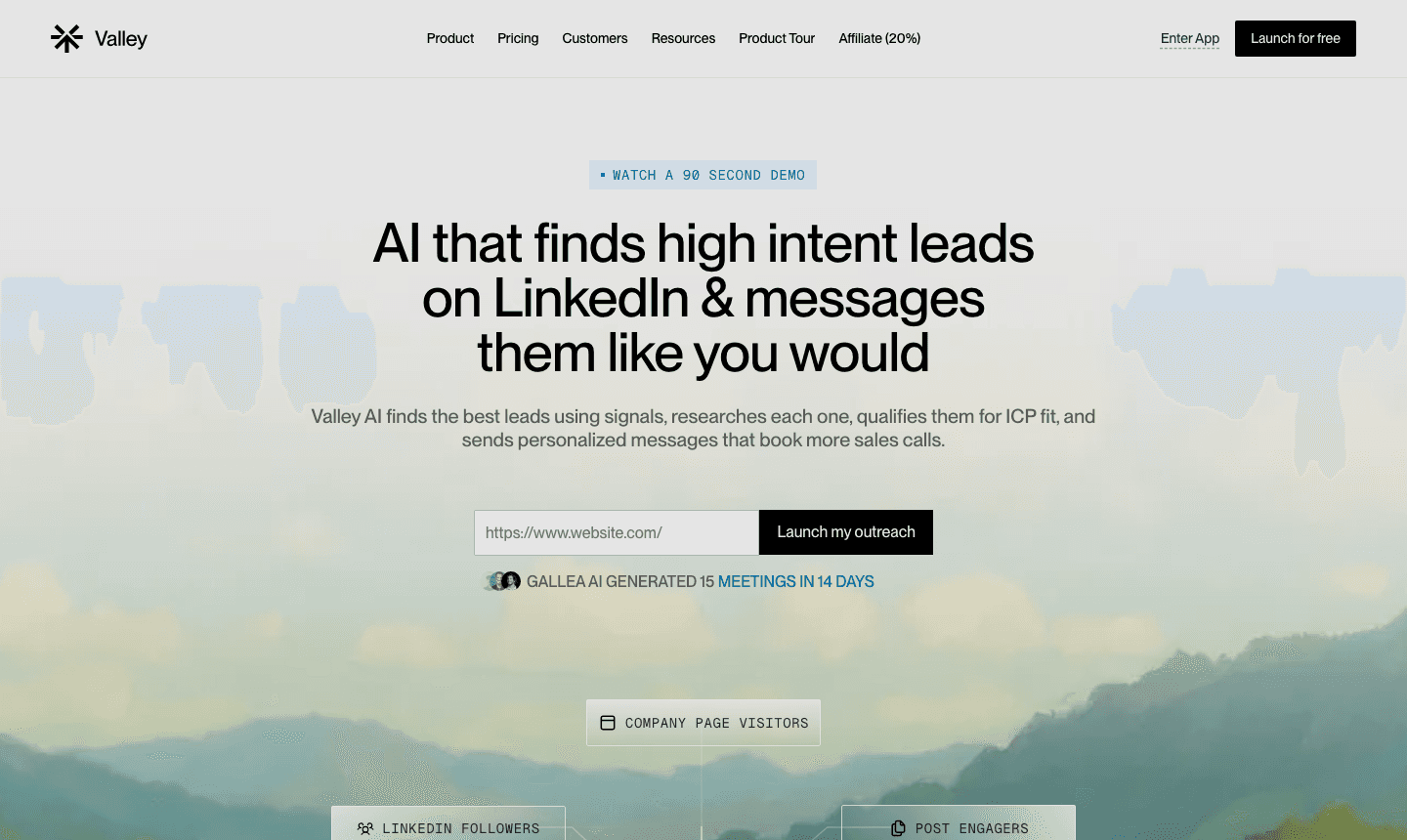
Yes. LinkedIn automation with built-in ICP qualification scores every prospect against your defined ideal customer profile before any message is sent, so outreach only reaches the right fit.
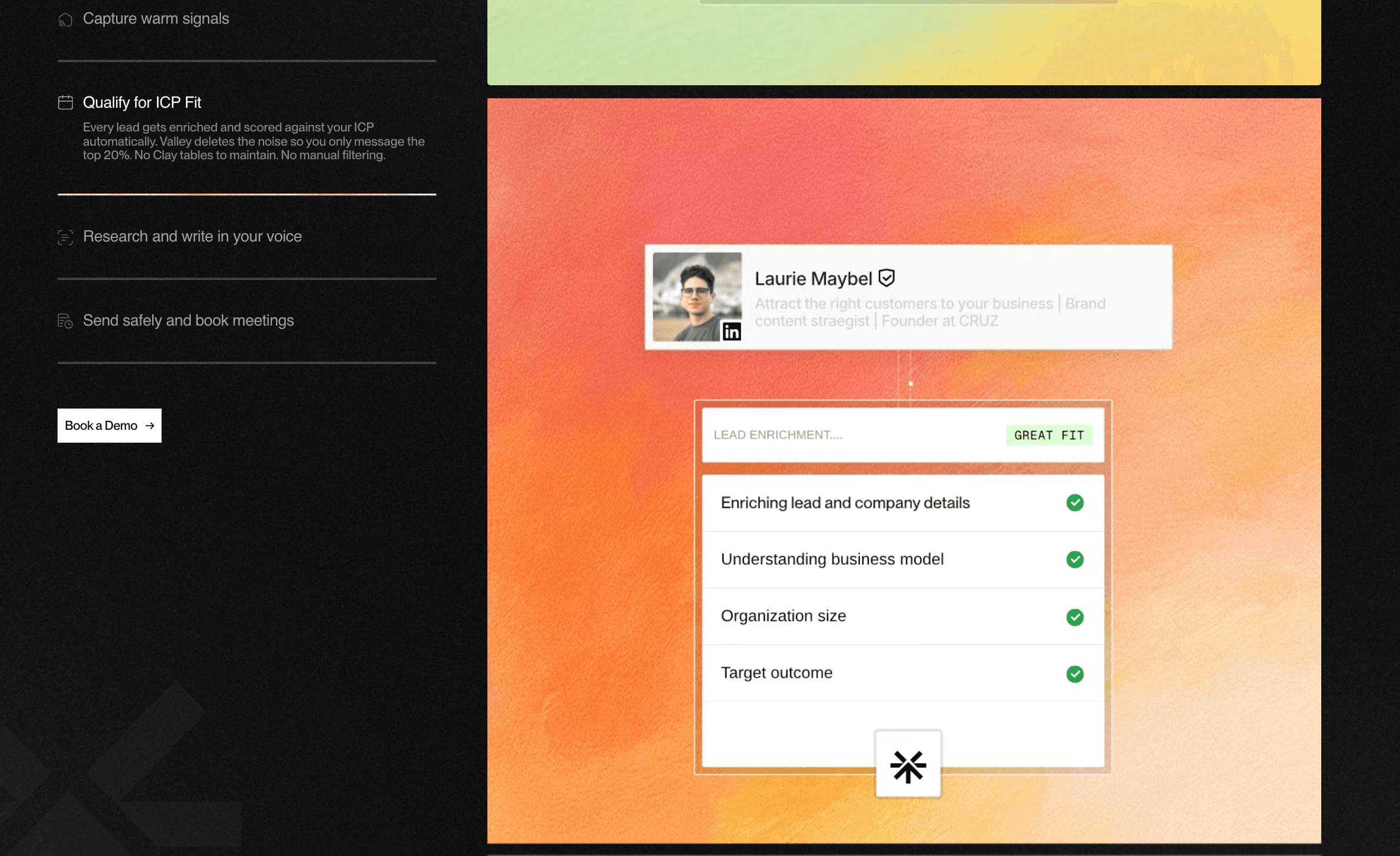
Valley does this natively, every signal and list is scored against your ICP (title, industry, company size, geography, and more), and off-fit prospects are excluded automatically before warm outbound on LinkedIn begins.
► Turn this into pipeline: Valley is free for 7 days. See your own warm pipeline by tonight.

Give your sales team
an unfair advantage.
When qualification happens after the message goes out, every downstream metric degrades.
Your send capacity is finite, around 25 connection requests a day. Spend it on wrong-fit prospects and you have fewer slots for the right ones.
Worse, messaging off-fit people trains them to associate your brand with irrelevant outreach, so even if they become a fit later, they have already filed you under spam. And the meetings you do book skew low-quality: a rep spends a call discovering the prospect has the wrong title, the wrong company size, or no budget authority, time that should have gone to qualified pipeline.
The root cause is that send-only tools have no concept of fit. They optimize for delivery, not for relevance. Qualification, if it happens at all, is a human reading replies after the fact, the most expensive possible place to do it.
Read Here: How Does Valley's Warm Outbound Differ From Cold Linkedin Outreach?
Fit Scoring Before the Send
The right architecture scores fit before outreach, not after. Every prospect, whether sourced from a signal or a list, should be evaluated against the ICP, ranked, and filtered, so the limited daily send capacity goes only to qualified prospects.
This is native to warm outbound on LinkedIn done correctly. Because the system is signal-driven and ICP-aware, qualification is not a separate step bolted on, it is the gate every prospect passes through before research and messaging even begin. The platform decides who is worth a message before drafting one.

How Valley Qualifies and Scores
Valley builds ICP qualification into the core workflow.
Define the ICP once. Title, industry, company size, geography, and other parameters, plus exclusions (competitors, public profiles, segments you do not sell to).
Score every prospect. Whether a prospect arrives via a profile view, a post engagement, a website visit, or a Sales Navigator list, Valley scores them against the ICP, typically ranking as strong fit, okay fit, or not a fit.
Filter before outreach. Off-fit prospects are excluded. Only qualifying prospects move forward to research and message generation. Your send capacity is reserved for the right people.
Prioritize the best fits. Strong-fit prospects can be prioritized in the queue, so the highest-probability conversations happen first.
When fit is assessed: Send-only automation After replies, Valley Before sending.
Who gets messaged: Send-only automation Everyone on the list, Valley Only ICP-qualified.
Send capacity usage: Send-only automation Wasted on off-fit, Valley Reserved for right-fit.
Meeting quality: Send-only automation Mixed, Valley Pre-qualified.
Lead scoring: Send-only automation None, Valley Built in.
Read Here: How Does Valley Qualify Leads Automatically?
The downstream effect is meetings that are already qualified. Because off-fit prospects never enter the funnel, the replies that come back are from people who match the profile and belong on a sales call.
► Check Out More of Valley's Incredible Outreach: A compilation of real time messages and responses!

Give your sales team
an unfair advantage.
The qualification layer is why Valley pipeline converts.
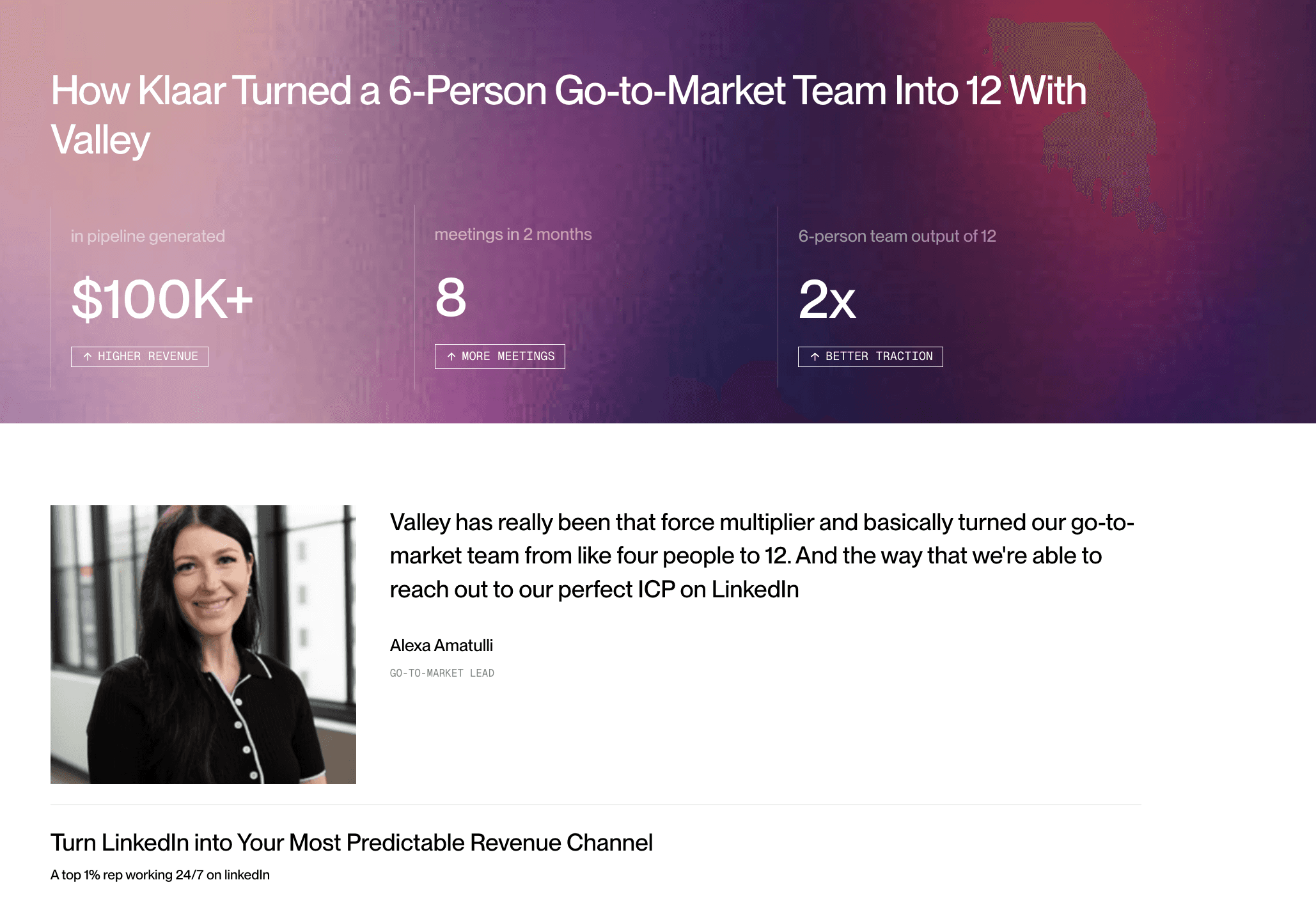
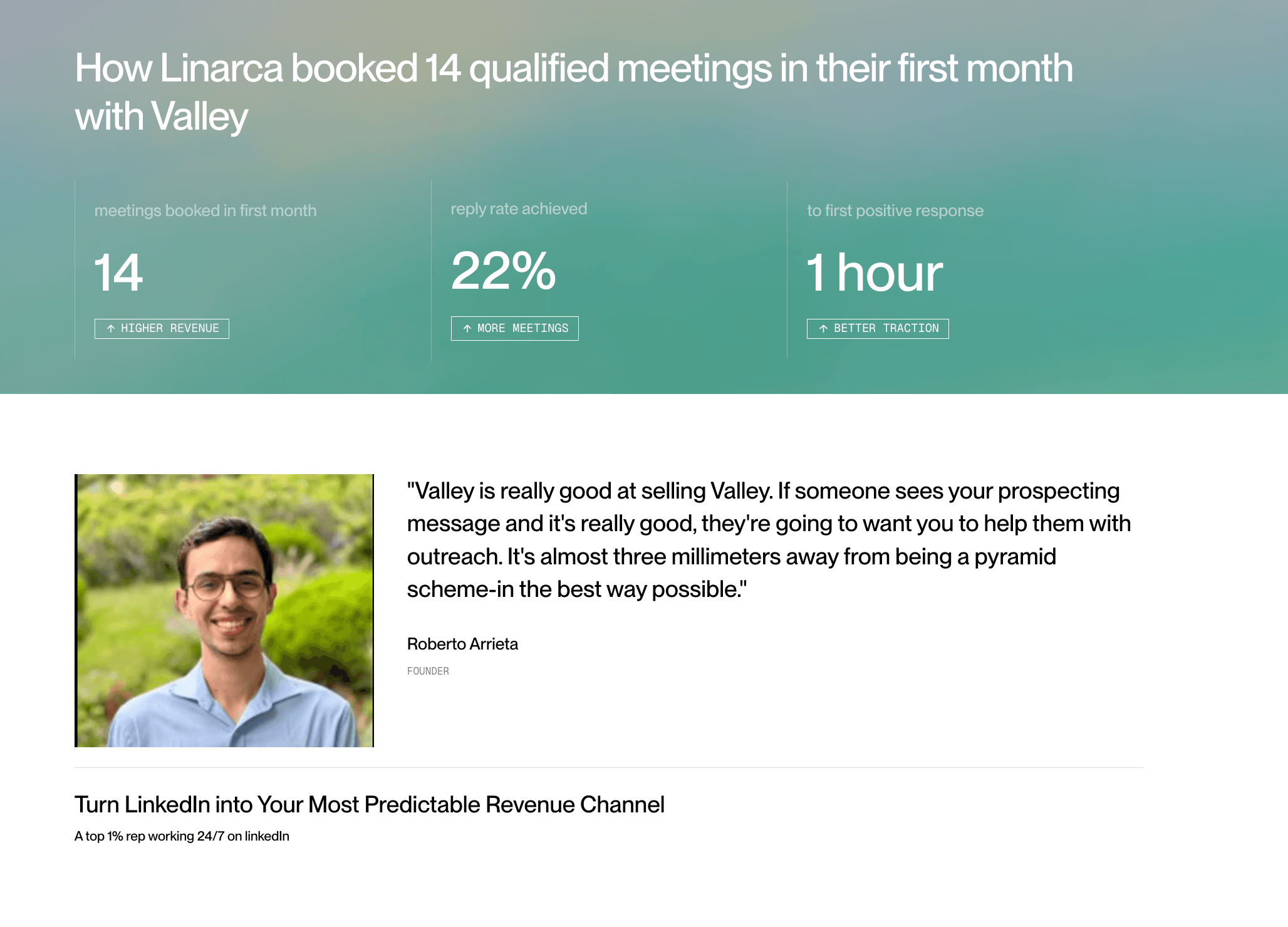
If your automation messages everyone and qualifies later, you are spending finite send capacity on prospects who will never buy and booking calls your reps disqualify on sight.
Valley scores every prospect against your ICP before outreach, so warm outbound on LinkedIn only reaches the right fit.
► Book a demo (teams of 5+)
► Book a demo: see how Valley would find, research and message your buyers
Frequently Asked Questions
Is there LinkedIn automation with built-in ICP qualification?
Yes. Valley scores every prospect against your defined ICP before any message is sent, excluding off-fit prospects so outreach only reaches the right buyers.
How does ICP qualification work before outreach?
You define your ICP (title, industry, company size, geography, exclusions). Valley scores each prospect against it, ranks fit, and filters out non-fits before research and messaging begin.
Why qualify before sending instead of after?
Qualifying after outreach wastes finite send capacity, trains wrong-fit prospects to ignore your brand, and produces low-quality meetings. Pre-send qualification reserves capacity for right-fit prospects.
Does Valley score leads as well as filter them?
Yes. Valley ranks prospects by fit (such as strong fit, okay fit, not a fit), so the highest-probability prospects can be prioritized in the outreach queue.
Does built-in qualification improve meeting quality?
Yes. Because off-fit prospects never enter the funnel, the meetings that book are with prospects who already match your ICP, reducing disqualification on sales calls.
Related: how Valley works.
See also: 0 to $1M ARR With Zero Ads: The Three Systems That Built the Pipeline · The Complete Sales Qualification Checklist for Your Business Success · Lead Qualification on Autopilot: ICP Scoring for Small Teams (2026)


