Best LinkedIn Outreach Tools for B2B SaaS Founders in 2026

Try Valley
Make LinkedIn your Greatest Revenue Channel ↓

Saniya
Published:
Updated:
Best LinkedIn Outreach Tools for B2B SaaS Founders in 2026
Published June 15, 2026 · Updated August 31, 2026
LinkedIn's average reply rate across all outbound messages sits between 10 - 15% in 2026, according to ConnectSafely's LinkedIn Statistics report. That sounds reasonable until you benchmark it against what the best tools produce for warm, signal-based campaigns: 40 - 50%. The gap is enormous, and it's mostly explained by one thing, whether you're messaging cold strangers or people who already know you exist.
Valley makes one of the tools in this category. We've marked our entry clearly and included tools that beat us for specific jobs.
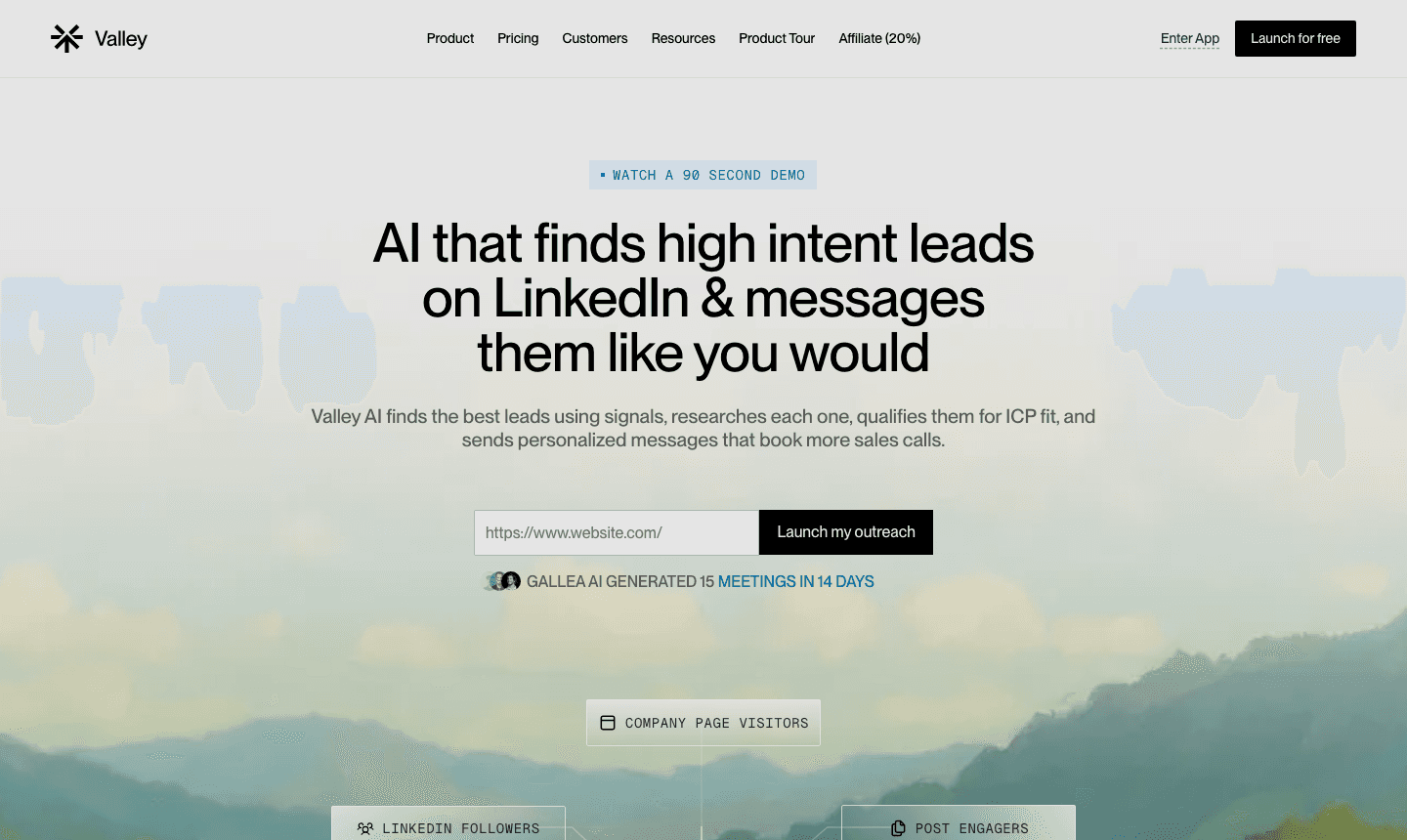
For B2B SaaS founders, this distinction matters more than anything else on a spec sheet. You don't have time to fire off thousands of cold messages and pray. You need a tool that focuses your limited outreach capacity on the prospects most likely to convert.
► Book a demo (teams of 5+) and explore how Valley can support your use case

Here's a clear breakdown of the tools worth your attention in 2026.
Why most LinkedIn outreach tools disappoint SaaS founders
Most tools in this category were built to solve a volume problem: how do I send more messages? That's the wrong question. The right one is: how do I message the right people?
Volume-first tools, and there are dozens of them, automate connection requests and sequences at scale. The tradeoff is thin personalization, account safety risks, and reply rates that rarely exceed 5 - 8% for cold lists. For a SaaS founder running 20 - 50 outreach messages per day, those numbers don't build a pipeline.
The tools that actually perform for early-stage SaaS teams share three traits: they identify intent signals before outreach begins, they qualify leads against your ICP automatically, and they generate messages that sound like you wrote them. That combination shifts outbound from guesswork to a repeatable system.
► Built for exactly this workflow: try Valley free for 7 days. No onboarding call required to start.

The 5 best LinkedIn outreach tools for B2B SaaS startups
1. Valley, best for signal-based warm outbound
Valley is the standout choice for B2B SaaS founders whose buyers are on LinkedIn. Rather than starting with a cold list, Valley works by capturing people who are already showing interest in your company: profile viewers, post engagers, company page followers, and competitor engagers. Every person in that pool gets scored against your ICP using 60+ data points, and anyone who doesn't fit gets automatically removed before a single message goes out.
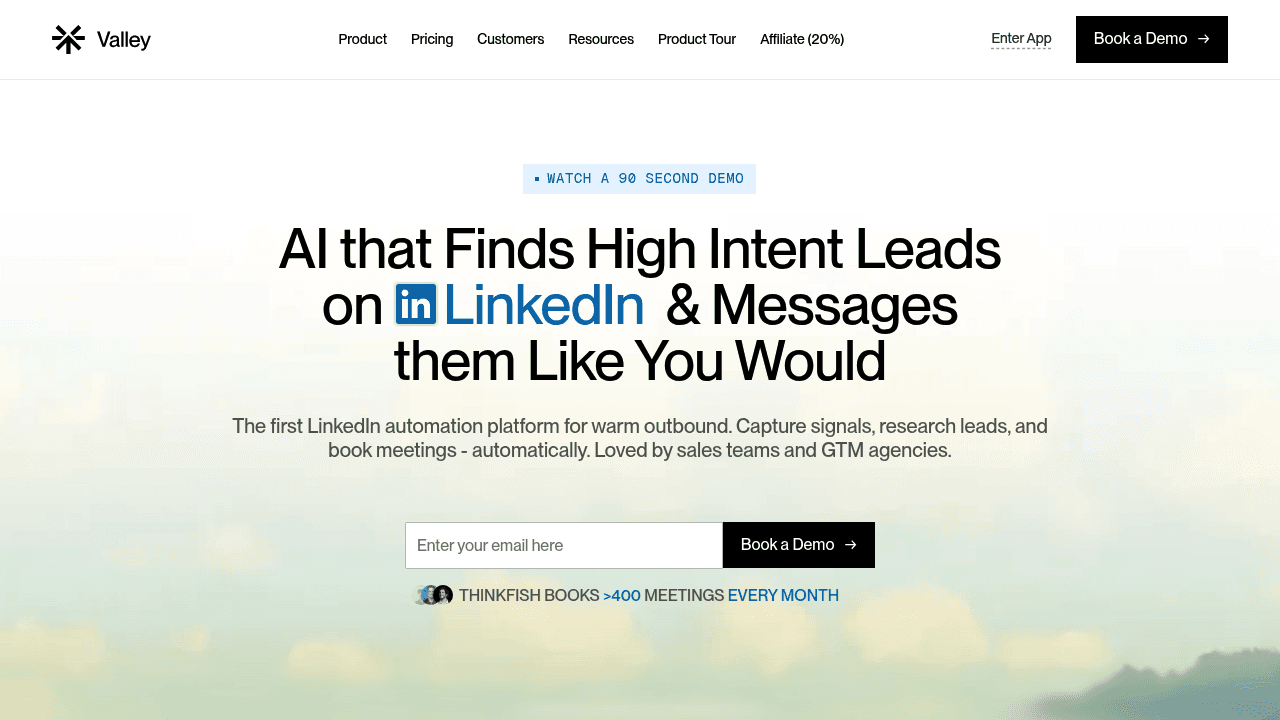
For the high-fit prospects that remain, Valley conducts deep research, company context, industry headwinds, recent news, the individual's role, and then generates a message in your exact voice. Not a template with a first name swapped in. A message that references something specific and relevant about that prospect.
The results back this up. Bolt.new used Valley to book 25 enterprise demos in 45 days and generate over $1M in qualified pipeline, while cutting daily prospecting time from 3 - 4 hours to about 15 minutes. ThinkFish books over 400 meetings monthly. Across all customers, Valley has contributed to $128M+ in pipeline generated, with reported reply rates of 40 - 50% on warm outbound campaigns.
Valley has maintained zero LinkedIn account suspensions across years of operation, a direct contrast to volume-first tools that routinely put accounts at risk. The platform runs entirely within LinkedIn's safety limits, with options for manual message approval or full autopilot.
Pricing: $149/month billed quarterly ($199 month-to-month), everything unlocked. Valley Scale covers 5+ seat teams.
Best for: SaaS founders, lean sales teams, and GTM agencies who want pipeline from warm intent without a multi-tool stack
For a deeper look at how the signal-capture and scoring works, Valley's warm outbound methodology covers the full loop.
2. HeyReach, best for multi-account agency scaling
HeyReach is built around one core idea: rotating across multiple LinkedIn senders to increase total outreach volume without hitting per-account limits. For agencies managing several clients or large teams running parallel campaigns, the economics make sense, the per-sender price drops significantly at scale (around $44/month at 10 senders).
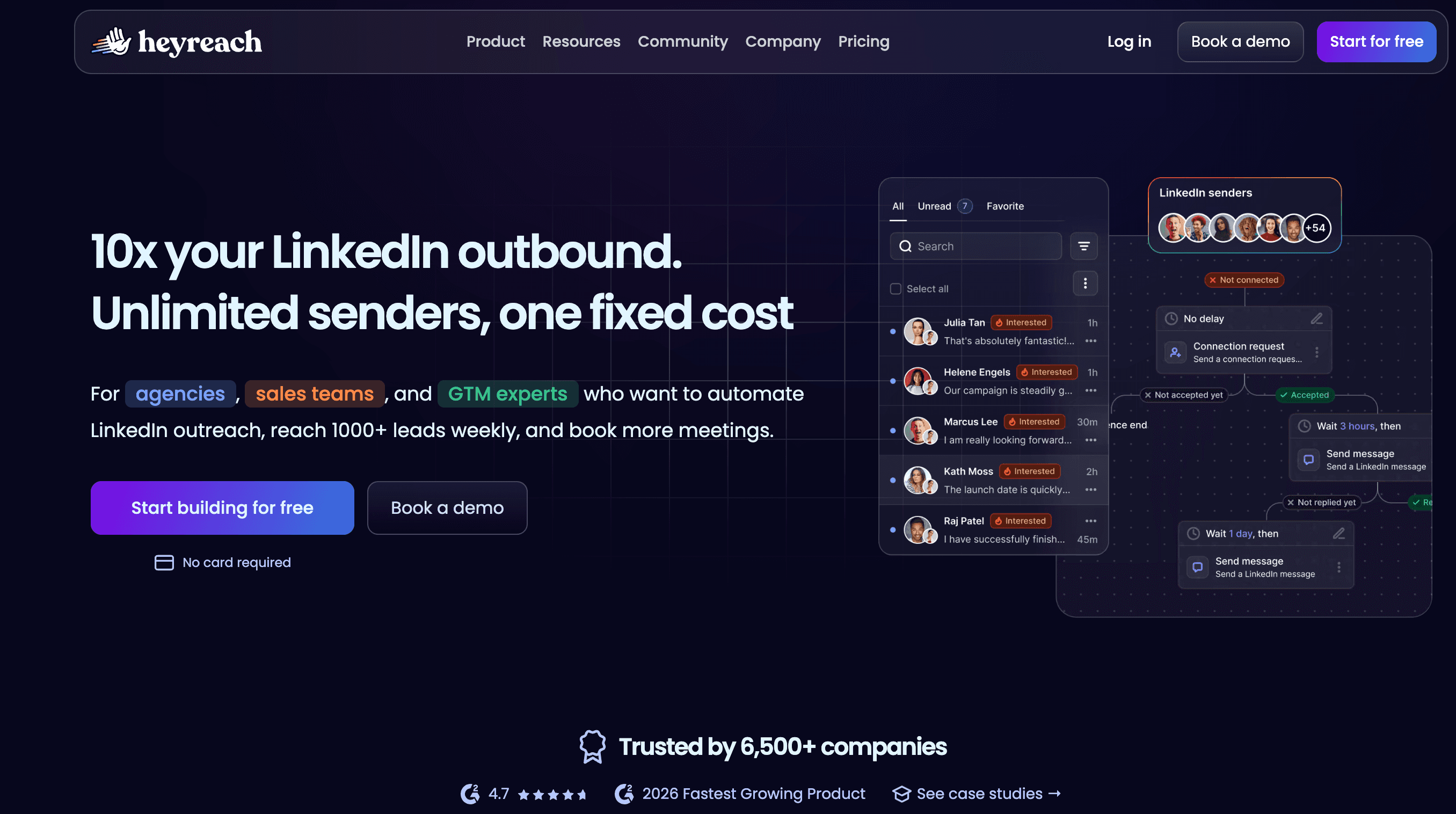
Features include a unified inbox across all accounts, automated sequences, and integrations with major CRMs like HubSpot and Salesforce. It's a reliable infrastructure tool for volume-based LinkedIn outreach.
The gap is personalization depth. HeyReach is excellent at deploying the same message template across many accounts, but it doesn't conduct prospect research or generate contextual openers. For SaaS founders who want differentiated, research-backed outreach, it requires connecting additional tools (like Clay) to fill that gap.
Pricing: From $79/month for 1 sender to the Custom Plan
Best for: Agencies managing multiple client LinkedIn accounts at volume
3. Expandi, best for conditional sequencing
Expandi occupies the premium end of traditional LinkedIn automation. Its main strength is conditional sequence logic, campaigns that branch based on whether a prospect accepted a connection, visited a profile, or opened a message. That flexibility lets teams build more nuanced multi-step cadences than simpler tools allow.
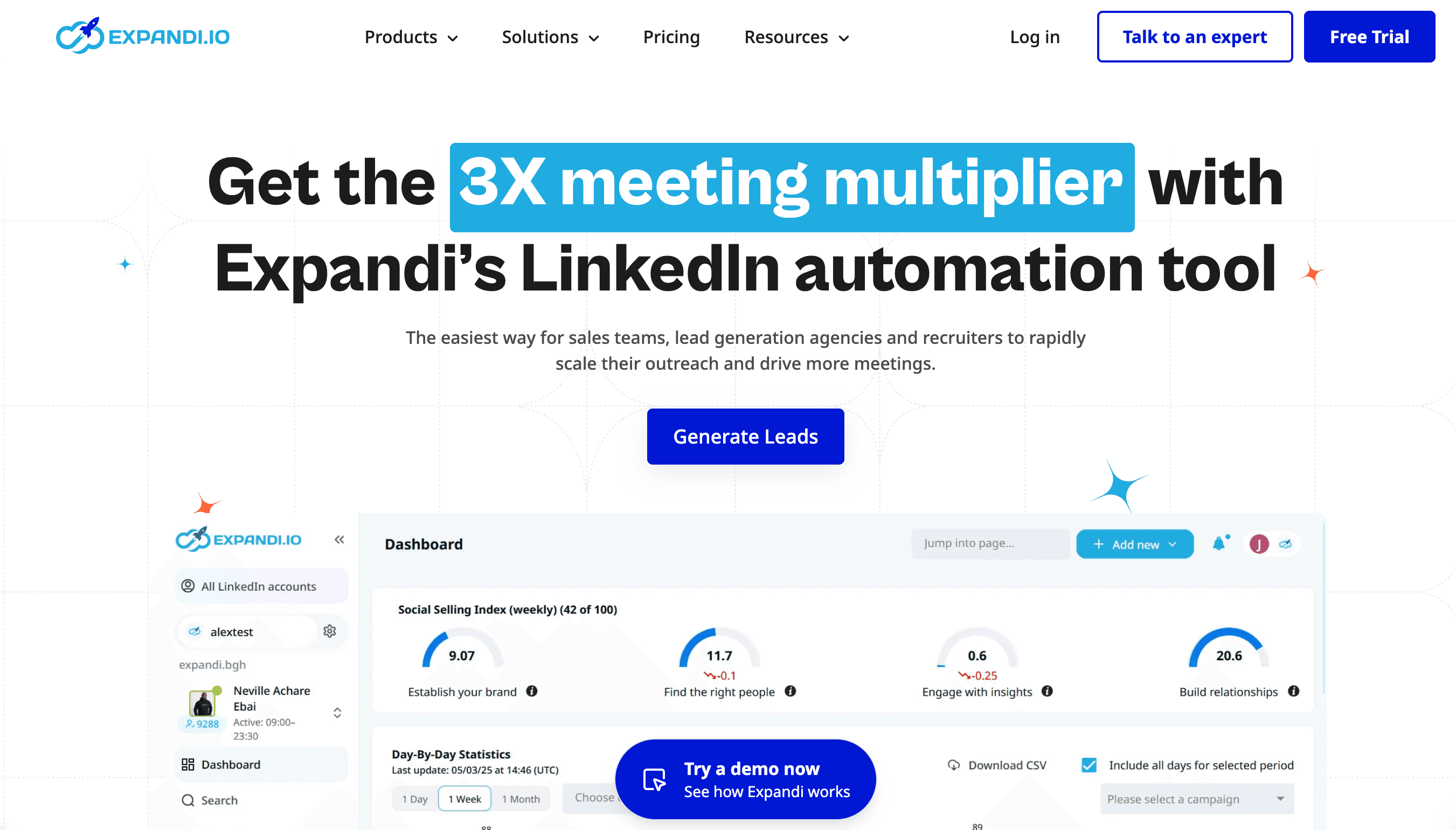
It also includes email outreach alongside LinkedIn, image and GIF personalization, and dedicated IP addresses for account safety. At $99/month per seat, it's in the mid-to-high range for single-user tools.
Expandi won't capture intent signals autonomously or write research-driven openers. It's a sophisticated sending engine, not an end-to-end outbound platform. Teams that want to build complex sequences and have the time to manage their own prospecting lists will find it useful. Those looking for one setup and a continuous pipeline generation loop will hit its ceiling quickly.
Pricing: $99/month per seat to the Agency plan.
Best for: Experienced SDRs who want fine-grained sequence control
4. Dripify, best for beginners
Dripify is the easiest LinkedIn automation tool to get running quickly. Its visual campaign builder lets non-technical users create drip sequences in minutes, and the analytics are clean and straightforward. It's a good starting point for founders or solo AEs who haven't run LinkedIn automation before.
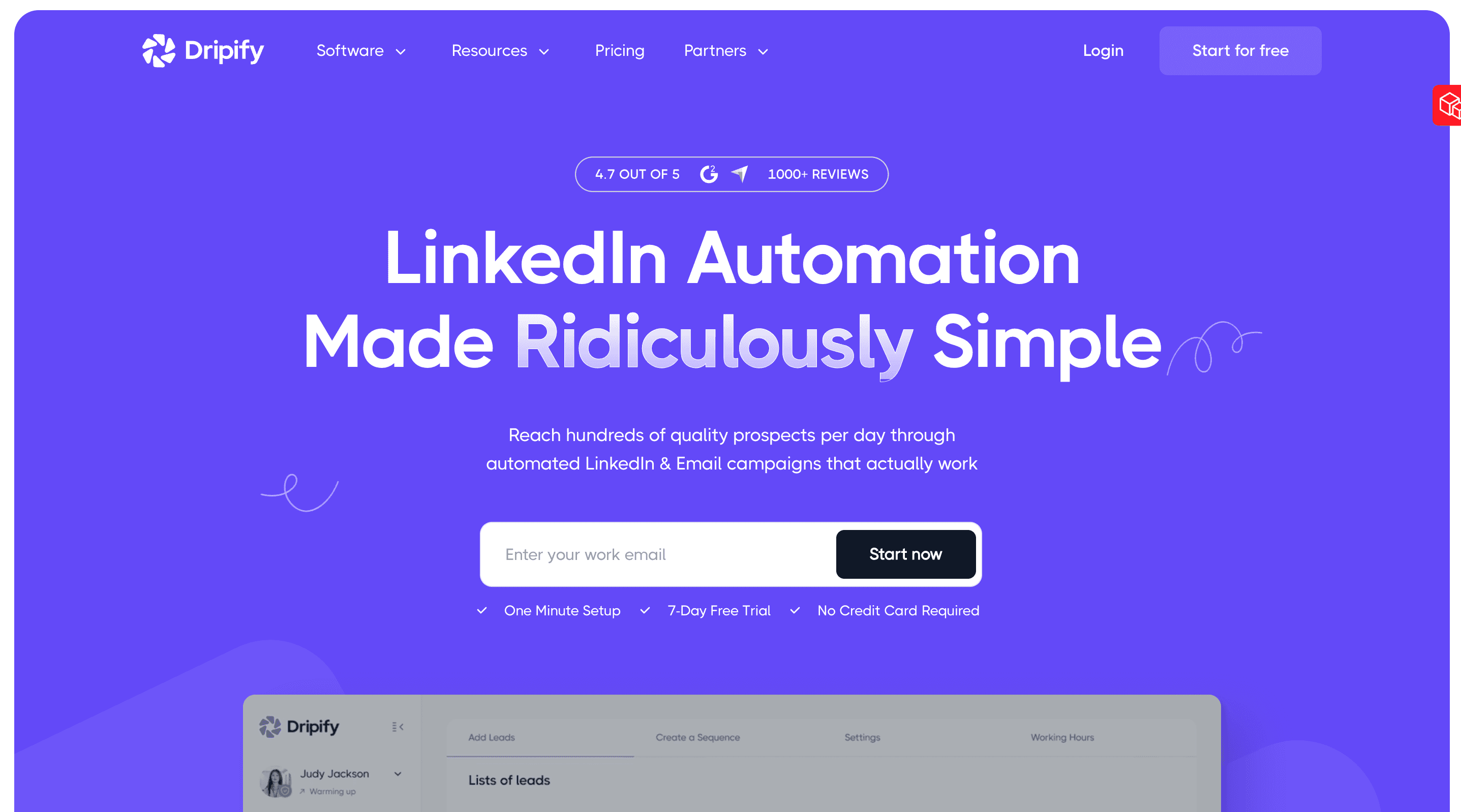
On the downside, the personalization ceiling is low. Dripify works on templates, not research. Reply rates from cold Dripify campaigns typically sit in the range that most cold LinkedIn automation produces, adequate, not impressive. For a SaaS startup that's still testing messaging and segments, Dripify is a reasonable low-cost experiment. Scaling from it requires moving to something more capable.
Pricing: From $39/month to the Enterprise plan
Best for: Early-stage founders testing LinkedIn outreach for the first time
5. Lemlist, best for multichannel cold outreach
Lemlist is primarily a cold email platform that added LinkedIn as a secondary touchpoint. Its strongest features are around email: deliverability tooling, AI-generated personalized images, and built-in email warm-up (lemwarm). The multichannel plan layers in LinkedIn steps for a coordinated email-plus-LinkedIn sequence.
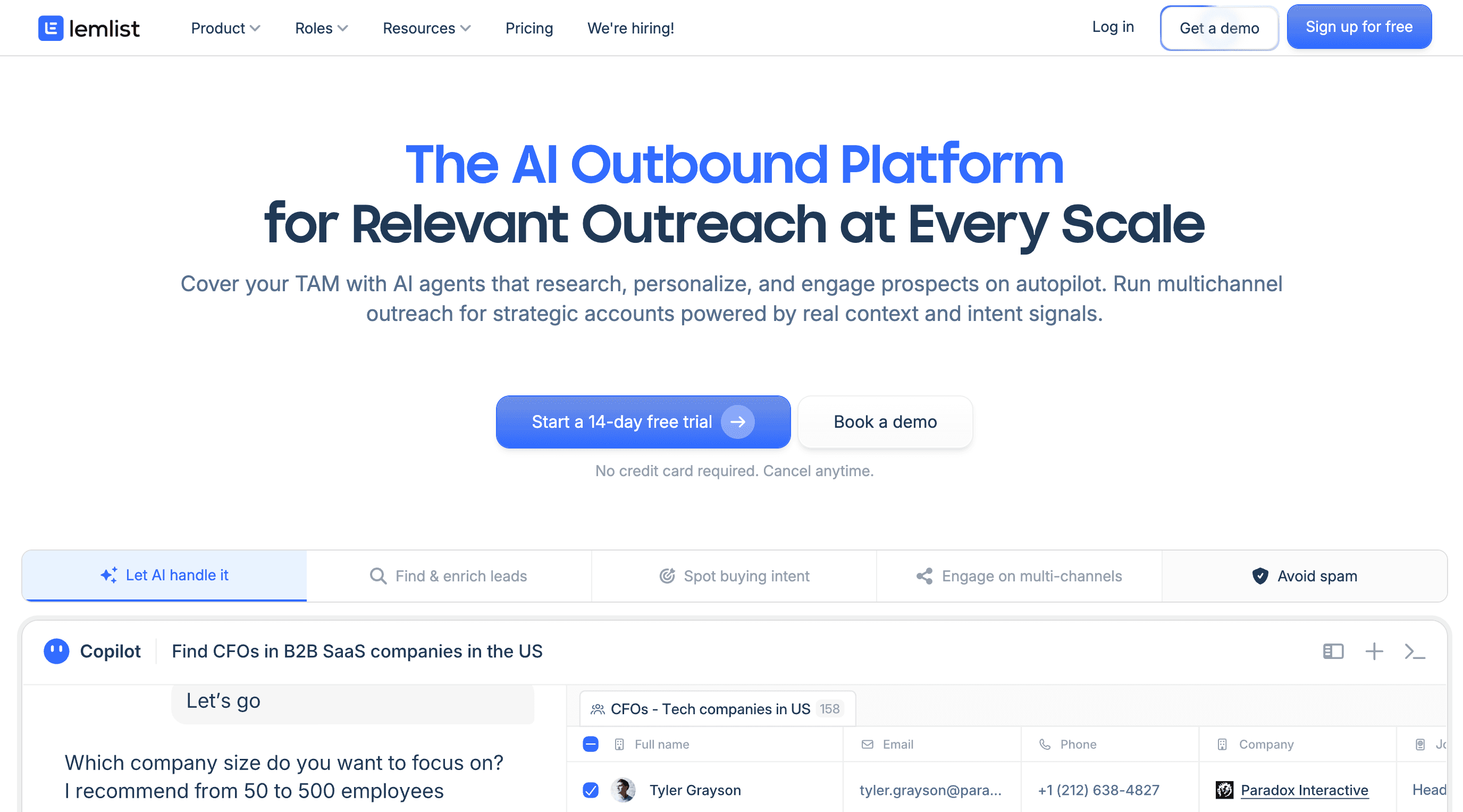
For SaaS founders whose buyers are more email-responsive than LinkedIn-active, lemlist's email-first approach makes sense. Its LinkedIn automation is comparatively basic, it handles touchpoints within a sequence but doesn't approach the depth of LinkedIn-native tools for signal capture or in-voice personalization.
Pricing: $69/month for email-only to the Enterprise plan
Best for: Teams that want to coordinate cold email with light LinkedIn touches
Keep exploring: Valley pricing, explained · real customer results.

How to pick the right tool for your stage
The decision mostly comes down to two variables: where you are in building outbound, and whether you want warm intent-based pipeline or volume-based cold outreach.
If you're pre-Series A, running lean, and your buyers are active on LinkedIn, Valley's signal-based approach removes most of the manual work and produces far higher reply rates than cold automation. The LinkedIn automation tools comparison shows how the approaches stack up in booked meetings per week.
If you're managing multiple client accounts and need to scale volume across dozens of LinkedIn profiles, HeyReach's per-sender pricing model is the most economical. Expandi is the right call if you need sophisticated conditional branching on your own account. Dripify is where you start if you're just getting off the ground. Lemlist is the play if cold email is your primary channel and you want LinkedIn as a supplement.
One thing worth being honest about: no tool compensates for weak ICP targeting or a product that doesn't have market fit. Automatic ICP qualification addresses the targeting problem, but the product-market fit question has to come first.
The reply rate reality check
Cold LinkedIn automation at scale typically delivers 8 - 15% reply rates under good conditions, per the Expandi State of LinkedIn Outreach 2026 report. Warm, signal-based campaigns targeting people already in your orbit produce a different result entirely.
Valley's customers consistently report 15 - 45% reply rates, with warm outbound campaigns for high-intent signals hitting toward the top of that range. That's not a marginal improvement. It's the difference between booking a few calls per week and building a real pipeline engine, which, for a B2B SaaS startup, is the only kind worth having.
► Book a demo (teams of 5+)
For teams ready to move beyond cold spray-and-pray, signal-based LinkedIn outreach is the foundation. The tools above represent the full spectrum of what's available in 2026, from raw volume automation to deep, research-driven warm outbound. The right choice is the one that matches where your pipeline needs to be, not just where it is today.
Frequently Asked Questions
Q: Is Valley the best LinkedIn outreach tool for B2B SaaS founders?
A: For founders whose buyers are on LinkedIn, Valley is the standout for signal-based warm outbound, it captures profile viewers, post engagers, and competitor engagers, scores them against your ICP, and writes researched messages in your voice. The post also weighs HeyReach, Expandi, Dripify, and Lemlist for other needs.
Q: What makes Valley different from volume-based LinkedIn outreach tools?
A: Most tools optimize for sending more messages, which yields thin personalization and 5 - 8% reply rates on cold lists. Valley identifies intent signals first, auto-qualifies leads against your ICP, and generates messages that sound like you wrote them shifting outbound from guesswork to a repeatable system.
Q: How does Valley's pricing compare to other LinkedIn outreach tools?
A: Valley is $149/month billed quarterly ($199 month-to-month) with everything unlocked; Valley Scale covers 5+ seat teams. HeyReach starts at $79/month per sender, Expandi at $99/month per seat, Dripify at $39/month, and Lemlist at $69/month but those are volume or template tools, whereas Valley replaces a multi-tool stack.
Q: Is Valley a good fit for agencies managing multiple LinkedIn accounts?
A: Valley suits agencies that want warm-intent pipeline and measurable per-client meeting results. For pure volume across 10+ senders, HeyReach’s per-sender pricing is more economical (around $44/month at 10 senders).
Q: What reply rates can founders expect from Valley versus cold outreach?
A: Cold LinkedIn automation typically delivers 8 - 15% reply rates under good conditions. Valley’s warm, signal-based campaigns reach 15 - 45%, with high-intent signals landing toward the top of that range.

Related Blogs

FEATURED READ
5 min
ZoomInfo Pricing Explained (2026): What It Actually Costs
Read
Read

FEATURED READ
5 min
Apollo Pricing and Credits Explained (2026): What You Actually Pay
Read
Read

FEATURED READ
5 min
Clay Pricing and Credits Explained (2026): The Post-March Math
Read
Read

FEATURED READ
5 min
LinkedIn Sales Navigator Cost Explained (2026): Every Tier, Real Numbers
Read
Read
Which channels does Valley support?
Valley supports LinkedIn outreach, including connection requests and InMails. Valley users safely send 1000-1200 messages per seat every month.
How safe is it and does Valley risk my LinkedIn account?
Do I have to commit to an Annual Plan like other AI SDRs?
How does Valley personalize messages?
Is Valley available in my country?

VALLEY MAGIC