
Try Valley
Put your outbound workflow to work.

Saniya Sood
Published:
Updated:
Published June 3, 2026 · Updated August 31, 2026
The contradiction is real but not unsolvable. The trick is recognizing what part of personalization can be automated (the research and drafting) and what part cannot (the judgment and approval).
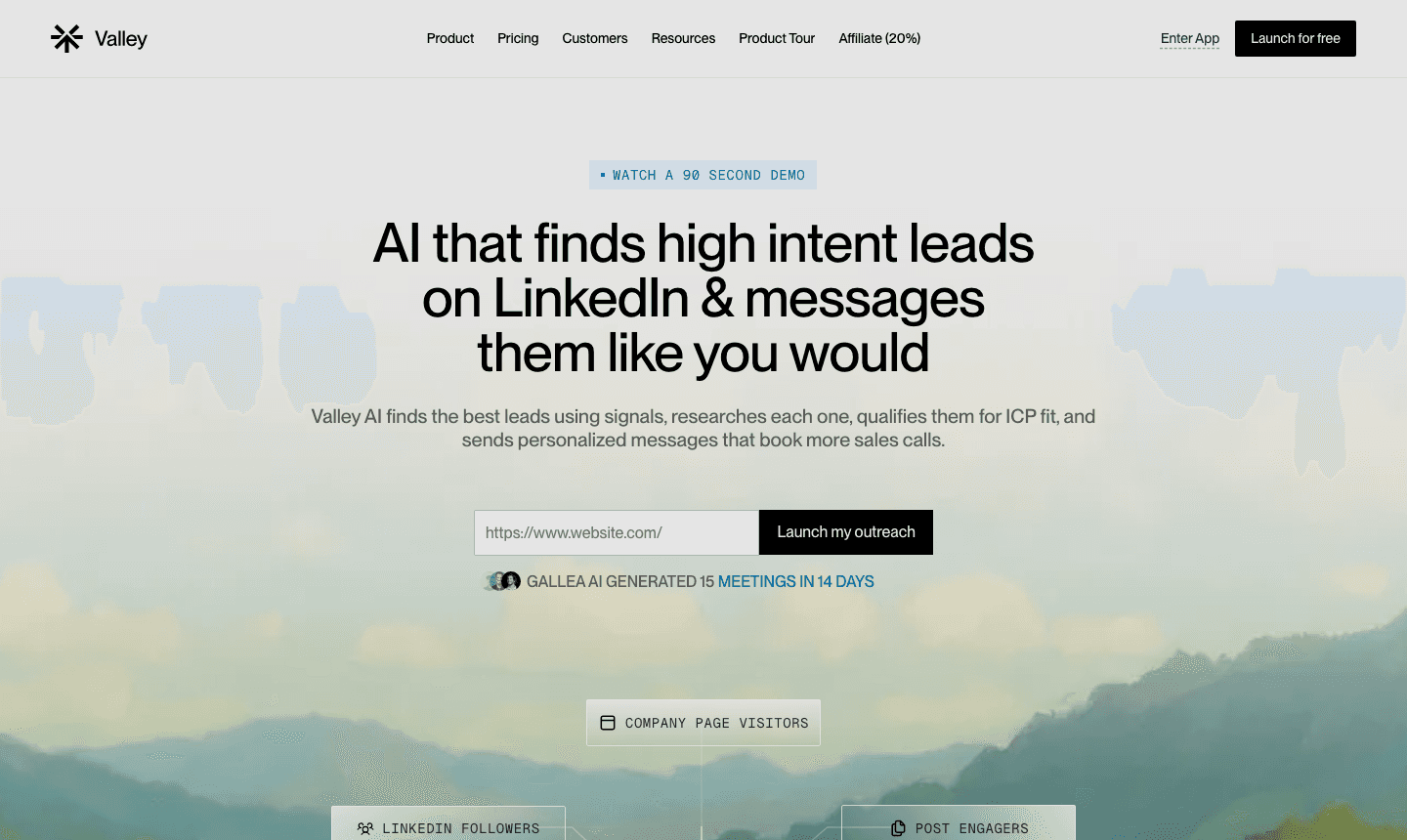
You personalize LinkedIn messages at scale by automating the research and drafting while keeping human approval. AI researches each prospect across multiple sources, writes a unique message referencing specifics, and a human reviews it.
Valley runs this for hundreds of prospects simultaneously, each message individually researched, so quality holds at volume instead of collapsing into templates.
► Book a demo (teams of 5+)and explore how Valley can support your use case
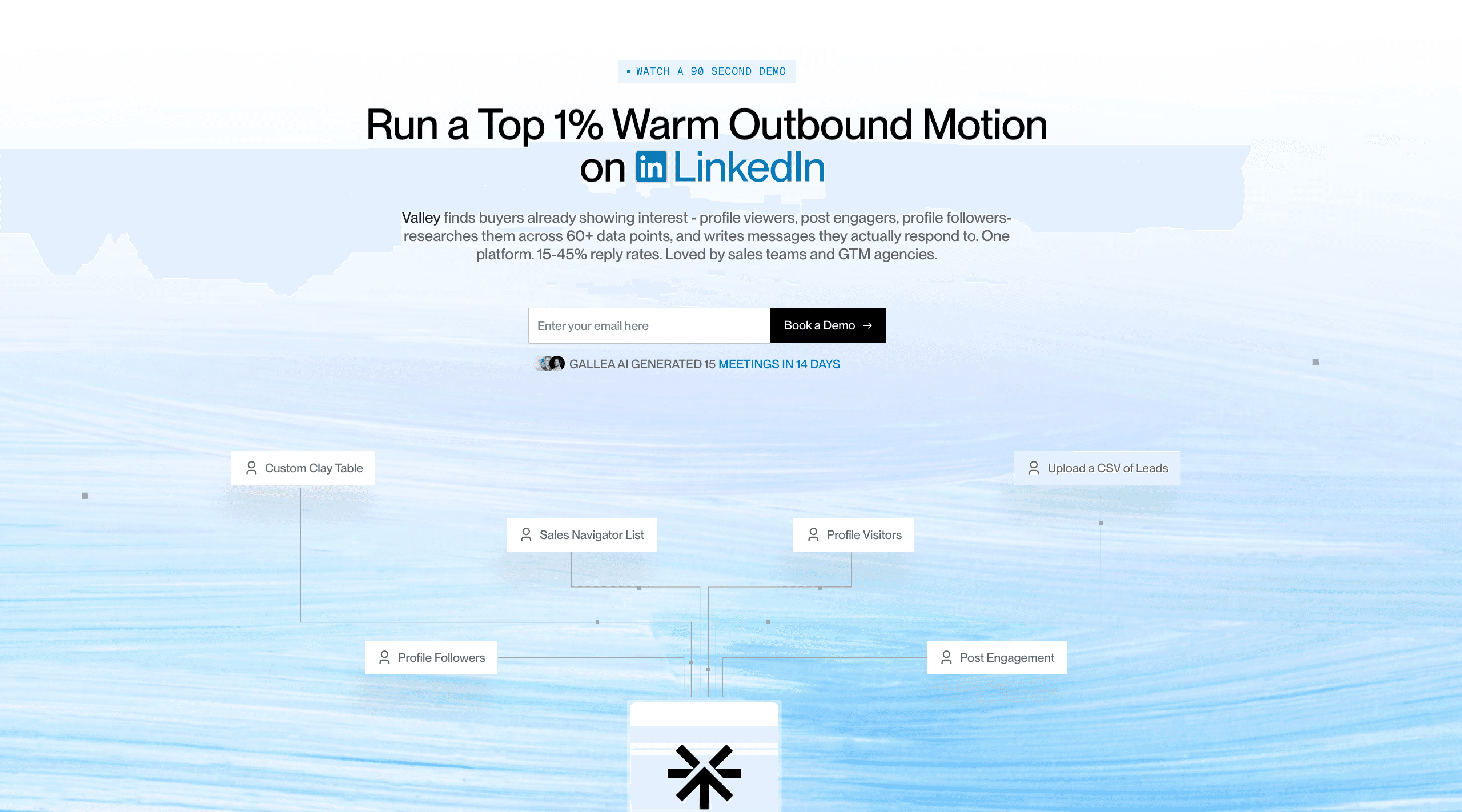
► Reading is step one; step two is a free 7-day Valley trial. See who viewed your profile this week.

Give your sales team
an unfair advantage.
The bottleneck is never the sending. Sequencers send thousands of messages effortlessly. The bottleneck is the research and writing that has to happen before a message is worth sending.
A genuinely personalized message requires reading the prospect's recent activity, understanding their context, finding a relevant hook, and writing something specific. That is roughly five to ten minutes of human work per prospect. A skilled rep sustains maybe 30 to 40 of these per week. Push past that and the research gets thinner, the hooks get lazier, and within two weeks the "personalized" messages are templates with a recent-post-title slotted in.
This is why most teams that claim personalization at scale are quietly running cold templates. The volume looks impressive in a report. The reply rate tells the truth: 3 to 8%, the signature of generic outreach regardless of how much AI branding sits on top.
The Criterion That Separates Real From Fake
Evaluate any personalization-at-scale claim by one question: how many distinct data sources inform each message, and is a human approving the output? Template tools inform each message with one or two fields. Real personalization informs each with a multi-source research brief.
This is where warm outbound on LinkedIn changes the equation structurally. Because outreach triggers on a signal, a profile view, a post engagement, a website visit, the prospect pool is already smaller and warmer than a cold blast. You are not personalizing 5,000 cold contacts; you are personalizing the few hundred who showed interest. Smaller, warmer pools make deep personalization economically possible, and the signal itself becomes the opening line.
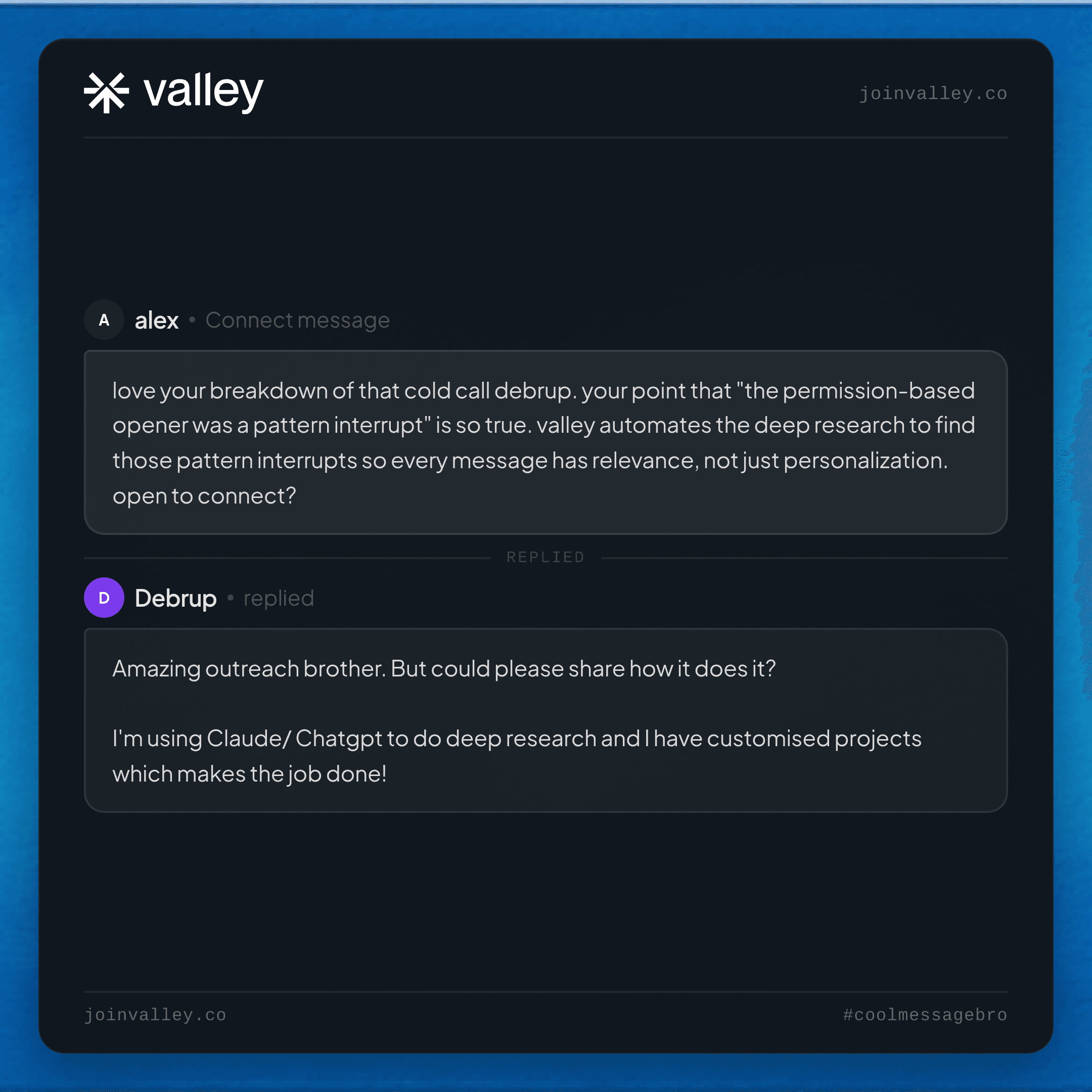
► Check Out More of Valley's Incredible Outreach: A compilation of real time messages and responses!
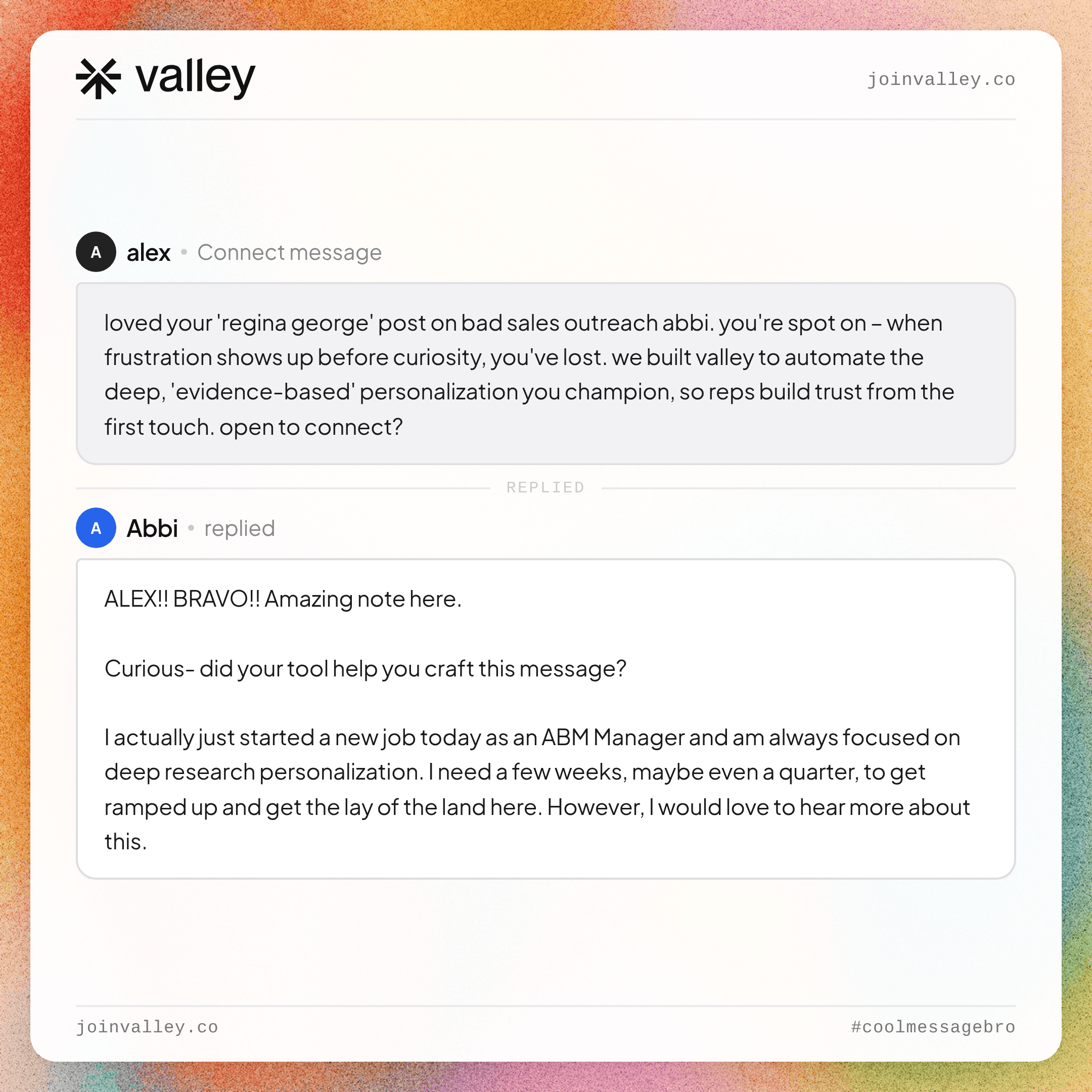
How AI Personalizes at Scale Inside Valley
Valley automates the expensive part of personalization without removing the judgment.
Research per prospect. For each qualifying prospect, Valley pulls recent posts, company news, funding activity, role context, and the triggering signal. This is the five-to-ten-minutes-of-human-work step, done in seconds, for every prospect in parallel.
Generation from the brief. Valley writes a message from that research brief in your configured voice. Because the brief is unique per prospect, the message is too, no shared template underneath.
Centralized approval. Every draft queues for review. A reviewer approves, edits, or rejects with feedback across the whole campaign from one interface, processing 30 to 50 messages an hour. The model learns from each decision.
Safe sending at volume. Approved messages send within LinkedIn's limits, with follow-ups sequenced. The system runs across hundreds of prospects without the research quality dropping, because the research is automated, not rationed.
Research depth: Manual personalization Deep, but capped at ~40/week, Template "scale" None, Valley Deep, unlimited.
Message uniqueness: Manual personalization High, Template "scale" None, Valley High.
Human approval: Manual personalization Inherent, Template "scale" Skipped, Valley Built in.
Volume ceiling: Manual personalization ~40/week, Template "scale" Unlimited but ineffective, Valley ~1,500/seat/month effective.
Reply rate: Manual personalization High, Template "scale" 3 - 8%, Valley 6 - 10%.
► Don't imagine the message quality, read it: Valley's live outreach compilation

Give your sales team
an unfair advantage.
Angelene Perez-Vento at Growth Protocol described the scale shift directly: warm outbound on LinkedIn through Valley reached
The point is not raw volume, it is personalized volume. Thousands of individually researched messages is a number no solo operator reaches by hand, and the quality held: she generated roughly $150K in pipeline in about four months.
If your team is choosing between personalizing a few prospects and scaling templates that nobody replies to, that is a false choice created by manual research limits.
► Book a demo (teams of 5+) with Valley and automated the research and drafting, keeps you in the approval loop, and holds quality across hundreds of prospects.
Frequently Asked Questions
How do you personalize LinkedIn messages at scale without losing quality?
Automate the research and drafting, keep human approval. AI researches each prospect across multiple sources and writes a unique message; a person reviews it. Valley does this for hundreds of prospects in parallel so quality holds.
Can AI personalize messages for hundreds of prospects at once?
Yes. Valley researches and drafts for each prospect individually, in parallel, supporting roughly 1,500 prospects per seat per month while keeping each message uniquely researched.
Why do template tools fail at personalization?
They inform each message with one or two variable fields rather than a research brief. Prospects recognize the template structure immediately, producing reply rates of 3 to 8%.
Does warm outbound make personalization easier to scale?
Yes. Triggering on interest signals shrinks the pool to warmer prospects, making deep personalization economical, and the signal itself supplies the message hook.
How fast can a reviewer approve personalized messages?
An experienced reviewer processes 30 to 50 Valley-drafted messages per hour, since the research and writing are already done, only judgment and approval remain.
Related: how Valley works.
See also: How to Personalize LinkedIn Messages at Scale Using AI · How To Automate B2B Outreach With AI: Personalize At Scale · Personalize LinkedIn Outreach at Scale Without Templates


