
Try Valley
Put your outbound workflow to work.

Saniya Sood
Published:
Updated:
Published July 16, 2026 · Updated August 31, 2026
Most LinkedIn outreach advice leads to the same dead end: buy a list, load a template, hit send, repeat until the replies stop. The tools that promise to fix this usually just automate the same broken process faster.
This guide focuses on a different question: which AI LinkedIn prospecting tools are affordable and actually produce booked meetings? Not just connection requests. Not just “opens.” Meetings.
The short answer is that the tools worth paying for share one trait: they reach people who already have some reason to respond, rather than cold-blasting strangers at scale.

Give your sales team
an unfair advantage.
Why most cheap tools fail at booking meetings
Price is easy to compare. Whether a tool books meetings is harder to measure, which is why the market is cluttered with cheap options that generate activity without results.
The gap usually comes down to one thing: mass messaging vs. smart LinkedIn outreach produces very different outcomes. Volume-first tools send hundreds of generic connection requests and hope a few convert. Signal-based tools find the people who already showed interest (profile viewers, post engagers, company page followers, competitor audiences) and reach out while intent is fresh.
According to a June 2026 study by Belkins, a personalized note barely changes how many connection requests get accepted, but it clearly lifts how many get a reply. That gap compounds across hundreds of contacts and determines whether your pipeline grows or stalls.
The tools worth considering in 2026
Valley (affordable pick that actually works)
Valley is the standout option for small teams and startups that want real results without building a complex multi-tool stack. Valley is $500 a month for the first seat and $200 for each extra seat, with LinkedIn, email and 1,000 credits in every seat. There is no free trial: every new customer books a demo and gets a guided setup, starting with a 45-minute onboarding call. That is far cheaper than hiring a GTM engineer or stitching together Clay + PhantomBuster + a messaging tool.
What separates Valley from cheaper automation tools is the underlying approach. Instead of importing cold lists, Valley captures LinkedIn intent signals from people already in your orbit: profile viewers, post engagers, company page followers, and competitor audiences. Each prospect is then scored against your ICP using 60-80+ data points before a single message is drafted. The platform runs deep research to find the specific "why" behind each signal, then writes messages in your voice rather than using token-merge templates.
The results are measurably different. Valley reports warm outbound reply rates of 15-45%, with zero suspensions across 1,000+ accounts.
Every seat includes the same research and signal-based targeting.
The workflow: signals are captured automatically, leads are scored and filtered (only the top-fit prospects get messaged), personalized drafts are generated, and outreach runs natively inside LinkedIn within platform safety limits. You approve every message, or let vetted sequences run. Replies are managed inside Valley's dashboard.
For agencies managing multiple clients, Valley handles multi-account workflows without scaling headcount. Each client's content and competitor audiences become separate signal sources.
Turn LinkedIn profile viewers into sales meetings is one of Valley's highest-performing use cases: someone who visited your profile is already researching you, and a relevant message sent within 24-48 hours converts at rates no cold list can match.
PhantomBuster
PhantomBuster is a solid automation layer for teams comfortable building their own workflows. It connects to LinkedIn data sources, extracts leads from specific searches or engagement lists, and can trigger outreach sequences. Pricing starts low (free tier available, paid plans from around $56/month), making it accessible for solo operators.
The trade-off is setup complexity and personalization depth. PhantomBuster gives you the plumbing; you supply the qualification logic, research, and message quality. For teams that already have an ICP framework and a writer who can produce genuine personalization at scale, it's a cost-effective component. For teams that want the whole system automated, it requires significant configuration and additional tools.
Account safety is also worth watching. ConnectSafely.ai (May 2026) notes that LinkedIn prohibits automated methods including bots, scrapers, headless browsers, and unapproved extensions that mimic human actions. Any tool operating outside LinkedIn's native environment carries risk, and PhantomBuster operates as a browser-based automation layer.
HeyReach
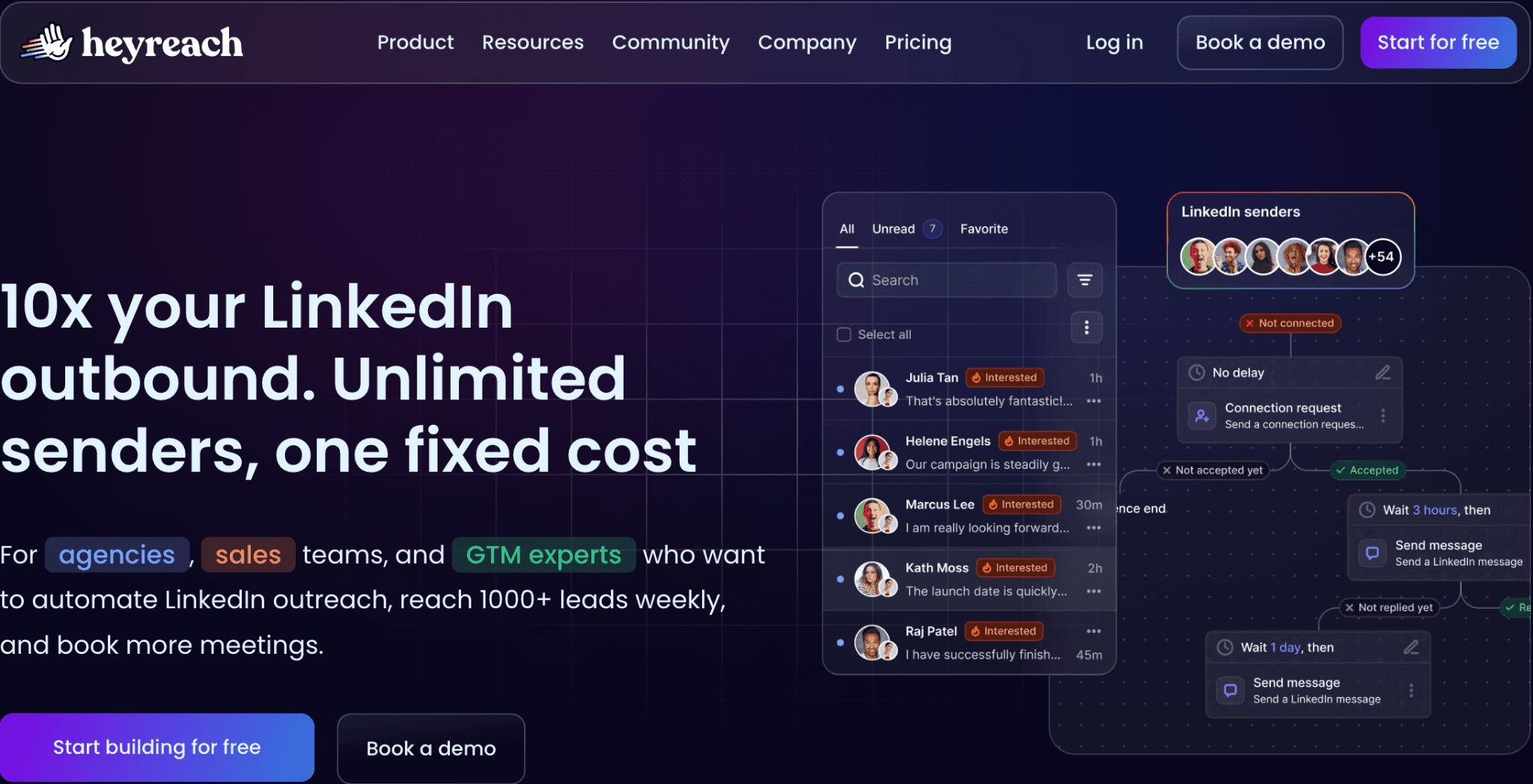
HeyReach focuses on LinkedIn outreach sequences with multi-account rotation, which helps distribute sending volume across several LinkedIn profiles to stay within per-account limits. It's a reasonable choice for agencies running high-volume campaigns across many clients.
Pricing is team-oriented and competitive. The limitation is similar to PhantomBuster: the tool automates sending but doesn't natively handle ICP scoring, deep research, or signal capture. You're still responsible for list quality and message relevance. ICP enrichment and lead scoring requires a separate step, usually a tool like Clay or manual work.
For agencies that have already solved qualification and personalization and just need safe sending infrastructure, HeyReach is worth evaluating. For teams that want the full workflow in one place, it's an incomplete solution.
Expandi
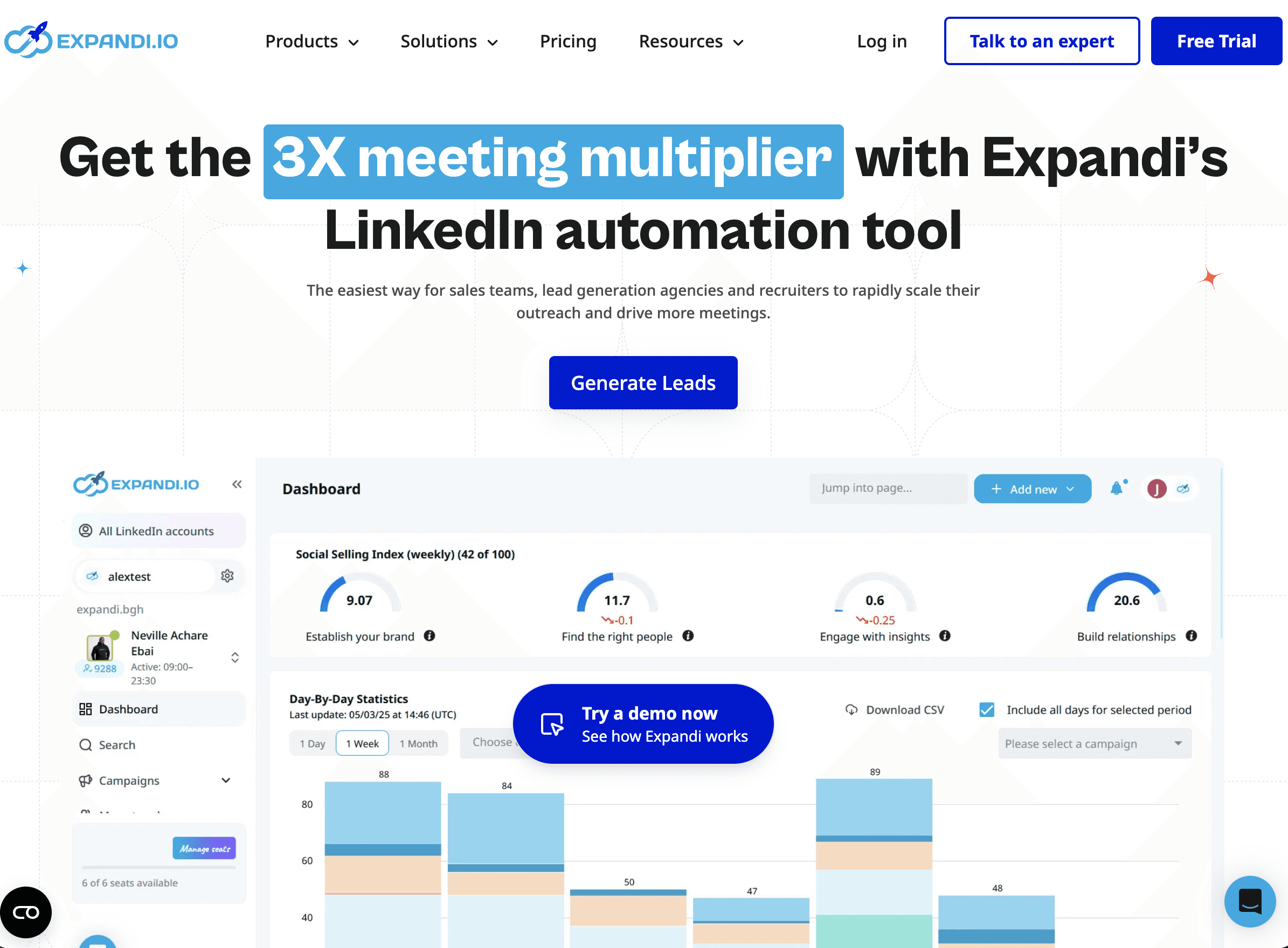
Expandi is a cloud-based LinkedIn automation tool with sequences, A/B testing, and smart inbox features. It's been around long enough to have a reputation for reliability, and its cloud-based architecture is generally safer than browser extensions.
Pricing starts around $99/month per account. Personalization is template-variable-based rather than research-driven, which means messages tend to look personalized without being genuinely relevant. It works for volume campaigns where message quality is secondary; it won't produce the reply rates that signal-based, research-driven outreach achieves.
What "affordable but actually works" requires
The price of a tool is almost never the bottleneck for bookings. The bottleneck is message relevance, which is a function of:
Who you're messaging (signal-fit vs. cold list)
Why you're messaging them (specific trigger vs. generic pitch)
How you're messaging them (in your voice vs. token-merge template)
Cheap tools that handle sending but not qualification or research require you to solve steps 1-3 manually. That's fine if you have the time and skill. If you don't, the cheap tool ends up costing more in wasted effort than a complete platform.
The LinkedIn connection request best practices that consistently produce replies share a common structure: a specific signal hook ("I noticed you commented on [X post]"), a brief relevant insight, and a low-friction ask (a binary question, not a 30-minute meeting request).
Valley automates that structure at scale with research backing each component. Other tools give you the template; the thinking is up to you.

Give your sales team
an unfair advantage.
A note on account safety
Every LinkedIn automation tool carries some risk if used carelessly. Hey Sid (April 2026) covers conservative activity limits as a baseline for reducing risk, and the general guidance across the industry is consistent: avoid bot-like or scraping behavior, stay within LinkedIn’s daily activity norms, and prefer tools that operate within LinkedIn’s native environment rather than mimicking human actions from outside it.
Valley’s architecture is built around safe LinkedIn automation as a design constraint, not an afterthought. Zero suspensions across 1,000+ accounts is a meaningful claim in a space where account bans are common.
The bottom line
For small teams and startups that want an option that genuinely books meetings: Valley, at $500 a month for the first seat ($200 per extra seat), with a guided setup. It is not the cheapest seat on this list; it is the one that does the finding, research and writing. The signal-based targeting and genuine personalization mean the meetings actually land, not just the connection requests. For the full field, by job and with dated prices: LinkedIn prospecting tools compared by job.
For teams comfortable building their own stack: PhantomBuster handles extraction, HeyReach handles sending, and you supply qualification and personalization separately.
For agencies that want one platform managing signals, scoring, research, drafting, sending, and reply management across multiple clients: Valley’s full tier is the most complete option available and still undercuts the cost of a multi-tool stack by a significant margin.
Book a demo to see the signal-based workflow in action.
Related: running client outbound from one platform.
See also: Best LinkedIn Outreach Tools for B2B SaaS Founders in 2026 · How to Do LinkedIn Outbound as a Solo Founder (Without Hiring an SDR) · How to Personalize LinkedIn Messages at Scale Using AI
► Book a demo: see how Valley would find, research and message your buyers
FAQs
What makes an AI LinkedIn prospecting tool “affordable”?
Affordable doesn’t just mean a low monthly price. It means the cost-per-meeting is reasonable relative to the pipeline it generates. A $50/month tool that books zero meetings is expensive. A $300/month tool that consistently fills your calendar with qualified prospects pays for itself. When evaluating cost, factor in setup time, the tools you no longer need, and the quality of meetings booked, not just the subscription fee.
Why do most cheap LinkedIn outreach tools fail to book meetings?
Most low-cost tools automate volume, not relevance. They send the same templated connection request to hundreds of strangers and call it “outreach.” The problem isn’t the automation; it’s reaching people who have no reason to respond. Tools that book meetings consistently reach prospects who are already showing some form of intent, whether that’s visiting your profile, engaging with your content, or following a competitor.
What is signal-based LinkedIn outreach and why does it matter?
Signal-based outreach means reaching out to people who have already shown interest (profile viewers, post engagers, company page visitors, competitor followers) rather than cold-blasting a purchased list. When someone has already interacted with your content or brand, your message lands in a different context. They have a reason to recognize you. That’s why signal-based approaches consistently produce 15-45% reply rates.
How do AI tools personalize LinkedIn messages at scale?
The better tools go beyond simple variable replacement like first name and company. They analyze multiple data points per prospect (LinkedIn activity, published content, role history, company context) to find a specific, relevant reason to reach out. The best ones then draft messages that match your writing style, so the personalization feels genuine rather than obviously templated. The goal is a message that reads like you wrote it specifically for that person, because the research behind it actually was specific to that person.
Is automated LinkedIn outreach safe for my account?
It depends entirely on how the tool executes outreach. Tools that operate outside LinkedIn’s native environment or ignore sending limits put your account at risk. The safer approach is outreach that runs inside LinkedIn’s own infrastructure, respects daily connection and InMail limits, and uses gradual ramp-up rather than blasting hundreds of messages from day one. Always check whether a tool has explicit safety rails built in before connecting it to your primary LinkedIn account.
What reply rate should I expect from AI-powered LinkedIn outreach?
Cold outreach to purchased lists rarely gets replies. Signal-based outreach to warm prospects (people who have already interacted with your content, profile, or competitors) can realistically reach 15-45% reply rates when paired with relevant, personalized messaging. The difference isn’t the tool itself; it’s whether the tool is reaching people who already have a reason to respond.
Can GTM agencies use these tools across multiple client accounts?
Some tools are built for single-account use and become operationally painful to manage across multiple clients. Agencies should look specifically for platforms that support multi-account management, allow separate ICP configurations per client, and can capture signals from each client’s own LinkedIn content and competitor audiences. The right setup lets agencies scale meeting volume across clients without scaling the fulfillment headcount required to run each campaign manually.
Do I still need a separate CRM or outbound stack if I use an AI LinkedIn prospecting tool?
The honest answer depends on your workflow. Some teams use a standalone LinkedIn outreach tool alongside a CRM for pipeline tracking and other channels for follow-up. Others find that a well-built LinkedIn outreach platform handles enough of the workflow (lead capture, enrichment, ICP scoring, message drafting, sending, and reply management) that it replaces several tools they were previously stitching together. If you’re currently running LinkedIn outreach through a combination of tools like Clay, Phantombuster, and a messaging platform, consolidating into a single purpose-built tool usually reduces both cost and operational complexity.


